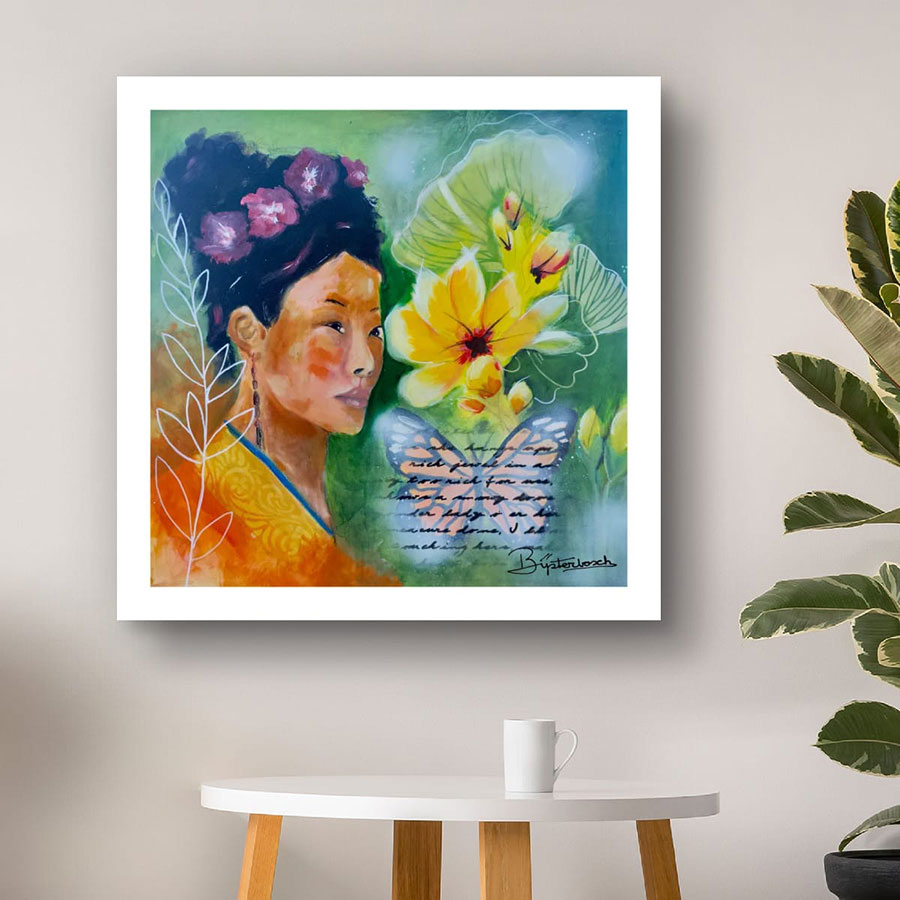
Some rooms look finished and still feel empty. The sofa is right, the rug works, the lighting is soft, yet the space says almost nothing about the life happening inside it. That is usually the moment emotional art for home begins to matter. Not as decoration to fill a wall, but as a presence that changes how a room feels when you walk in and how you feel when you stay.
Art has a quiet power in a home. It can steady a space, soften it, wake it up, or make it feel deeply personal. The right work does more than match the palette. It brings memory, longing, wonder, tenderness, courage. It gives a room an inner life.
What emotional art for home really means
Emotional art for home is not one style. It is not limited to abstracts, portraits, landscapes, or bold color. It is art that carries a feeling strongly enough to meet you every day. Sometimes that feeling is peace. Sometimes it is joy, wildness, intimacy, or reflection. The common thread is that the piece does not sit on the wall as background. It speaks.
This is why two people can respond very differently to the same painting. One may be drawn to a quiet horizon because it reminds them of a trip that changed them. Another may feel nothing at all. Emotional connection is personal, and that is exactly what makes it valuable in a home.
A beautiful interior can impress. An emotionally resonant interior can comfort, inspire, and stay with you. That difference matters, especially if you want your home to feel like more than a styled image.
Why some art changes the atmosphere instantly
When art holds emotional weight, it becomes an anchor. A room with neutral furniture and careful details can still feel unsettled if nothing in it carries depth. One painting can shift that completely. It can create calm in a busy home, warmth in a minimal space, or a sense of freedom in a room that feels too controlled.
Color plays a role, of course, but emotion in art is not just about color psychology. Brushwork matters. So does subject matter, scale, and even the amount of openness or tension inside the composition. A large expressive piece can make a room feel brave. A tender figurative work can make it feel intimate. A painting inspired by nature can bring breath and spaciousness, even in a city apartment.
This is also why generic wall decor often falls flat. It may be pleasant, but if it carries no real point of view, it rarely changes the emotional atmosphere of a room. It fills space without deepening it.
Choosing art by feeling, not just by color
Many people begin with the practical question: what matches my home? A better question is: what feeling do I want to live with here?
If you start with color alone, you may end up with art that behaves politely but says very little. If you start with feeling, the piece usually finds a more meaningful place. In a bedroom, you may want softness, closeness, rest. In an entryway, perhaps curiosity or welcome. In a dining room, art with warmth and vitality can make gatherings feel more alive.
That does not mean visual harmony stops mattering. It does matter. But harmony is broader than matching beige with beige or blue with blue. A painting can work in a room because it shares an energy, not just a color family. Sometimes the most moving piece is the one that introduces contrast – something richer, wilder, or more human than the rest of the space.
This is where instinct deserves respect. If you keep returning to a certain work, there is usually a reason. It may reflect a memory you have not named yet. It may hold the kind of freedom or stillness you want more of in your life.
The role of story in a meaningful interior
Homes become memorable when they hold story. Emotional art helps tell that story without making the space feel staged. A painting inspired by travel, wildlife, a quiet landscape, or the beauty of human presence can open a room beyond its walls. It reminds you that a home is not only where you keep things. It is where your values, memories, and inner world take shape.
For collectors and thoughtful decorators, this is often the turning point. They stop asking whether art fits the wall and start asking whether it reflects the life they are building. Art with a story tends to age beautifully in a home because its meaning grows over time. You notice new details. Different seasons bring out different moods. Guests ask about it. The piece becomes part of the rhythm of the place.
At Bijsterbosch Art, this emotional storytelling is part of what gives the work its presence. Paintings rooted in nature, culture, travel, and human beauty carry more than imagery. They carry lived wonder.
Emotional art for home in different spaces
Not every room asks for the same emotional register. A living room can hold a bolder statement because it is often where conversation and energy gather. A large painting with expressive color can create openness and vitality there, especially if the rest of the room is understated.
Bedrooms usually ask for another kind of attention. Here, emotional art for home works best when it supports exhale rather than performance. That could mean soft abstraction, a poetic nature scene, or a piece with tender movement. The goal is not to make the room boring. It is to make it restorative.
Hallways, landings, and entryways are often overlooked, yet they are ideal places for art that creates transition. A meaningful piece in a passageway can shift your mood as you move through the house. It gives even a small architectural moment a sense of intention.
In commercial interiors like hospitality spaces or high-end real estate, the equation changes slightly. The art still needs emotional force, but it also has to speak to a broader audience and support the larger design language. Larger-scale abstract collections often work well here because they create atmosphere without becoming overly literal. Still, the best pieces never feel anonymous.
Original paintings or prints?
This depends on budget, yes, but also on how you want to live with art. Original paintings carry the physical presence of the artist’s hand – texture, surface, subtle shifts in color that can feel deeply alive in a room. For some buyers, that immediacy is part of the emotional experience.
Prints offer another kind of generosity. They make meaningful artwork more accessible and allow collectors to bring emotion and story into their home without waiting for the perfect moment to invest in an original. A well-made print can still transform a space beautifully.
The trade-off is not simply original equals better. It is more about what kind of relationship you want with the work and what fits your space right now. A thoughtfully chosen print with real emotional resonance will always outlive a more expensive piece chosen only to fill a blank wall.
When bigger is better, and when it isn’t
People often underestimate scale. If a piece is too small for the wall, even wonderful art can lose impact. Emotional art needs room to breathe. It should feel intentional, not timid.
That said, bigger is not automatically more powerful. In a quiet reading corner or intimate bedroom, a smaller work can feel like a secret – something you discover rather than something that announces itself. Large pieces create presence quickly, but smaller works can invite closeness.
A good rule is to think about emotional distance. Do you want the art to greet you from across the room, or do you want it to reveal itself slowly as you come near? Both can be right. It depends on the room and on your relationship to stillness, energy, and focus.
How to know you’ve found the right piece
Usually, the right artwork creates a kind of inner recognition. Not perfection. Recognition. You feel your body respond before you finish analyzing it. You imagine living with it. You can sense what it would bring into the room that is missing now.
You may not even be able to explain it clearly, and that is fine. Emotional connection is not less valid because it is hard to put into words. In fact, that mystery is part of art’s gift. It reaches places language does not always reach.
A home should not feel like a showroom of correct choices. It should feel alive, intimate, and true. The art you bring into it can help shape that truth with surprising force.
If you are choosing a piece for your space, let beauty matter, but let feeling lead. The room will not only look better. It will begin to hold more of you.