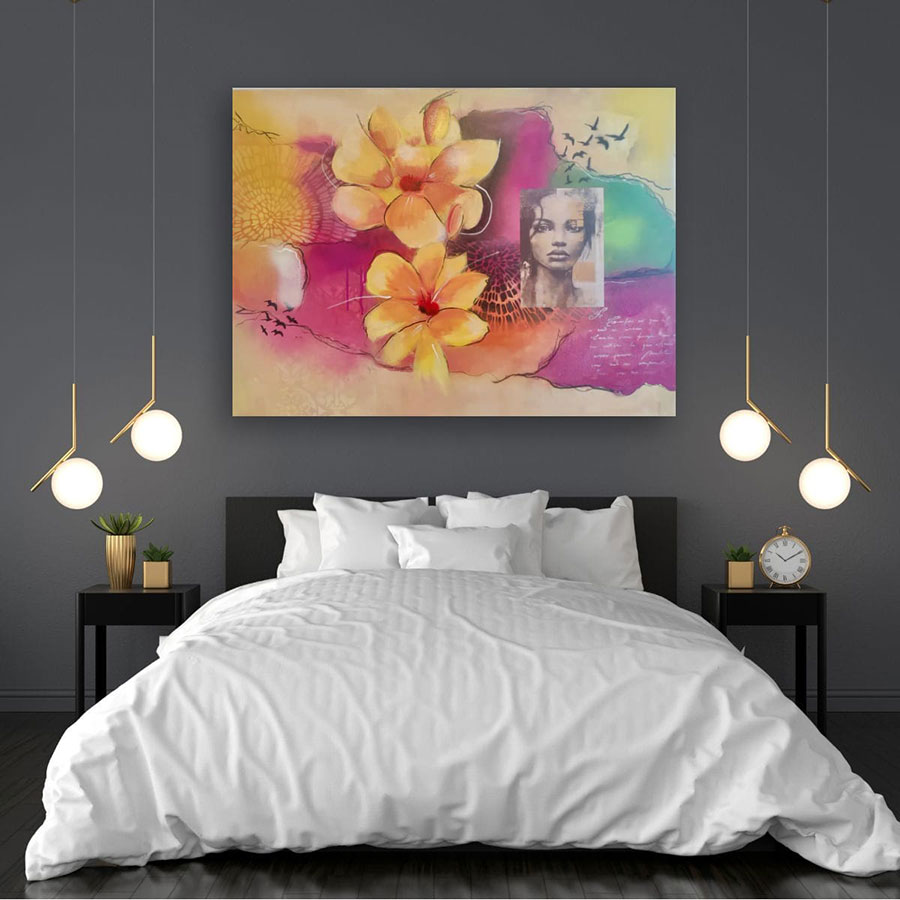
The mood of a bedroom can change with a single image. Not because art is decoration in the simple sense, but because what we see before sleep and after waking settles into the body. Peaceful wall art for bedroom spaces has a quiet kind of power. It can soften a restless room, hold a memory of nature or travel, and make the space feel like it finally belongs to you.
A bedroom asks something different from art than a hallway or dining room. This is where you exhale. Where the noise of the day leaves the edges of your mind. The right piece does not need to be bland or pale to feel calming. In fact, some of the most peaceful rooms hold art with depth, movement, and emotion. Peace is not the absence of feeling. It is the presence of something that lets you rest inside yourself.
What peaceful wall art for bedroom spaces really does
When people begin choosing art for a bedroom, they often focus first on matching colors. That matters, but it is only one layer. The stronger question is emotional. How do you want the room to feel when the lights are low, when morning arrives, when you need comfort, when you need stillness?
Peaceful art can guide that feeling. A soft landscape may open the room and make it breathe. An abstract piece with gentle rhythm can slow visual tension without becoming predictable. A nature portrait can bring a sense of connection, almost like keeping a quiet companion nearby. Art gives the bedroom an inner climate, and that is why it deserves more attention than a last-minute print chosen just to fill a blank wall.
There is also a difference between passive decor and meaningful art. Generic pieces may look pleasant for a while, but truly peaceful work tends to keep revealing itself. A brushstroke, a color shift, a remembered place, a face with tenderness in it – these details create a more intimate relationship with the room.
The most calming subjects are often rooted in memory and nature
Nature remains one of the most trusted sources for peaceful bedroom art, and for good reason. Water, trees, open skies, birds, botanical forms, and quiet horizons all carry visual patterns the mind already knows how to relax with. They remind us of something older than our schedules.
But the answer is not simply to buy any landscape. The feeling depends on how the image is made. A stormy sea may be beautiful, yet not ideal if you want the room to settle your nervous system. A forest scene with too much darkness may feel dramatic rather than restorative. Even wildlife can shift between serene and intense depending on pose, scale, and color.
This is where personal resonance matters. If a place reminds you of freedom, a mountain path or tropical green can feel deeply peaceful. If your version of calm is warmth and human connection, art that carries tenderness, feminine softness, or quiet cultural beauty may feel more right than a minimal beige canvas. Peace has personality.
Color matters, but not in an obvious way
Bedrooms usually respond well to softened palettes, though that does not mean everything should fade into the wall. Dusty greens, warm sand, muted blues, clay tones, off-whites, soft charcoal, and earthy blush shades all tend to support calm. These colors feel grounded and breathable.
Still, too much caution can leave a room feeling flat. A peaceful piece often needs one note of life inside it – deep teal, ochre, rust, olive, or a warm rose – so the art feels alive rather than sleepy. The room should rest you, not erase itself.
If your bedroom already holds strong color in bedding, rugs, or painted walls, the artwork can either echo that palette gently or provide relief from it. Neither choice is wrong. It depends on whether you want cohesion or contrast. A room with rich terracotta linens might welcome a painting with soft cream and green to cool the atmosphere. A neutral bedroom may need a more expressive piece to prevent the space from feeling anonymous.
Peaceful wall art for bedroom design is also about scale
One common mistake is choosing art that is too small. A tiny artwork over a bed can feel hesitant, as if the room is whispering when it should be breathing. Larger work often creates more calm because it feels intentional. The eye lands, stays, and settles.
That does not mean every bedroom needs an oversized statement painting. In smaller rooms, a medium-sized work with visual openness can be more restful than a giant dark piece. In larger bedrooms, one generous artwork above the bed can create a grounded focal point, while a pair of related works can bring balance if the room is wide.
Scale should support stillness. If you are creating a gallery wall, keep it restrained. Too many small frames can introduce visual chatter, which works in lively spaces but not always in rooms meant for restoration.
Abstract or representational? It depends on how you rest
Some people relax most easily with recognizable imagery. A quiet shoreline, a botanical study, or a softly rendered figure gives the mind something gentle to return to. There is comfort in knowing what you are looking at.
Others find peace in abstraction. A well-composed abstract painting can feel like music without words. It allows emotion without instruction. This can be especially beautiful in a bedroom, where too much narrative may feel mentally active.
The trade-off is subtle but real. Representational art tends to create familiarity and story. Abstract art tends to create atmosphere and spaciousness. If your days are already full of information, abstraction may offer more relief. If you long for connection and memory, representational work may feel more nourishing.
At Bijsterbosch Art, this balance between emotional storytelling and visual calm is part of what makes original work feel so alive in an interior. Peace does not have to be plain. It can arrive through expressive color, gentle symbolism, and the quiet dignity of a subject painted with feeling.
Placement changes the experience of the art
Above the bed is the obvious choice, but it is not the only one. If you want the room to feel less staged and more intimate, consider placing art where you first see it on entering, or where your gaze naturally falls from a reading chair. Peaceful art works best when it meets you in a real moment.
Height matters too. Art hung too high can feel detached. In bedrooms, a slightly lower placement often feels more human and relaxed. The piece becomes part of the room rather than a separate object floating above it.
Framing also shapes mood. Light wood, natural oak, soft black, or thin understated frames usually support a calm feeling. Heavy ornate framing can be beautiful, but it changes the emotional temperature. Sometimes that is welcome, especially in classic interiors. Sometimes it adds more formality than the space needs.
How to choose art that still feels peaceful years from now
Trends are seductive because they offer quick certainty. You see a style repeated enough times and it starts to feel like the safe choice. But bedrooms are deeply personal spaces. Art chosen only because it is fashionable can lose its tenderness once the trend passes.
A better approach is to ask whether the piece carries a lasting emotional truth for you. Does it remind you of a place where you felt free? Does it hold a kind of quiet beauty you never tire of? Does it bring softness without becoming invisible?
Collectible art has a different rhythm than trend decor. You live with it slowly. You notice new things. It becomes part of the story of your home. That is especially valuable in a bedroom, where the goal is not to impress guests first, but to create a space that supports your own inner life.
If you are choosing between an original painting and a print, the answer depends on budget, scale, and what kind of presence you want. Original art often carries texture and intimacy that transforms a room in a powerful way. A beautiful print can still create atmosphere and emotional impact, especially when the image itself has soul. The real question is not which is more worthy. It is whether the work moves you.
A peaceful bedroom does not come from removing everything that has energy. It comes from choosing what kind of energy belongs close to you. Art can hold stillness, wonder, tenderness, and memory all at once. When you find a piece that does that, the bedroom becomes more than a place to sleep. It becomes a place to return to yourself.