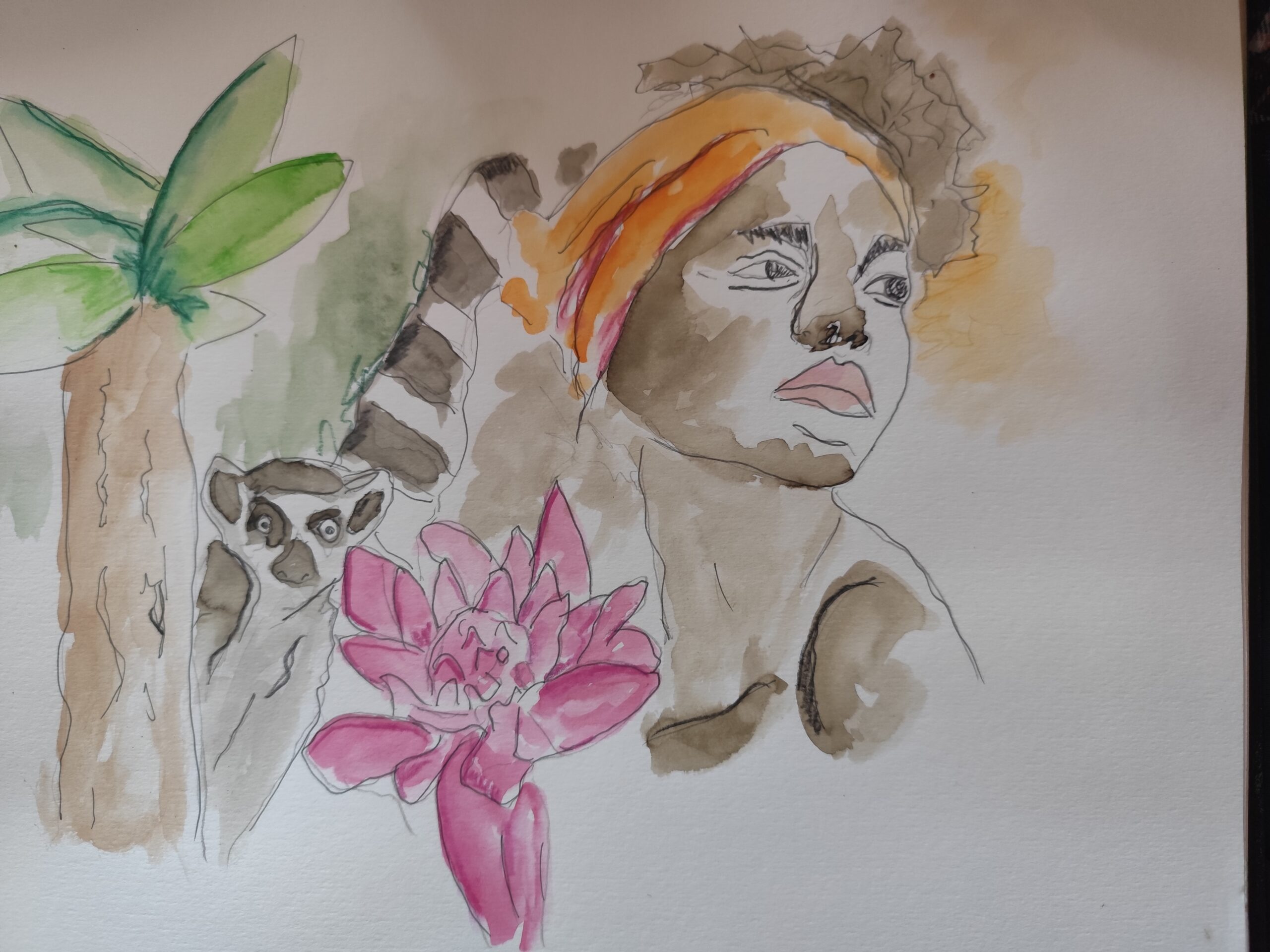
The first sketch is rarely about technique. It is about presence – the rustle of leaves before sunrise, the quick flash of a lemur through the trees, the feeling of standing somewhere that still holds mystery. A Madagascar artist travel week is not simply a creative trip. It is a lived encounter with biodiversity, local stories, and the quiet inner shift that happens when art is made in a place that asks you to pay real attention.
For artists who long for more than a beautiful backdrop, Madagascar offers something rarer. It offers contrast, vulnerability, color, fragility, and wonder in one breath. The experience can be deeply energizing, but it can also be confronting. You are not arriving to consume a destination. You are arriving to witness, to listen, and to create in relationship with a landscape and with the people who know it intimately.
Why a Madagascar artist travel week feels different
Some art retreats are built around comfort and productivity. This is something else. Madagascar invites a slower, more alert form of creativity. The light changes quickly. The textures are unfamiliar. The wildlife feels almost imagined until it appears in front of you. Even the silence has a different shape.
That matters because many artists do their strongest work when they are moved slightly beyond the familiar. Not overwhelmed, but awakened. In Madagascar, inspiration does not arrive as a polished concept. It comes in fragments – a pattern in bark, a child’s gesture, a market color, a sacred sense of interdependence between forest, animal life, and community. Those fragments ask for interpretation, not imitation.
There is also an emotional charge to making work in a place where biodiversity is both astonishing and under pressure. Art made here often carries more than observation. It carries response. That does not mean every painting or drawing must become overt activism. It simply means the experience tends to deepen the question many artists already hold close: what is my work in service of?
What happens during a Madagascar artist travel week
No two weeks should feel exactly the same, because the strongest creative journeys leave room for weather, wildlife, human connection, and surprise. Still, the rhythm usually matters. A meaningful week balances immersion with reflection.
Mornings are often when the senses are most open. Early excursions, sketching in the field, walking through forest paths, or sitting quietly with a notebook can become the foundation of the day’s work. This is when artists gather visual language – movement, silhouette, light, rhythm, and emotional tone.
Later, there is space to translate experience into form. Some artists paint immediately, while the memory is still warm. Others write, collect color notes, or make studies before beginning something larger. Both approaches are valid. Quick response can capture energy. Slower processing can reveal meaning that was not obvious in the moment.
The human side of the week is just as important. Encounters with local communities, conversations about culture and ecology, and moments of shared respect can shape the work in profound ways. The point is not to borrow someone else’s story. The point is to let your own story be changed by contact.
When guided with care, a week like this also connects creativity with conservation. Artists see not only beauty, but the realities surrounding habitat protection and cultural preservation. That context can turn a personal journey into a purposeful one.
The creative trade-offs are real, and that is part of the value
It helps to be honest about what this kind of week is and is not. If you want a tightly controlled studio schedule, dependable conditions, and perfect concentration every day, Madagascar may challenge you. Nature is not curated. Travel can be tiring. Light disappears. Rain interrupts. Animals do not perform on command.
Yet these very interruptions often make the work more alive. You stop forcing an outcome and begin responding to a living environment. That shift can be unsettling for artists who are used to planning every detail, but it can also be liberating. It asks for trust.
There is another trade-off too. A week may not produce your most finished work. It may produce your most honest raw material instead. Field sketches, color studies, visual notes, and emotional impressions might later become the seed of a powerful body of work. That is not a lesser result. Often, it is the more lasting one.
What artists tend to bring home beyond artwork
The visible outcome is only part of the story. Yes, artists return with sketchbooks filled, reference images gathered, and new ideas rising. But the deeper return is often internal.
Many artists leave with renewed courage. Working close to wildlife and wild landscapes can strip away creative noise. You remember what first pulled you toward image-making in the first place. Not trends. Not approval. Not pressure. Just the instinct to witness and translate beauty, fragility, and life.
There is also a different relationship to subject matter after an experience like this. Nature stops being a theme and becomes a relationship. Cultural encounter stops being an aesthetic influence and becomes a responsibility to portray with humility. Conservation stops being an abstract value and becomes something tangible, local, human, and urgent.
This is where purpose-driven travel can reshape an artist’s path. It does not force a message into the work. It clarifies what already matters.
How to prepare for a Madagascar artist travel week
Preparation is less about packing the perfect materials and more about preparing your attention. Bring tools that are flexible and portable. A sketchbook you are not afraid to use imperfectly matters more than expensive supplies you feel protective of. Choose mediums that travel well and allow you to work quickly when a moment opens.
Emotionally, it helps to arrive without demanding a masterpiece from yourself. Let the week be generous before you ask it to be productive. Curiosity will serve you better than creative pressure.
It is also wise to learn something about Madagascar’s ecosystems, cultural context, and conservation realities before you arrive. Not to become an expert overnight, but to show respect. The more informed you are, the more meaningful your observations become. Sensitivity is part of artistic practice.
And perhaps most importantly, prepare to listen. To guides. To local voices. To the land. To your own responses. In a place with this much life, listening is a creative act.
Why purpose matters in creative travel
There is a difference between being inspired by a place and being in relationship with it. Purpose is what closes that gap. When a travel week is connected to biodiversity protection and respect for local communities, the art created there carries a deeper resonance. It becomes part of a larger circle of care.
This is one reason the vision behind Art-To-Protect feels so timely and so human. It recognizes that beauty alone is not enough. Beauty can move us, but meaning asks us to respond. When artists create from direct experience in places like Madagascar, their work has the potential to carry story, emotion, and support far beyond the moment of travel.
That does not mean artists must become spokespersons or simplify complex realities into one visual statement. It means they can let their work remain layered, tender, and true while still contributing to something larger than themselves.
Is this week right for every artist?
Not always, and that honesty matters. A Madagascar artist travel week is especially powerful for artists who feel nourished by immersion, unpredictability, and emotional connection to place. It suits those who are willing to observe patiently, work responsively, and let the experience shape them.
For artists who prefer controlled studio conditions or who want purely technical instruction, it may feel less direct. The value here is not only in learning how to paint or draw better. It is in learning how to see more deeply. For many, that becomes the more transformative lesson.
There is room for emerging artists and experienced ones alike, but the shared thread is openness. You do not need to arrive with certainty. You need to arrive with sincerity.
In the end, the real gift of a week like this is not that it hands you a finished answer. It is that it leaves you with a more vivid question – how might your art hold wonder, responsibility, and reverence at the same time? That question can stay with you long after the forest sounds have faded, and sometimes that is where the most meaningful work begins.