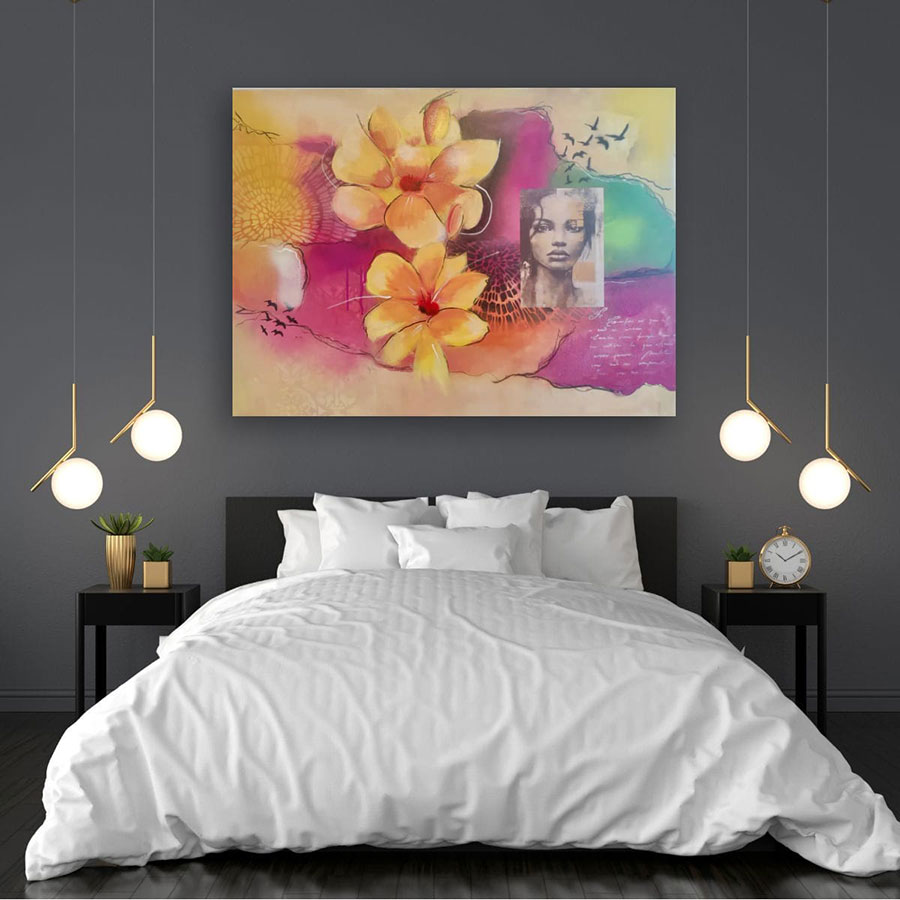
A room can be perfectly furnished and still feel like it is waiting for its soul. The sofa is in place, the lighting is warm, the textures are layered, and yet something remains unfinished. This is where abstract art for interior design becomes more than decoration. It changes the emotional temperature of a space. It gives the eye somewhere to rest, wander, and return.
Abstract art has a rare kind of freedom. It does not tell you exactly what to see, which is part of why it lives so beautifully in interiors. It leaves room for memory, mood, and imagination. In one home, a painting may feel serene and grounding. In another, the same work may bring energy, courage, or a sense of quiet mystery. That openness is not vague. It is personal.
Why abstract art works so well in interiors
Interior design is never only about function. It is about atmosphere. We shape our homes, workspaces, and hospitality environments not just to use them, but to feel something inside them. Abstract art supports that intention because it speaks through color, movement, contrast, and composition rather than a fixed narrative.
That matters when you are designing a room you want to live in for years. A very literal image can sometimes narrow the feeling of a space. It can become tied to a trend, a theme, or a moment. Abstract work often has greater emotional range. It can continue revealing something new as your life shifts around it.
This does not mean abstract art is automatically the right choice for every room. If a space needs storytelling through portraiture, landscape, or cultural references, then representational art may be the stronger voice. But when the goal is to create presence, rhythm, and a felt sense of beauty, abstraction offers unusual depth.
Abstract art for interior design begins with feeling
A common mistake is choosing art only after every other design decision has been made, as if the painting is there to match the pillows. Sometimes that works. More often, it leads to rooms that feel coordinated but emotionally flat.
The better question is not, What color should the art be? It is, What should this room feel like when someone walks in?
A bedroom may ask for softness, exhale, and stillness. A dining room may benefit from warmth and movement. A hotel lobby might need scale, confidence, and curiosity. A real estate staging project may call for work that feels elevated without becoming too specific. The role of the art changes with the space, and the strongest interiors respect that.
When you begin with feeling, color becomes more intuitive. Muted earth tones can create calm and depth. Mineral blues and smoky grays can quiet a room. Ochre, rust, coral, or deep rose can bring life and generosity. High contrast black and white can feel architectural, dramatic, and clean. None of these palettes are universally right. It depends on the room, the light, and the emotional story you want the interior to tell.
Color should relate, not repeat
One of the most beautiful things abstract art can do is create harmony without becoming predictable. If every tone in the painting is already present in the furniture, the room can feel overly controlled. If the artwork introduces a note that appears nowhere else, it can feel disconnected.
The sweet spot is relation rather than repetition. A painting might echo the warmth of wood tones, pick up a shadow color from a rug, or bring a softened version of a stronger accent used elsewhere. This gives the room cohesion while still allowing the artwork to breathe as its own presence.
Scale changes everything
Scale is often the difference between art that feels transformative and art that feels apologetic. A small piece on a large wall can look stranded, no matter how beautiful it is. On the other hand, an oversized abstract painting can anchor an entire room and create a sense of confidence that carries through the design.
This is especially true in commercial interiors, hospitality spaces, and open-plan homes where architecture asks for bolder gestures. Large-format abstract work can hold visual space without cluttering it. It offers impact while keeping the atmosphere open.
Still, bigger is not always better. Intimate spaces sometimes need restraint. A smaller work with layered texture and emotional subtlety can be more powerful in a reading corner, entry, or bedroom than a dramatic statement canvas. Again, it depends on what the room is asking for.
How to choose abstract art that belongs in the room
The best abstract pieces do not simply fit a room. They belong there. That sense of belonging comes from a mix of intuition and practical attention.
Start by noticing the room’s visual pace. Is it already full of pattern, texture, and architectural detail? Then the art may need spaciousness and calm. Is the room minimal, quiet, and structured? Then the painting may be the place where gesture and emotion can fully enter.
Look at the light next. Natural light changes everything about how color is perceived. Morning light can make cool tones feel luminous. Evening light can deepen warm pigments and bring shadow into textured surfaces. If a room has low light, work with enough tonal contrast can help it feel alive throughout the day.
Then consider materials. A room with linen, oak, plaster, stone, and handmade ceramics often welcomes abstract art with organic movement and layered color. A sharper interior with metal, glass, polished surfaces, and strong lines may suit work with bolder contrast or more architectural composition. There are no hard rules here, only relationships.
Most of all, pay attention to your body’s response. Some art quiets you immediately. Some energizes you. Some asks you to stay a little longer. That reaction matters. We live with art physically, not just intellectually.
The difference between filling a wall and shaping a space
There is a real difference between buying something because a wall is empty and choosing artwork that changes how a room feels. The first solves a decorating problem. The second creates atmosphere.
Abstract art is especially powerful here because it can act almost like an emotional layer in the architecture. It softens rigid spaces. It brings movement to still ones. It introduces depth where a room feels too polished or too cautious. It can even help connect different zones in a home by repeating a mood rather than a motif.
This is one reason interior designers often turn to abstraction in residential and commercial projects. In a home, it can make the environment feel more personal without dictating a single story. In hospitality or real estate, it can elevate a space and invite broad emotional appeal. For larger projects, collections of related abstract works can create continuity from room to room while allowing each area to keep its own character.
Living with abstract art over time
The most meaningful art does not reveal itself all at once. It lives with you. It changes as seasons change, as light shifts, as the room evolves, and as you do.
That is part of the lasting beauty of abstract work. Because it is not fixed to one obvious reading, it has room to keep meeting you differently. A painting you first loved for its calm may later feel full of resilience. A piece chosen for its color may become important because of the memory it gathers in that room.
This is why collecting art for interiors can be such a personal act. You are not just selecting an object. You are choosing what kind of energy will accompany daily life.
For those drawn to expressive, story-led work, brands like Bijsterbosch Art speak to this deeper relationship between painting and place. The goal is not simply to style a room beautifully, but to create spaces that carry wonder, peace, and emotional presence.
When abstract art is worth the investment
Not every room needs original art, and not every project has the same budget. Prints can be a beautiful way to bring feeling and visual depth into a home, especially when chosen with care and framed well. Original paintings, though, offer something uniquely alive – texture, gesture, and the subtle evidence of the artist’s hand.
The right choice depends on your priorities. If you are furnishing a first home, layering meaningful prints with a few special pieces can be a thoughtful approach. If you are designing a forever space, a hospitality concept, or a high-impact focal room, investing in original abstract work may shape the entire environment in a more lasting way.
What matters most is not status. It is connection. Good art earns its place by continuing to give something back.
A beautiful interior does more than look complete. It holds you, reflects you, and gently changes the way you move through your day. When abstract art is chosen with care, it does exactly that – not by explaining everything, but by making the room feel deeply, unmistakably alive.