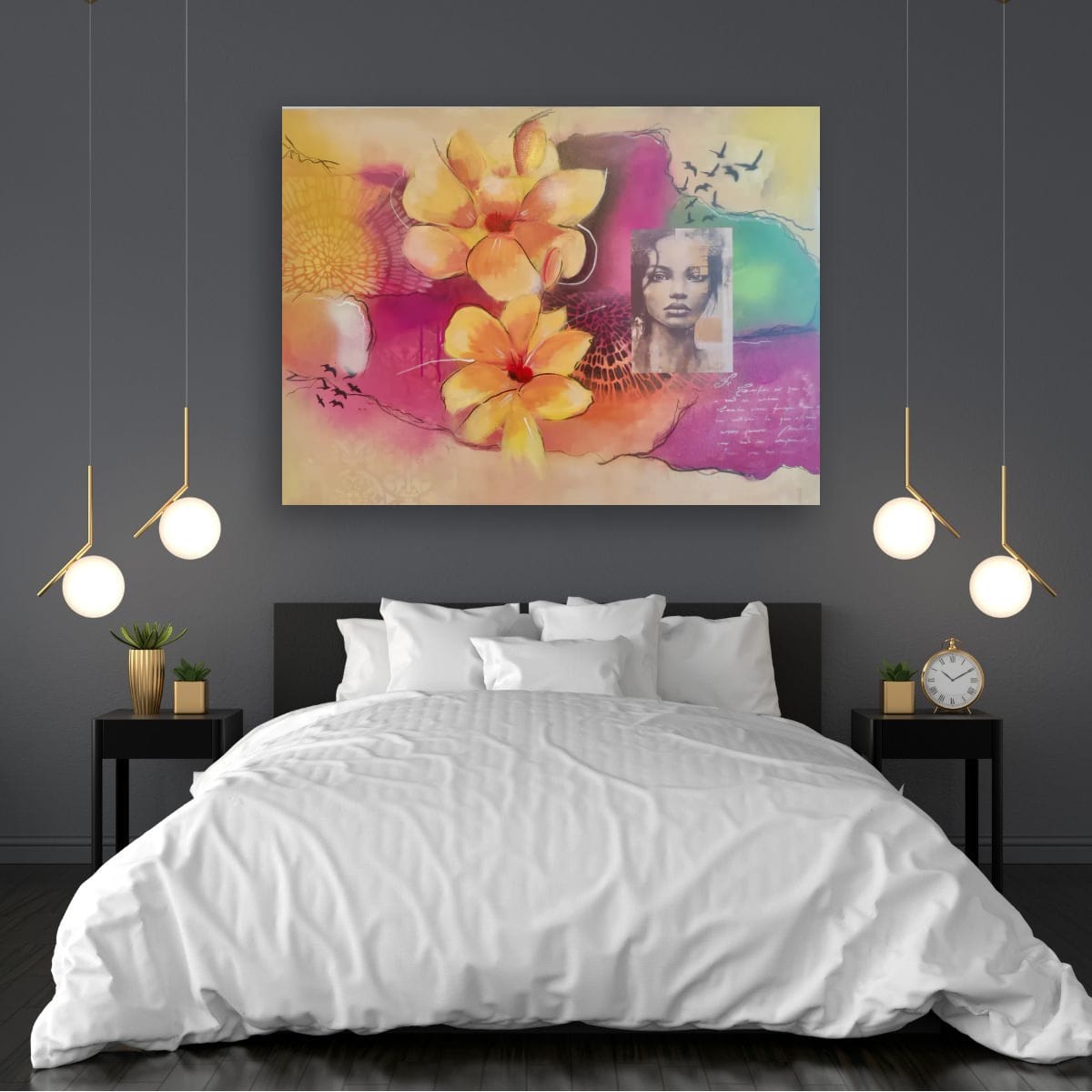
A guest may forget the exact thread count of the sheets or the shape of the bedside lamp, but they rarely forget the feeling of walking into a hotel that has a soul. That is where art for boutique hotels becomes far more than a finishing touch. It becomes part of the emotional signature of the stay – the quiet element that lingers in memory long after checkout.
Boutique hotels live and die by atmosphere. They are chosen for intimacy, character, and a sense of place that cannot be copied by chains. Every choice inside them carries meaning, and art is one of the clearest ways to express that meaning without saying a word. When the work is chosen with care, it can bring calm, spark curiosity, awaken longing, or create a sense of connection that feels deeply human.
Why art for boutique hotels carries so much weight
In a boutique hotel, guests are not only looking for comfort. They are looking for experience. They want to feel that they have arrived somewhere with a point of view, somewhere shaped by story rather than formula. Art helps create that feeling because it speaks directly to emotion before the mind begins to analyze.
A painting can slow a person down after a long journey. A series of works can create rhythm as someone moves through a corridor. A powerful piece in a lobby can set the tone within seconds. None of this is accidental. Art changes how a space is perceived, but more importantly, it changes how a space is felt.
That emotional layer matters even more in hospitality because guests are in a heightened state of perception. They are away from home, often more open, more observant, and more sensitive to atmosphere. They notice what feels generic and what feels alive. They also notice when art has clearly been treated as an afterthought.
The difference between decoration and presence
Not all hotel art creates a lasting impression. Some work simply fills a blank wall. It is polite, safe, and forgettable. It does not offend, but it does not move anyone either. For a boutique hotel, that can be a missed opportunity.
Art with presence carries a distinct voice. It has emotional clarity. It suggests that someone cared enough to choose work with depth rather than defaulting to something neutral. This does not mean every piece must be dramatic or loud. Presence can be quiet. A gentle oil painting with rich color and honest brushwork can hold a room more powerfully than something oversized and fashionable.
There is a real trade-off here. If a hotel chooses only universally agreeable work, it may feel visually pleasant but emotionally flat. If it chooses work that is too concept-heavy or confrontational, guests may feel pushed away rather than welcomed. The strongest collections for hospitality often sit in that beautiful middle space – distinctive enough to be memorable, generous enough to be inviting.
What guests actually respond to
Guests tend to respond to art that gives them something to feel rather than something to decode. They may not know the language of fine art, but they know when a piece stirs wonder, tenderness, freedom, nostalgia, or peace. That response is immediate and instinctive.
Nature-inspired work often resonates strongly because it softens the nervous system. Images rooted in wildlife, forests, oceans, and open landscapes can create a sense of exhale. Work shaped by travel and culture can also be deeply moving when it is made with sincerity and respect. It offers a feeling of discovery, of being connected to a wider and more vivid world.
Color matters too, though not in a formulaic way. Saturated tones can create richness and vitality. Earthy palettes can ground a guest. Luminous layers can make a room feel more expansive. The right color language does not just support the hotel’s identity – it affects the emotional tempo of the stay.
This is one reason artist-led work often feels different from mass-produced hospitality pieces. It carries the trace of a real hand, a real eye, a real encounter with the world. Guests may not articulate that difference, but they feel it.
Art for boutique hotels should reflect place, not mimic it
One of the most common mistakes in hospitality art is being too literal. A coastal hotel fills every wall with obvious beach scenes. A forest retreat leans on clichés of leaves and trees. A city property uses predictable black-and-white street photography. The intention is understandable, but the result can feel thin.
A more powerful approach is to reflect the spirit of a place rather than illustrate it. If a hotel is near the sea, the art does not need to show waves in every room. It may instead carry the fluidity, light, movement, and openness of the coast. If a property is rooted in a region rich with wildlife, the work might echo its vitality, color, or mystery rather than turning local nature into a postcard.
This kind of interpretation gives guests a richer experience. It allows the art to deepen the identity of the hotel instead of repeating it too literally. It also makes the collection feel more timeless.
Working with an artist brings a hotel’s story into focus
There is something quietly powerful about hospitality spaces that include work made by an artist with a distinct vision. It changes the energy of the environment because the art is no longer anonymous. It comes from lived experience, from observation, from courage, from a personal relationship with beauty.
For boutique hotels, this can be especially meaningful. These properties often pride themselves on individuality, and that value is strengthened when the artwork also has a human center. An artist who paints from journeys through wild landscapes, cultural encounters, or intimate moments of wonder brings layers into the work that generic sourcing simply cannot reproduce.
Commissioned collections can be particularly compelling when there is room for dialogue. The hotel shares its atmosphere, values, and the feeling it hopes guests will carry away. The artist responds with work that translates that essence into color, texture, and image. The result can feel rooted rather than staged.
That said, custom work is not always the right path for every property. It asks for trust, clarity, and enough time for the process to unfold. Some hotels need immediate solutions. Others are ready to invest in something more personal and lasting. It depends on the ambition of the project and the emotional role art is expected to play.
When art becomes part of the guest experience
The best hotel art does not sit passively in the background. It participates in the guest experience. A painting near reception can create an opening mood of warmth or intrigue. Work in guest rooms can offer stillness, especially after overstimulation from travel. Pieces in dining spaces can shift the emotional texture of a meal, making it feel more intimate or more alive.
This does not require every work to demand attention. In fact, some of the most successful pieces are the ones guests return to quietly. They notice a detail on the second morning. They feel calmer sitting beneath a certain painting in the evening. They remember a color, a figure, an animal, a brushstroke. The art becomes part of the rhythm of their stay.
For hotels that want to be remembered, this matters. People share places that make them feel something. They recommend hotels that seem thoughtful, layered, and genuine. Art contributes to that sense of emotional authorship.
Choosing art with depth, warmth, and courage
If there is one principle worth holding onto, it is this: choose art that feels alive. Not perfect. Not merely expensive. Not selected only to match a concept board. Alive.
Alive art carries energy. It may hold the quiet dignity of a portrait, the wild freedom of an animal, the pulse of a landscape, or the emotional resonance of abstraction. What matters is that it brings something true into the room. Something that lets guests feel they have entered a place with heart.
For boutique hotels, that choice can shape more than visual identity. It can shape memory. It can create an atmosphere of trust, beauty, and curiosity. It can remind a tired traveler that hospitality is not only about service. It is also about being received into a space that has been made with feeling.
Bernadet Bijsterbosch creates work from that place of feeling – shaped by nature, travel, wildlife, and the beauty found in human presence across cultures. In hospitality settings, art like this offers more than image. It offers a sense of wonder that stays with people.
The most memorable hotels understand that walls are never just walls. They are opportunities to tell a quieter story, one that guests do not simply see, but carry with them when they leave.