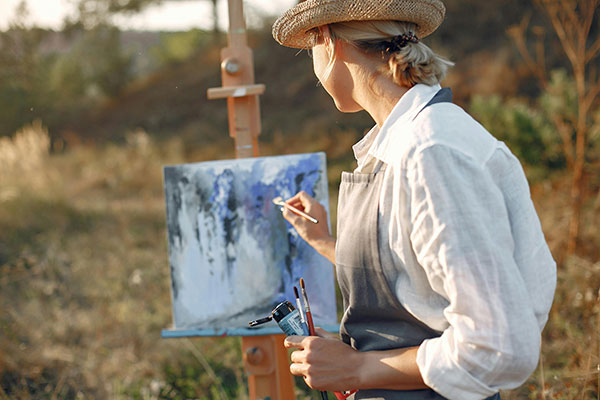
Some places change the way you paint before you ever lift a brush. The light feels different, the silence carries its own color, and ordinary details suddenly ask for your full attention. That is why the best destinations for art travel are not simply famous art cities. They are places that stir the senses, challenge your perspective, and leave you with something deeper than reference photos.
For artists and art lovers who travel with purpose, the right destination offers more than museum lists and postcard views. It offers atmosphere, texture, human connection, and often a new relationship with nature and culture. Some places sharpen your eye through centuries of artistic heritage. Others open your heart through biodiversity, ritual, and the humility of standing inside a landscape that feels alive.
What makes the best destinations for art travel?
A truly meaningful art destination does at least one of three things. It brings you close to masterworks that shift your understanding of form and technique. It immerses you in a living culture where art is still woven into daily life. Or it places you inside a natural world so powerful that your creative instincts wake up almost immediately.
The best trips often combine all three, but not always in equal measure. If you are a painter drawn to color and gesture, you may need sensory overload and street energy. If you are a wildlife artist or visual storyteller, you may need rainforest silence, local knowledge, and time to observe. If you are in a season of creative exhaustion, a quieter destination may serve you better than a crowded cultural capital.
That is the trade-off many travelers miss. The most famous city is not always the most fruitful one for your work.
10 best destinations for art travel
Florence, Italy
Florence remains one of the clearest places to study how beauty, skill, and devotion can meet in a single object. For painters, draftsmen, and lovers of classical composition, it offers a kind of visual discipline. Frescoes, sculpture, architecture, and devotional imagery ask you to slow down and look carefully.
Yet Florence is not only for those chasing the Renaissance. It is also for artists who need to reconnect with craft. In a world of speed and distraction, the city reminds you that great work is built through patience. The challenge, of course, is that Florence can feel crowded and heavily curated. Go early, sketch often, and leave room for quiet corners rather than trying to conquer every landmark.
Mexico City, Mexico
If Florence teaches structure, Mexico City teaches intensity. Murals, folk traditions, contemporary art spaces, and markets create a visual language that is bold, layered, and unapologetically alive. There is history here, but it does not sit still. It keeps speaking through walls, textiles, color, and public space.
For artists interested in identity, political memory, ritual, and everyday poetry, Mexico City can be electrifying. It is especially strong for those who want to see how art breathes outside elite institutions. The pace can feel overwhelming, so this is a destination to approach with openness and stamina.
Kyoto, Japan
Kyoto offers a different kind of creative education. Instead of abundance, it teaches restraint. The beauty is often subtle – a weathered gate, a moss garden, a gesture in calligraphy, the quiet rhythm of traditional craft.
This is one of the best destinations for art travel if your work needs space, clarity, and attention to detail. Textile traditions, ceramics, woodblock history, and temple aesthetics create a deeply contemplative atmosphere. Kyoto is less about dramatic artistic breakthroughs and more about refinement. If you arrive ready to be dazzled every minute, you may miss its gift. It reveals itself slowly.
Marrakech, Morocco
Marrakech is color, geometry, dust, ornament, and heat. It is a place where pattern is not decoration but language. Courtyards, textiles, carved surfaces, spice markets, and desert tones offer a visual feast that can feel almost musical.
For artists drawn to pattern, symbolism, and the emotional power of color, Marrakech can open new directions. It also invites reflection on craftsmanship and the sacred role of making. The trade-off is that it can be easy to romanticize the city from a distance. The richer experience comes when you stay present, listen well, and move beyond surface beauty.
Oaxaca, Mexico
Oaxaca carries a rare sense of artistic continuity. Craft, ceremony, food, storytelling, and visual culture are deeply intertwined, and the creative life of the region feels grounded rather than performative. Natural dyes, weaving traditions, carved forms, and powerful local iconography make it especially meaningful for artists who care about heritage and handmade practice.
It is also a place that asks for respect. Art here is connected to community memory, not just aesthetic pleasure. If you travel to Oaxaca as a learner rather than a consumer, it can leave a lasting mark on how you think about authorship and influence.
Paris, France
Paris still earns its place, not because it is predictable, but because it remains an extraordinary conversation between past and present. You can spend a morning with monumental art history and an afternoon watching contemporary visual culture unfold in the street, in galleries, and in the movement of the city itself.
For many artists, Paris offers permission. Permission to take beauty seriously. Permission to make work that is intelligent and sensual at the same time. The risk is that expectations can be too high. Paris will not automatically make anyone more creative. But if you arrive curious and attentive, it can sharpen your standards in the best way.
Santa Fe, New Mexico
Santa Fe holds a quieter power. The land itself is a teacher here – wide skies, mineral colors, adobe forms, and a desert palette that seems to change by the hour. The city also offers a strong relationship between art, spirituality, and cultural heritage.
For painters inspired by landscape and artists interested in place-based expression, Santa Fe can feel expansive and centering. It is especially compelling for those who need distance from noise. At the same time, this is not a destination to consume superficially. The presence of Indigenous art and cultural histories requires humility, context, and care.
Ubud, Bali
Ubud can be both nourishing and complicated, which is partly why it belongs on this list. The surrounding rice fields, lush textures, ceremonial life, and strong artistic traditions create real inspiration. Dance, carving, painting, offerings, and daily rituals reveal a culture in which creativity is woven into spiritual life.
For artists seeking renewal, Ubud can be deeply restorative. But it also depends on timing and intention. Parts of it are shaped heavily by tourism, which can blur authenticity if you stay at the surface. The best experience usually comes through slower travel, local guidance, and genuine participation rather than consumption.
Madagascar
Madagascar is not a conventional art destination, and that is exactly its strength. The island offers something many artists are missing: astonishment. Its wildlife, shifting landscapes, baobab silhouettes, forests, and coastal light can pull you out of habit and back into direct seeing.
For artists inspired by biodiversity, conservation, and the emotional force of wild places, Madagascar can be transformative. It asks more of you than a museum city does. Travel may be less easy, comforts fewer, and logistics more demanding. But creative depth often grows in places where you are not buffered from reality. For purpose-driven artists, this kind of journey can reconnect art with responsibility.
Costa Rica
Costa Rica offers a vivid meeting point between art and ecology. Rainforests, birds, amphibians, coastlines, and rich plant life make it a living studio for anyone moved by the intelligence of nature. It is especially powerful for sketching, field observation, and work rooted in movement and life force.
What makes Costa Rica stand out is not only beauty, but accessibility. Compared with more remote biodiversity destinations, it can be easier to navigate while still offering profound immersion. That makes it ideal for artists who want nature to lead the process. Through experiences like those created by Art-To-Protect, destinations like this become more than travel. They become a way to witness, create, and contribute.
How to choose the right art destination for your season
The best art trip is not always the one with the strongest reputation. It is the one that meets your creative season honestly. If you need technical study, choose a city with masterworks and time-tested visual language. If you need emotional renewal, choose nature, silence, and a slower rhythm. If you need your work to become more socially awake, choose places where culture, land, and community remain inseparable.
It also helps to ask what kind of attention you want to practice. Looking at art is one kind of attention. Making art in response to a place is another. Listening to people whose traditions are rooted in that place is deeper still.
That final layer matters. Art travel becomes richer when it is not only about what we can take in, but about how we allow a place to change the way we see.
A meaningful destination does not just give you beautiful subjects. It gives you a more honest eye, a more tender heart, and sometimes a new reason to create at all.