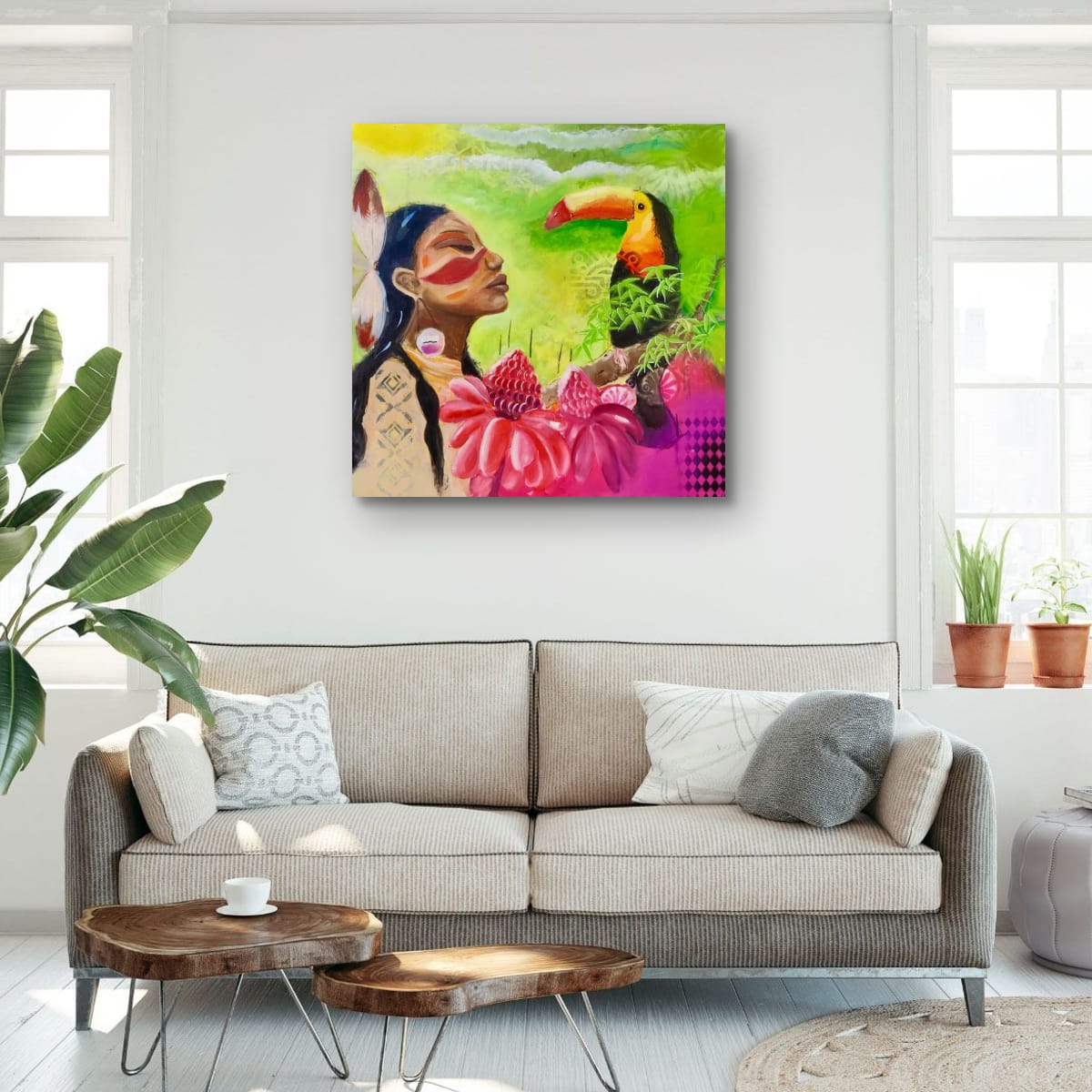
The moment a print arrives, you know more than you think. Before you read the certificate, before you check the size, before it even reaches the wall, your hands and eyes begin a quiet fine art print quality review. Does the surface feel alive or flat? Do the colors breathe, or do they sit on the paper without depth? Does the image hold emotion, or has something essential been lost in translation?
That reaction matters because a fine art print is not only a copy. At its best, it carries the atmosphere of the original work – the weight of a brushstroke, the softness of a sky, the pulse of a living color. At its worst, it becomes a decorative substitute with little soul. The difference is rarely one dramatic flaw. It is usually a series of small decisions that shape whether a print feels collectible or forgettable.
A fine art print quality review starts with paper
Paper is often the first truth a print tells. Even before color accuracy or sharpness, the paper announces whether the piece was made with care. A thin, overly smooth sheet can make even a beautiful image feel mass-produced. A well-chosen fine art paper gives the work presence.
There is no single best paper for every artwork. That is where nuance matters. A textured cotton rag can be extraordinary for paintings with visible brushwork or earthy, organic subjects because it adds softness and depth. A smoother paper may suit images with cleaner edges, finer line detail, or more contemporary clarity. Matte finishes often feel more painterly and calm, while slight sheen can lift contrast and saturation.
Weight matters too. Heavier paper usually feels more substantial, but weight alone is not quality. Some heavy papers can still feel lifeless if the coating is poor or the image profile is off. What you want is harmony between the artwork and the surface carrying it.
Color should feel faithful, not loud
Color is where many prints succeed just enough to look good online, yet fail when viewed in person. A screen can flatter almost anything. Print reveals everything.
In a thoughtful fine art print quality review, color is not judged by brightness alone. Strong color does not automatically mean accurate color. If skin tones drift too pink, greens turn acidic, or shadows collapse into muddy darkness, the emotional register of the artwork changes. A tender painting can become harsh. A luminous landscape can become heavy.
Faithful color reproduction is especially important in expressive work. Subtle transitions between warm and cool tones often carry the mood of the piece. When those transitions are compressed or exaggerated, the print may still resemble the image, but it no longer feels the same.
This is why artists and high-end printers spend time on proofing. The goal is not perfection in a sterile sense. The goal is emotional honesty. A print should honor the spirit of the original, even when the medium naturally behaves a little differently.
Why lighting changes your judgment
Print quality is never assessed in a vacuum. A print seen in soft daylight may look beautifully balanced, while the same print under harsh artificial light can reveal color casts or flatten detail. That does not mean the print is poor. It means print viewing is relational.
If you are reviewing a print seriously, look at it in more than one kind of light. This simple step helps separate a printing issue from a lighting issue. It also gives you a better sense of how stable and refined the color really is.
Detail is about restraint as much as sharpness
People often use the word sharp when they mean high quality, but in fine art printing, excessive sharpness can work against beauty. Paintings are not supposed to look like over-processed photographs. Texture, line, and edge definition should be clear, but they should also feel natural.
A good print preserves detail without creating a brittle or artificial surface. You should be able to see delicate transitions, subtle marks, and layered depth. Fine details should not disappear into blur, yet they also should not be pushed so aggressively that the image starts to look digital.
This trade-off shows up often in reproductions of oil paintings. If the scan or photograph of the original is poorly captured, no premium paper can rescue it. If the file is excellent but the print process overcompensates with contrast and sharpening, the emotional softness of the painting may be lost. The best results hold clarity and tenderness at once.
Ink quality affects longevity and feeling
Not all inks age the same way, and not all of them render color with the same richness. Archival pigment inks are generally favored for fine art prints because they offer better longevity and more nuanced color than cheaper dye-based alternatives. That matters for collectors, but it also matters for anyone who wants a print to remain beautiful over time.
Longevity is not only about avoiding obvious fading. Inferior inks can shift unevenly, causing colors to lose balance long before the image appears visibly damaged. A once-deep blue may become dull. Warm neutrals may drift strange. The piece slowly loses integrity.
There is also a tactile perception involved. High-quality inks tend to create a print with more depth and subtlety, especially in shadow areas and soft gradients. You may not identify the technical reason at first glance, but you will feel the difference.
The black point tells a quiet truth
One of the simplest ways to judge a print is to look at the darkest areas. Are the blacks rich without swallowing detail? Can you still see variation in dark passages, or has everything collapsed into one dense shape?
Poor-quality printing often struggles here. In trying to create drama, it sacrifices nuance. But shadow detail is where atmosphere lives. In wildlife, portraiture, and nature-inspired work, the mystery of darker values often gives the image its emotional gravity. If those values are handled badly, the print can feel blunt rather than deep.
A strong print lets darkness remain spacious. It keeps form inside shadow.
A fine art print quality review should include edges, borders, and finish
Collectors sometimes focus so closely on the image itself that they overlook the physical finish of the print. Yet craftsmanship reveals itself at the edges too. Are the borders clean? Is the trimming precise? Does the paper lie flat, or does it curl awkwardly? These details may sound minor, but together they shape trust.
A beautiful image with careless finishing feels incomplete. A carefully made print, by contrast, carries quiet confidence. It suggests that the maker respected the work from first capture to final handling.
This is also where editioning and signing can matter, depending on the artist and the print offering. Not every excellent print must be part of a limited edition, and an open edition is not automatically less worthy. But transparency matters. Buyers should understand what they are purchasing and why it is priced the way it is.
The difference between decorative prints and fine art prints
This distinction is not about snobbery. Decorative prints can be enjoyable, accessible, and visually pleasing. But they are usually produced for volume and broad appeal, which means the paper, ink, and color fidelity are often chosen for efficiency rather than depth.
Fine art prints are made with another intention. They seek to preserve the character of an artwork, not merely reproduce its outline. That intention shows in the materials, in the calibration, and in the discipline of not rushing the process.
For buyers, the question is not which category is morally better. It is what kind of relationship you want with the piece. If you are drawn to art because it carries memory, feeling, story, or the presence of an artist’s hand, quality becomes more than a technical issue. It becomes part of the experience.
How to judge a print when buying online
Buying online asks for a little more trust, but there are still clues. Look for clear descriptions of paper type, print method, and whether archival inks are used. Vague language usually signals a generic product. Specific language suggests care.
Product photography also reveals a great deal. If every image is heavily mocked up and there are no close views of texture or surface, you are missing important evidence. A seller who believes in the quality of the print usually wants you to see it closely.
It also helps to notice how the artist speaks about reproduction. When prints are treated as a meaningful extension of the original work, not as an afterthought, the results are often stronger. At Bijsterbosch Art, that philosophy matters deeply because the emotional life of a painting should not disappear when it becomes a print.
Quality is visible, but it is also felt
The most memorable prints are not only technically good. They hold presence. You can sense that someone cared about the paper, the color, the tonal range, and the final object in your hands. That care changes everything.
When you are choosing a print, trust both your eye and your emotional response. Look closely at materials and finish, yes. But also ask the simplest question of all: does this piece still carry wonder? If it does, the print has already done something rare and worth keeping.