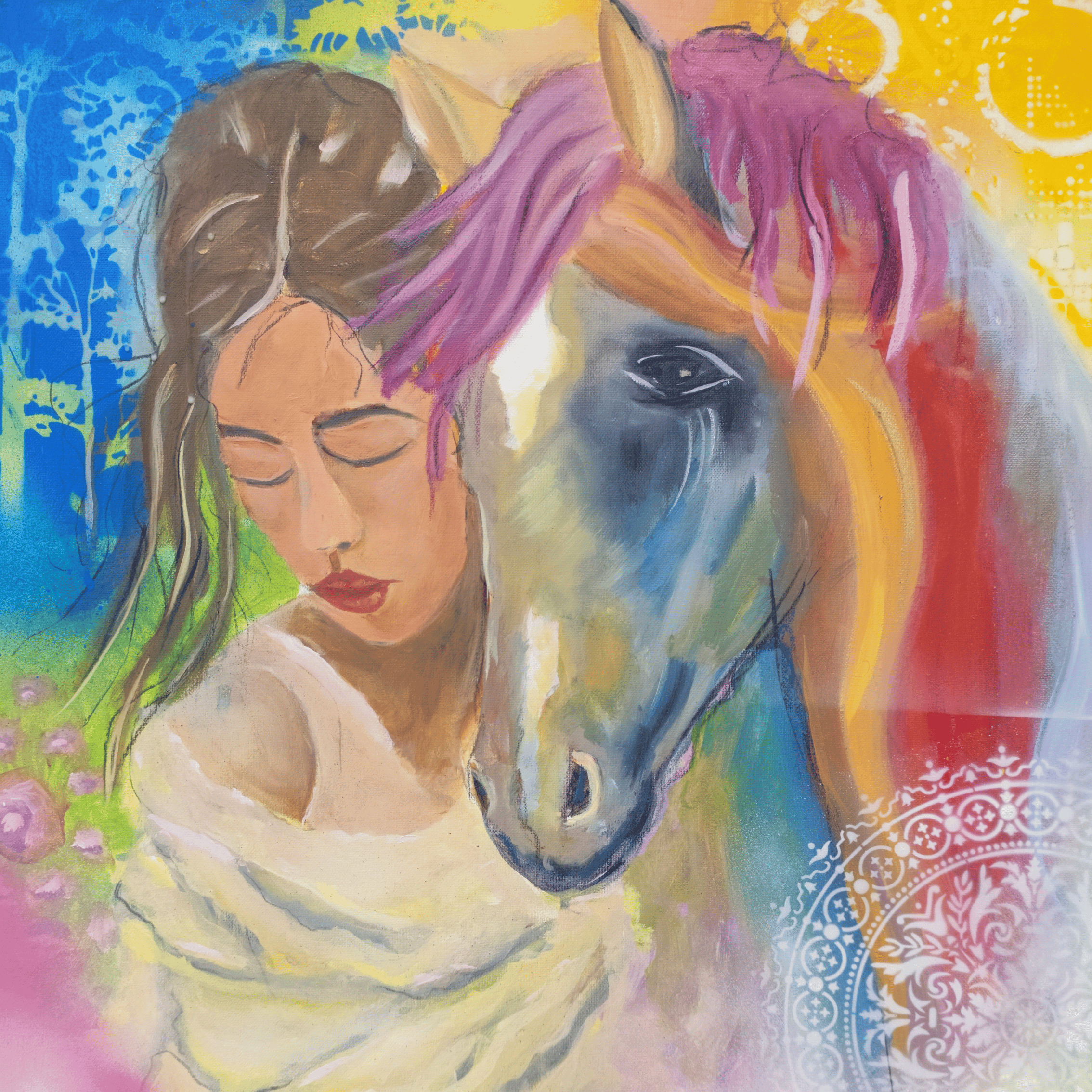
A narrative painting should do more than match a wall. It should hold a world.
If you are wondering how to commission narrative paintings, start there – not with size, not with color, not even with budget. Start with the story that keeps returning to you. The place you cannot forget. The encounter that changed your direction. The animal, landscape, family memory, or cultural thread that still feels alive in your body. A strong narrative painting begins when something meaningful asks to be seen.
This kind of commission is different from ordering a decorative piece. You are inviting an artist to translate memory, emotion, symbolism, and atmosphere into visual form. That takes trust, clarity, and room for interpretation. The result can be deeply personal, but only when both you and the artist understand that the goal is not perfect replication. It is resonance.
What makes a narrative painting different
A narrative painting carries a sense of movement, relationship, and emotional truth. It suggests that something has happened, is happening, or is about to happen. Sometimes the story is explicit – a journey through a rainforest, a meeting between people and wildlife, a scene rooted in cultural memory. Sometimes it is more intuitive, built through gesture, color, posture, and layered symbols.
That is why commissioning one requires more than a visual reference board. A narrative work asks for inner material. The artist needs to understand what matters beneath the surface. Why this story, and why now? What feeling should remain with the viewer after the first impression fades?
This does not mean you need to arrive with a polished concept. Often the most moving commissions begin with fragments – a notebook page, a remembered scent, a photograph from travel, a conversation with an elder, a sense of grief, devotion, wonder, or belonging. What matters is honesty.
How to commission narrative paintings with clarity
Before you approach an artist, take time to shape the commission in words. Not formal language, just true language. Write a short paragraph about the story you want the painting to hold. Include the emotional center, the setting if it matters, and any symbols that feel essential.
For example, maybe you want to honor a period of restoration in your life through a painting of mangroves, birds, and rising light. Maybe you want to capture the bond between a community and a threatened landscape without turning it into a literal documentary scene. Maybe the commission is a tribute to someone whose life was woven with animals, rivers, or migration. These are very different starting points, and the more clearly you can name yours, the better the collaboration will be.
It also helps to know what not to overcontrol. If you dictate every detail, the painting can lose breath. Narrative art needs space for intuition. You are commissioning an artist for their vision, not hiring a machine to assemble instructions. A good brief offers direction and emotional truth, then allows the artist to build the deeper language of the work.
Choosing the right artist for the story
Style matters, but sensitivity matters more.
An artist may be technically gifted and still not be the right person for your commission. Look for someone whose existing work already carries atmosphere, symbolism, or emotional depth close to what you are seeking. If your story involves nature, cultural memory, wildlife, or human connection, the artist should show genuine care for those themes. You can feel the difference between borrowed imagery and lived attention.
This is especially important when the narrative touches Indigenous cultures, sacred places, or conservation themes. A painting should not extract beauty from a story without respecting the people, land, or species involved. If your commission includes cultural references beyond your own experience, ask yourself whether you are approaching the story with humility. Then look for an artist who does the same.
Sometimes the best fit is not the artist with the most dramatic portfolio, but the one who listens well and responds with depth. A meaningful commission is a conversation before it becomes an object.
What to share in your commission brief
Once you have chosen an artist, your brief should be rich enough to guide the work without suffocating it. In most cases, the strongest briefs include the core story, the mood, the intended scale, the medium, and any practical constraints. Reference images can help, especially for landscapes, animals, garments, or significant objects, but they should support the narrative rather than replace it.
You may also want to share words instead of images. A line from your journal. A few feelings. A memory of light on water. The sound of insects at dusk. Narrative painters often work from sensory and emotional cues as much as visual ones.
At this stage, be open about budget and timing. This is part of respect. Original paintings take time, and stories with complexity often take more. If your deadline is tied to a ceremony, anniversary, or public event, say so early. If your budget is fixed, be honest. A good artist can tell you what is possible within that range, whether that means adjusting size, medium, or complexity.
The conversation that shapes the painting
The best commissions usually deepen through dialogue. After receiving your brief, the artist may ask questions you had not considered. Which part of the story is most important – the human figure, the landscape, the animal presence, or the emotional transition? Should the work feel intimate and quiet, or expansive and luminous? Do you want clear symbolism, or something more open-ended?
These questions are not obstacles. They are part of the art.
In some cases, the artist may create a concept sketch or written proposal before beginning the final work. This can be helpful, especially for complex stories. But a sketch is not the soul of the painting. Oil, texture, layering, and gesture often transform the original concept. Expect some evolution. That is not a sign the process is going off course. It is often a sign the work is becoming alive.
Trade-offs to understand before you begin
There is a quiet tension in every commission between precision and freedom. If you want a painting to capture a very specific memory exactly as it appeared, you may need a more representational approach. If you want the emotional truth of an experience rather than a literal scene, abstraction and symbolism may serve the story better.
Neither path is superior. It depends on what you want the painting to do.
There is also the question of emotional intensity. Some people ask for a narrative work because they want to hold something beautiful. Others want to process something difficult. Both are valid, but they lead to different artistic choices. A painting born from grief, ecological loss, or personal transformation may not feel easy at first. That does not make it less successful. Sometimes the most honest works ask to be lived with slowly.
How to commission narrative paintings without losing the magic
One of the easiest ways to weaken a commission is to treat every stage like a checkpoint for corrections. Of course, practical issues should be discussed. If a major symbol is missing or a key element has been misunderstood, say so. But try not to chase perfection in the early stages.
Narrative painting is not only about accuracy. It is about presence.
Give the artist room to surprise you. Very often, the detail you did not request becomes the emotional center of the work. A shadow. A gesture of the hand. The angle of a bird in flight. The way a forest seems to breathe around a figure. These things rarely arrive through overmanagement. They arrive through trust, attention, and artistic courage.
For purpose-driven commissions, this matters even more. When a painting is connected to biodiversity, cultural heritage, or a shared sense of responsibility toward the living world, it should feel more than descriptive. It should carry reverence. That kind of depth cannot be forced. It has to be invited.
After the painting is finished
When the work is complete, take time with it before judging too quickly. Narrative paintings often reveal themselves in layers. What feels subtle at first may become powerful over days and weeks. The painting may not mirror the image you first imagined, but it may express the deeper thing you were trying to reach.
If the commission has been built with care, what you receive is not just a custom artwork. It is a translation of meaning. A visual memory with its own pulse. A reminder of what you love, what you honor, what you refuse to forget.
That is the real answer to how to commission narrative paintings. Come with sincerity. Choose an artist with soul. Offer the story clearly, then leave space for mystery. The most unforgettable paintings are not the ones that explain everything. They are the ones that keep speaking long after the first glance.