The Madagascar art week experience begins long before the first sketch. It starts in that quiet moment when you realize you do not want another ordinary trip, another fast itinerary, another camera roll full of places you barely had time to feel. You want to stand still long enough for a landscape to enter you. You want to draw what moves, listen to what is ancient, and make something honest with your own hands.
That is what makes this kind of journey different. It is not tourism dressed up as creativity. It is an invitation to live inside a place for a little while, to notice its rhythm, its textures, its fragility, and its fierce beauty. In Madagascar, that means the rustle of palms, the red earth under your shoes, the sudden flash of a lemur through the trees, and the presence of communities whose relationship with land and tradition carries a wisdom many people have forgotten how to hear.
What a Madagascar art week experience really feels like
If you imagine a formal retreat with perfect studio lighting and neatly controlled inspiration, Madagascar may surprise you. The creative energy here is rawer, more alive. You sketch in changing weather. You paint with birds calling in the background. You work with colors that seem almost unreal until you look around and understand they belong fully to this place.
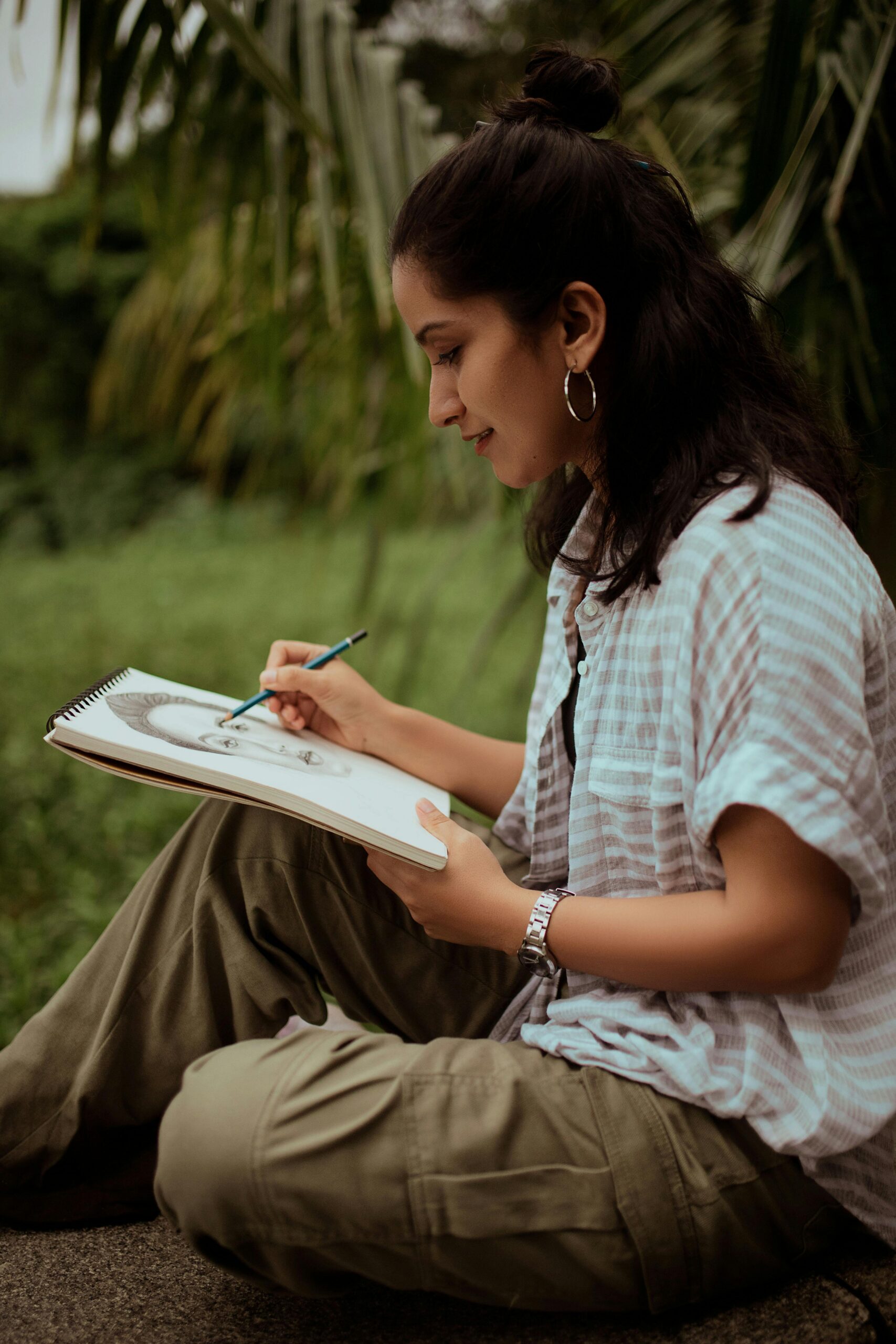
There is something deeply humbling about making art in nature that has not been flattened into convenience. The forest does not perform for you. The wildlife does not wait politely. A scene changes before you finish the line. That can feel challenging at first, especially for artists who are used to working from photographs or in the calm privacy of a studio. But that challenge is also a gift. It asks for presence instead of perfection.
This is why many artists come back changed by the experience, not only by what they create but by how they create. The hand loosens. The eye sharpens. The heart opens. You begin to trust gesture, instinct, and emotional truth a little more.
Art, travel, and purpose in one week
What gives the experience its real depth is that it is not only about personal inspiration. The work created during the week supports organizations that protect biodiversity, forests, animals, and local communities. That matters. It changes the energy of the whole journey.
When art is connected to a larger mission, something beautiful happens. Your sketchbook is no longer only a private space. Your painting becomes part of a conversation about care, protection, and responsibility. It does not mean every artwork needs to carry a heavy message. Sometimes a quick study of a tree branch or a portrait of a village scene can hold that care quietly. But the awareness is there. You are not just taking from the landscape. You are also giving something back.
For many people, this is the most meaningful part of the Madagascar art week experience. Travel can be enriching, but it can also feel extractive if we move through places without reciprocity. Creating art for a fundraising exhibition shifts that balance. It allows beauty to serve life.
Why Madagascar speaks so strongly to artists
Madagascar has a visual language of its own. The colors are rich but not predictable. The plant life feels sculptural. The wildlife has an almost mythical presence because so many species exist nowhere else. There is tenderness in the details and drama in the whole.
For painters and sketch artists, that creates endless tension in the best sense. Do you follow the broad atmosphere of the jungle, or the intricate line of a leaf? Do you focus on animals, on people, on the emotional weight of the landscape? There is no single right approach, and that freedom is part of the magic.
At the same time, Madagascar asks for sensitivity. It is easy to romanticize places that feel visually powerful. A more truthful artistic response goes deeper. It pays attention to nuance. It recognizes both wonder and vulnerability. It resists turning local culture, wildlife, or poverty into an aesthetic object. The strongest work often comes from respect, patience, and real observation.
The role of the group in a Madagascar art week experience
People often think of art as solitary, and in many ways it is. But a shared creative journey can be unexpectedly nourishing. During an art week, you are surrounded by others who also chose a less ordinary path. They came for the same reason you did – to feel, to learn, to make, to contribute.
That creates a rare kind of community. Some people will be experienced artists. Others may still be finding confidence in their materials. Both belong. The point is not to perform skill. The point is to stay open.
Working alongside others changes your process in subtle ways. You notice techniques you would not have tried. You hear how someone else interpreted the same scene completely differently. You remember that art is not a competition for the best image but a chorus of perspectives. Sometimes that alone can free an artist from years of self-judgment.
When the week is artist-led, there is also reassurance in being guided by someone who knows how to translate experience into artwork without overcontrolling the process. Good guidance does not make everyone paint the same way. It helps each person hear their own visual voice more clearly.
What to expect creatively
A practical truth: not every day will feel equally inspired. Some sessions may flow with ease. Others may feel messy, uncertain, unfinished. That is normal, especially in an environment as alive and unpredictable as Madagascar.
You may begin with quick observational studies, color notes, and visual journaling. These are not lesser works. They are often the doorway into stronger paintings later. A field sketch holds freshness that a polished studio piece can lose. If you come expecting masterpieces every day, you may miss the quiet power of process.
It also helps to release the idea that you must capture Madagascar fully. You cannot. No one can. What you can do is respond truthfully to the moments that stay with you. A pattern of light on bark. The movement of a child running past. The alert stillness of an animal in the distance. Art does not need to explain a place completely to honor it deeply.
What makes this more than a workshop
A workshop teaches technique. An art week like this can touch identity. It asks what kind of artist you become when you step away from comfort, routine, and noise. It asks whether beauty can move you into courage. It asks whether creativity can become a form of service.
That may sound lofty, but in practice it is very human. It is waking up tired and painting anyway. It is trying again after a page goes wrong. It is feeling small in a vast landscape and making one brave mark. It is sharing work that feels vulnerable because it came from a real encounter.
For those who travel with Bernadet Bijsterbosch, there is often an added sense of artistic sincerity in the journey. The focus is not on polished performance, but on experiencing the jungle, the people, the animals, and the act of creating with full attention and heart.
Who this experience is truly for
The Madagascar art week experience is for artists who want more than instruction. It is for people who feel alive in nature, who are moved by cultural encounter, and who believe art can hold both beauty and responsibility. You do not need to arrive fearless. Curiosity is enough.
It may be less suited to someone who wants a luxury trip with creativity as a side activity, or someone who needs complete control over schedule and setting. Madagascar has its own pace. The environment can be physically and emotionally demanding. Yet that is often what makes the week unforgettable. You are not cushioned from reality. You are brought closer to it.
And closeness changes the work. It changes the memories too. Long after the week ends, many artists find that the experience continues to echo through future paintings, new ideas, and a deeper trust in what calls them.
If you feel that pull, pay attention to it. Some journeys arrive as an opportunity, but feel more like a recognition. As if a place, a purpose, and a creative longing have been waiting to meet each other in the same moment.
Join us for our next trip!