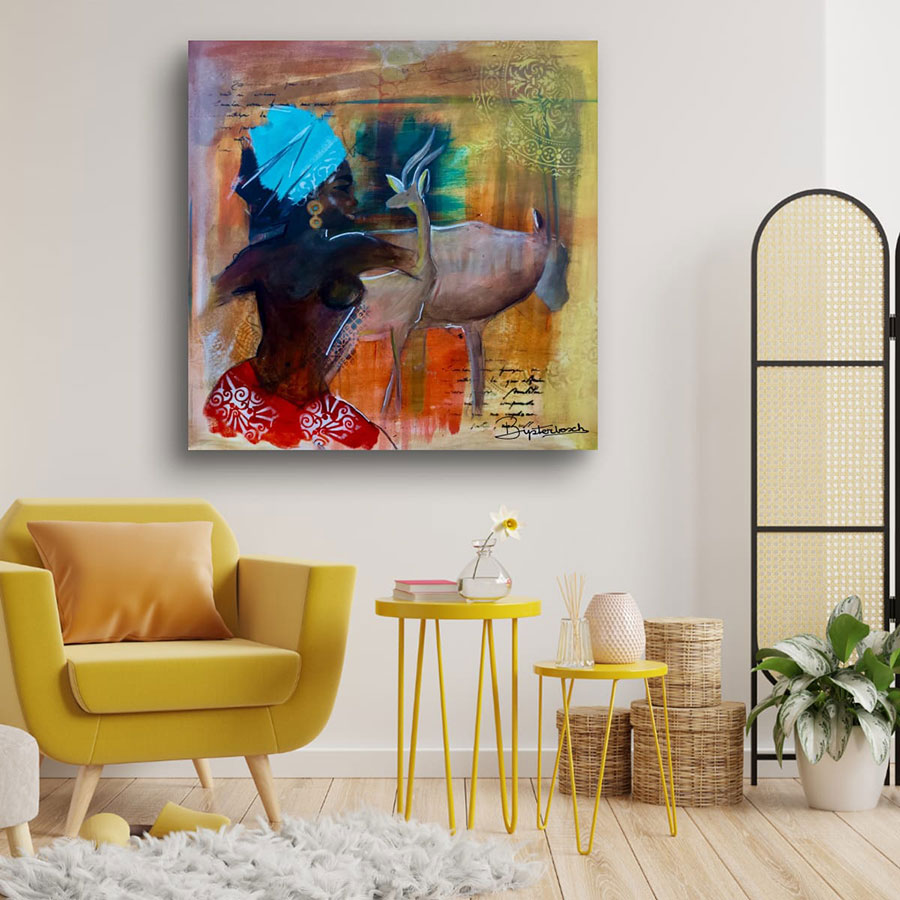
A living room tells the truth about how you want to feel at home. Before anyone notices the sofa fabric or the shape of the coffee table, they feel the atmosphere. That is why original oil paintings for living room spaces matter so much. They do more than fill a wall. They set a tone, hold emotion, and quietly shape the energy of the room every single day.
If you have ever stood in a beautifully designed room and felt that one artwork made everything come alive, you already understand the difference. Original art has presence. The texture of brushwork, the depth of pigment, the human hand behind the piece – all of that creates a kind of living warmth that mass-produced decor rarely carries.
Why original art changes a living room
A living room is where life gathers. It holds conversation, rest, celebration, reading, music, and sometimes silence. Because it serves so many moods, the art you place there has a special responsibility. It should feel layered enough to keep revealing itself, yet calm enough to live with.
Original oil paintings are especially powerful in this setting because oil paint has richness. Colors tend to feel deeper, surfaces catch light softly, and the material itself brings a sense of substance. Even a quiet palette can feel luminous in oil. That matters in a room where natural light shifts throughout the day and lamps create a different mood at night.
There is also the emotional factor. People often choose furniture for function first, but art is where personality enters. A painting inspired by nature, travel, wildlife, cultural memory, or abstract movement can anchor the room in something more personal than trend. It can remind you of who you are, what you love, and what kind of beauty you want near you.
How to choose original oil paintings for living room spaces
The best piece is not always the loudest or the biggest. It is the one that creates a meaningful relationship with the room.
Start with feeling, not color matching
Many people begin by asking what painting will match the pillows. That can work, but it often leads to safe choices that disappear into the background. A stronger question is this: how do you want the room to feel?
If you want calm, look for paintings with breathing space, organic forms, softened edges, or grounded earth tones. If you want vitality, expressive brushwork and richer contrasts may bring the life you are craving. If your living room is where you host and connect, a painting with movement, warmth, or a sense of story can make the space feel more alive.
Color still matters, of course. But instead of matching every tone exactly, look for resonance. A painting can echo one note from the room, then introduce two or three others that deepen the palette. That tension often feels more refined than perfect coordination.
Let scale do some of the work
Scale is one of the most common reasons art feels right or wrong in a living room. A painting that is too small above a sofa can feel apologetic. One that is too large for a narrow wall can overwhelm the architecture.
As a general visual rule, art above a sofa often looks balanced when it spans around two-thirds of the sofa width. But rules only help so much. What really matters is visual weight. A richly textured medium-size painting may command more presence than a larger but quieter piece.
If your room has high ceilings or open-plan architecture, larger original oil paintings can help create intimacy. They pull the eye upward and outward while still giving the room a center. In smaller spaces, a medium-size work with emotional depth can feel more elegant than trying to force a grand statement where there is no breathing room.
Think about the room’s rhythm
A living room already has movement. Windows, furniture lines, textiles, lighting, shelving, and negative space all create visual rhythm. The painting should either steady that rhythm or intentionally interrupt it.
In a room with many straight lines, a more fluid or expressive painting can soften the structure. In a room full of pattern and layered decor, a painting with a clearer focal point may bring needed quiet. Neither choice is better. It depends on whether the room needs energy or rest.
Subject matter and what it brings into the room
The subject of a painting changes how a room feels, sometimes more than color does.
Nature-based paintings tend to bring restoration. Landscapes, botanical forms, wildlife, and organic abstractions often create a sense of openness and exhale. They are especially beautiful in living rooms meant for decompression.
Portrait-driven work can make a room feel intimate and soulful. There is a human presence in portraiture that invites reflection. It can be powerful, but it asks for the right setting. If the room is already emotionally busy, a portrait may intensify that. If the room feels polished but impersonal, it may be exactly what is missing.
Abstract oil paintings offer a different kind of freedom. They often work beautifully in contemporary interiors and can hold complex emotion without becoming literal. For many collectors and designers, abstraction gives a space atmosphere without dictating a single interpretation. That is part of its beauty. You can live with it over time and keep finding new meaning.
Original oil paintings for living room walls with real presence
When people say they want a statement piece, what they often mean is a painting with presence. Presence is not only about bold color. It can come from silence, mystery, tenderness, or unexpected composition.
A painting with real presence tends to hold the room without competing with everything in it. You notice it, then you keep noticing it. It has enough depth to stay interesting from across the room and up close. The brushstrokes matter. The layers matter. The story behind it matters too, even if that story is felt more than explained.
This is one reason original art often becomes the emotional center of a home. It grows with you. Over time, it is no longer just something you bought. It becomes part of the memory of the space itself.
What to consider before you buy
A beautiful painting can still be the wrong choice if it does not suit your space or your way of living.
Light matters. Oil paintings can glow in natural light, but placement matters if a wall receives strong direct sun for long periods. Framing matters too, depending on the style of the piece and the mood you want. Some paintings feel complete with raw edges and visible canvas. Others become more architectural and grounded with a frame.
You should also think about what kind of relationship you want with the artwork. Are you looking for a bold focal point above the sofa, or a quieter piece near a reading corner? Do you want the painting to energize the room, or to soften it? These are not small questions. They shape the experience of living with the work.
Budget has its place here as well. An original oil painting is both an aesthetic decision and, for many buyers, an investment in something lasting. If an original feels out of reach right now, it can help to begin by learning your taste through artist-made prints, then move toward collecting originals when the moment feels right. What matters most is buying with intention rather than rushing toward filler.
Living with art that reflects something true
The most memorable living rooms are rarely the most expensive ones. They are the ones that feel inhabited by meaning. A painting with emotional honesty can do that almost instantly. It can turn a styled room into a personal one.
At Bijsterbosch Art, that belief sits at the heart of the work: art should not simply decorate a wall, but bring beauty, curiosity, peace, and a sense of connection into daily life. That is why choosing original oil paintings for living room spaces is not only a design decision. It is a way of shaping how home feels.
When you choose a piece, give yourself permission to listen for more than style. Notice what slows you down, what stirs memory, what creates ease in your body, what feels quietly brave. The right painting does not just fit your living room. It changes the room by asking you to feel more at home inside it.