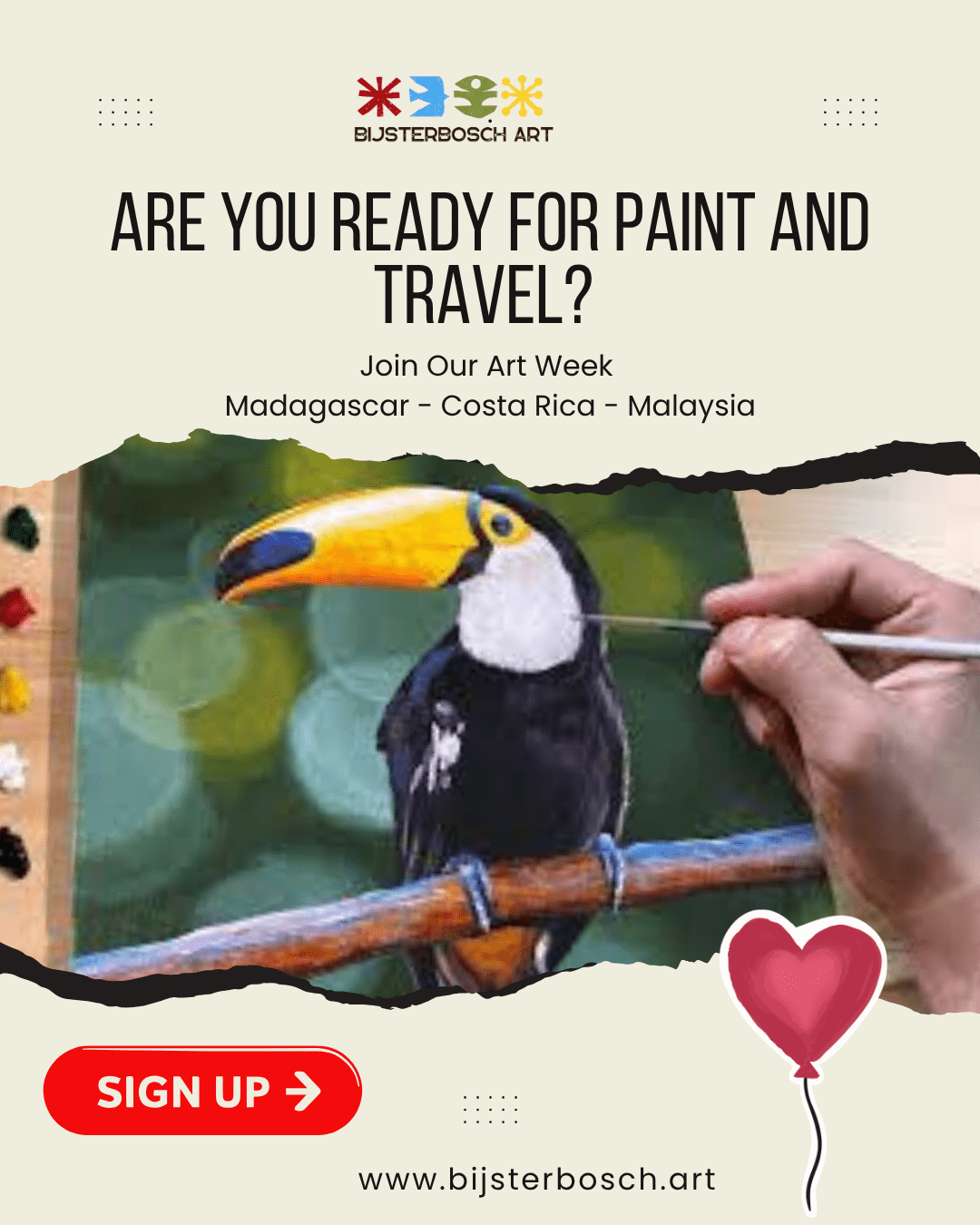
A painting of a rainforest canopy can stop someone in their tracks. A portrait of an endangered animal can stir grief, awe, and tenderness at once. That is where the question what is conservation art begins – not as a label, but as a felt experience. Conservation art is creative work that helps protect nature, wildlife, biodiversity, and often the human cultures deeply connected to those living landscapes.
It is art with a heartbeat beyond aesthetics. Not propaganda, and not decoration with a green message attached at the end. At its strongest, conservation art carries beauty and responsibility together. It invites people to care first, and then gives that care somewhere meaningful to go.
What is conservation art?
Conservation art is art created to raise awareness, inspire emotional connection, and support the protection of ecosystems, species, and communities. Sometimes that support is direct, through fundraising, partnerships, or exhibitions that benefit nonprofits. Sometimes it works more quietly, shaping how people see a place, an animal, or a threatened way of life.
The form can vary widely. It might be painting, photography, sculpture, installation, textile work, printmaking, or collaborative projects made with local communities. What makes it conservation art is not the medium. It is the intention, the relationship to the subject, and the impact the work is designed to create.
That said, intention alone is not enough. A piece can feature wildlife and still have very little to do with conservation. An image of a tiger is not automatically conservation art simply because tigers are endangered. The work becomes conservation art when it participates in a larger act of protection – by educating, fundraising, witnessing, honoring, or building support for those doing the work on the ground.
More than wildlife art
People often confuse conservation art with wildlife art, and there is overlap. Both may celebrate animals, landscapes, and the natural world. But wildlife art can exist purely for admiration or study, while conservation art usually carries a clearer purpose.
That purpose may be to draw attention to habitat loss, poaching, pollution, deforestation, ocean decline, or the fragile balance between human activity and biodiversity. It may also highlight Indigenous stewardship, ancestral knowledge, and the cultural heritage bound to a place. In that sense, conservation art is not only about saving species. It is also about protecting relationships – between land and people, memory and place, beauty and responsibility.
This is part of what gives the genre its emotional depth. It asks artists and viewers alike to move beyond observation. You are not only looking at nature. You are being invited into a bond with it.
Why conservation art matters
Facts matter, but facts alone rarely change hearts. Most people do not act because they were handed another statistic. They act because something becomes real to them. Art can make that happen with extraordinary force.
A work of conservation art can translate a distant crisis into something intimate. A vanishing forest becomes a remembered silence. A threatened bird becomes a presence with character and dignity. A community defending its land becomes not an abstract headline, but a living story.
This emotional bridge matters because conservation often struggles with distance. The places under pressure may be far away. The species at risk may be unfamiliar. The systems involved can feel overwhelming. Art narrows that distance. It makes the invisible visible and the unfamiliar personal.
There is also a practical side. Conservation art can generate funding for nonprofit organizations, fieldwork, habitat protection, education, and community-led initiatives. When artists collaborate with conservation partners in thoughtful ways, the work can create support that lasts beyond a single campaign. That is especially powerful when creativity is tied to long-term giving rather than one-time attention.
What makes conservation art credible?
Not every artwork about nature is automatically ethical or informed. This is where nuance matters.
Credible conservation art is rooted in respect. It does not use wildlife, Indigenous cultures, or threatened places as dramatic symbols without care for the real lives involved. It asks deeper questions. Who is represented here? Who benefits? Whose story is being told, and who gets to tell it?
Artists working in this space often spend time learning from scientists, conservationists, local guides, and communities. They pay attention to context. They avoid turning urgent realities into empty visual romance. Beauty still has a place, of course. In many ways, beauty is one of the most powerful reasons people choose to protect something. But beauty without honesty can flatten complexity.
The strongest conservation art holds both wonder and truth. It can celebrate the brilliance of nature while acknowledging loss, conflict, and vulnerability. It can honor cultural traditions without reducing them to an exotic backdrop. It can inspire action without becoming heavy-handed.
The different ways conservation art creates impact
Some conservation art works by awakening emotion. Some works by educating. Some works by raising money. Often, the most meaningful projects do all three.
An exhibition might be built around a threatened ecosystem, giving visitors a visual and emotional entry point into the realities facing that region. A series of paintings may support a nonprofit partner through a percentage of sales. An immersive art journey into a biodiversity hotspot may allow artists to witness a landscape firsthand, meet local communities, and create work that carries lived experience rather than secondhand imagery.
This matters because conservation is rarely solved by awareness alone. Awareness is the opening, not the finish line. For art to have lasting power in this field, it helps to be connected to real pathways of support.
That is why partnership is so important. When artists, conservation organizations, and local communities work in alignment, art can become more than a message. It becomes part of an ecosystem of care.
What is conservation art without story?
Very little, honestly. Story is often the difference between an image that is merely attractive and one that lingers in the soul.
Conservation art carries story in many forms. It may tell the story of a species on the edge, a forest under threat, a coastline changing, or a people defending ancestral land. It may also tell a more intimate story – of wonder, encounter, grief, reverence, and transformation.
This is one reason travel and firsthand experience can shape conservation art so deeply. When an artist has walked through a jungle at dawn, listened to local voices, or sat quietly in the presence of wildlife, the work tends to carry a different kind of truth. Not perfect truth, because no artist sees everything. But embodied truth. The kind that can be felt.
For artists drawn to this path, the challenge is not only to make something beautiful. It is to remain open enough to be changed by what they witness, and honest enough to let that change enter the work.
The tensions inside conservation art
There are real tensions in this field, and pretending otherwise would flatten it.
One tension is between urgency and subtlety. If the message is too obvious, the work can feel like a poster. If it is too subtle, the purpose may disappear. Another tension is between beauty and damage. Should the artist show the splendor worth protecting, or the destruction that demands response? Often, it depends on the audience and the intention behind the piece.
There is also the question of representation. Conservation conversations have not always centered the people who live closest to the land. Good conservation art should be alert to that history. It should make room for collaboration, listening, and humility.
These tensions do not weaken the genre. They are part of what makes it alive. Conservation art is not a fixed formula. It is an evolving practice that asks artists to create with conscience as well as skill.
A living definition of conservation art
So, what is conservation art in the fullest sense? It is art that deepens our relationship with the natural world and helps protect what is vulnerable. It is creative work shaped by wonder, guided by responsibility, and connected to real-world care.
Sometimes it looks like a painting that makes someone fall in love with a species they had never noticed before. Sometimes it looks like a shared exhibition that helps fund the protection of a threatened landscape. Sometimes it begins in travel, encounter, and courage, and grows into a body of work that gives both beauty and support back to the places that inspired it.
At Art-To-Protect, that belief lives at the center of the journey: art is not separate from life, and beauty is not separate from action. When creativity is rooted in reverence, it can become a quiet but enduring force for change.
If conservation art calls to you, let it ask more of you than admiration. Let it sharpen your attention, soften your heart, and remind you that protecting the living world can begin with something as human and powerful as the act of seeing.