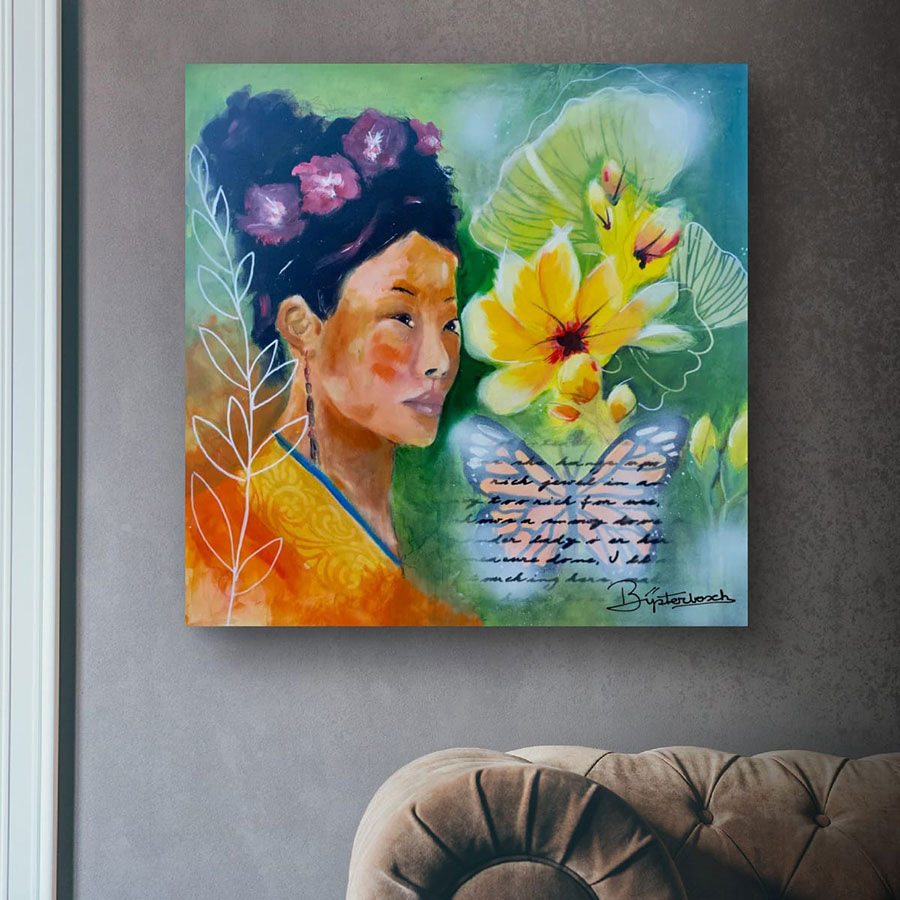
A room can be beautifully designed and still feel like it is waiting for its soul to arrive. That shift often happens when fine art oil on canvas enters the space. Not because it simply fills a wall, but because it carries presence – texture, mood, memory, and the unmistakable feeling that a human hand made this.
For collectors and home decorators alike, oil on canvas continues to hold a quiet power. It does not rush to impress. It lingers. It changes with the light across the day, reveals brushwork as you move closer, and brings a kind of depth that flat reproductions rarely match. When a painting is chosen well, it does more than decorate. It creates atmosphere. It tells the room how to feel.
What makes fine art oil on canvas different
There is a reason oil painting has remained beloved across centuries. Oil paint has body. It can be layered into velvety shadows, luminous skin tones, wild skies, soft horizons, and rich passages of color that seem to glow from within. On canvas, that material comes alive in a tactile way. You do not only see the image. You sense the movement that made it.
That physicality matters in a home. A real painting brings variation and breath into a space. It softens clean architectural lines, adds warmth to minimalist interiors, and gives personality to rooms that might otherwise feel too polished or impersonal. Even abstract work in oil has a grounded, handmade quality that helps a space feel more lived in and emotionally complete.
This is also where the difference between mass-produced wall decor and fine art becomes clear. Fine art is shaped by intention. The composition, the palette, the mark-making, the subject – all of it carries a personal vision. That vision is what gives a piece staying power. Trends pass. Emotional truth lasts.
Fine art oil on canvas and the feeling of a room
When people choose art for their homes, they often begin with size, color, or where the piece will hang. Those details matter, of course, but they are not the heart of the decision. The deeper question is more intimate: how do you want to feel when you live with this every day?
A painting can bring calm to a bedroom, curiosity to an entryway, tenderness to a dining room, or courage to a creative workspace. Nature-inspired work often carries a restorative quality. Portraits can create connection and presence. Travel-rooted imagery can awaken memory and longing. Abstract paintings may offer openness, rhythm, or emotional release without needing to explain themselves.
This is why oil on canvas is such a meaningful choice for personal interiors. It has emotional weight. It does not disappear into the background unless you want it to. It can be the quiet center of a room or the piece that gathers every glance.
For many art buyers, the right painting feels strangely familiar from the start. It may remind them of a landscape they once stood inside, a feeling they have been trying to name, or a version of themselves they want to live closer to. That kind of recognition is hard to manufacture. It is one of the gifts of original art.
How to choose fine art oil on canvas for your home
Choosing artwork can feel deeply intuitive, but intuition becomes easier to trust when you know what to look for. Start with the room itself. Notice the natural light, the pace of the space, and what that room is meant to hold. A lively social room can welcome bolder contrast and movement. A place of rest may ask for softness, depth, and breathing room.
Then consider scale. One large canvas can create a stronger emotional impact than several smaller pieces competing for attention. On the other hand, a smaller painting placed thoughtfully can feel jewel-like and intimate. It depends on the architecture, the furniture around it, and how much visual quiet you want to preserve.
Color deserves attention, but not obedience. Art does not need to match the sofa to belong in the room. In fact, perfect matching can flatten a space. A better approach is to look for conversation – a repeated tone, a complementary warmth, or a contrast that makes both the room and the painting more alive.
Subject matter matters too, but not in a rigid way. Some people are drawn to wildlife because it brings vitality and strength. Others want human figures, landscapes, or abstract forms because those subjects reflect something personal and inward. There is no universal rule here. The right choice is the one that keeps speaking to you after the practical questions are answered.
Original paintings versus prints
Not every collector begins with an original, and that is perfectly natural. Prints can be a beautiful entry point into living with art you love, especially when you are building a collection gradually or working across several rooms at once. They make certain images more accessible and allow more people to bring meaningful visual stories into their homes.
Still, original fine art oil on canvas offers something singular. It carries the texture of the artist’s hand, the subtle shifts in paint thickness, and the small surprises that happen only once. No two originals hold space in exactly the same way. That uniqueness is part of their emotional and collectible value.
This is not really a question of better or worse. It is a question of experience. A print can bring beauty and atmosphere. An original often brings presence in a fuller, more physical sense. Many collectors choose both, reserving original works for anchor spaces and using prints to extend a visual story elsewhere in the home.
Why story matters as much as technique
A technically skilled painting can still leave you untouched. What often makes a work unforgettable is the life inside it – the sense that it came from a real encounter with beauty, movement, grief, wonder, culture, landscape, or love.
That story does not have to be explained in full for you to feel it. In fact, some of the most powerful paintings leave room for your own memory to meet the artist’s. A portrait may carry dignity and tenderness beyond the identity of the subject. A landscape may feel like freedom, even if you have never walked that exact terrain. An abstract canvas may echo the emotional weather of a season in your life.
This is where soulful art becomes more than an aesthetic decision. It becomes relational. You live with it. You notice new details over time. It accompanies ordinary mornings and difficult seasons. It reflects light differently in winter than in summer. It becomes part of the emotional architecture of home.
At Bijsterbosch Art, that sense of story lives at the center of the work – in paintings shaped by nature, travel, human beauty, and the quiet strength found in both wild places and everyday life.
Living with oil on canvas over time
One of the loveliest things about oil paintings is that they do not give everything at once. They unfold. You may first fall for a color palette, then later notice a hidden tenderness in the brushwork, a tension in the composition, or a softness in the transitions that you missed on day one.
This long relationship is part of what makes collecting art so meaningful. Furniture serves a function. Art keeps revealing itself. It can steady you, inspire you, or simply remind you to look more closely.
There are practical considerations, of course. Original oil paintings should be displayed with care, away from direct harsh sunlight and excessive moisture. Good framing or thoughtful presentation helps preserve the work while allowing it to breathe within the room. But these are gentle forms of stewardship, not burdens. Caring for art can deepen your connection to it.
And when chosen with honesty, a painting does something rare. It keeps meeting you where you are, while quietly inviting you somewhere more spacious, more beautiful, and more alive.
The best fine art oil on canvas does not ask to be glanced at and forgotten. It asks to be lived with. If a piece gives you that unmistakable feeling of recognition, peace, or wonder, trust it. Your walls are not only there to be filled. They are there to hold what matters.