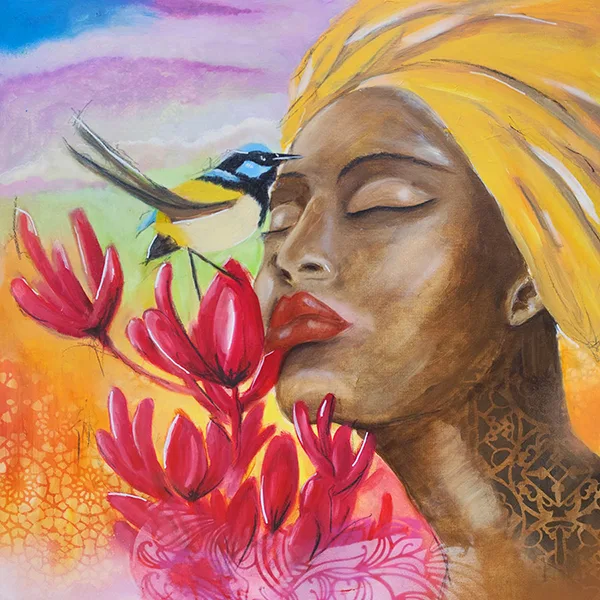
Some artworks catch your eye for a moment. Others stay with you because they carry a life inside them. That is the quiet power of story driven art collections. They do not simply present an image, a palette, or a technique. They hold a place, a memory, a meeting, a species, a human presence, a question. They ask you to feel something before you explain it.
For artists and art lovers who care about nature, culture, and purpose, that difference matters. A collection with a true narrative pulse creates a deeper relationship between the work and the person standing before it. It becomes less about surface appeal and more about emotional recognition. You are not only seeing art. You are entering an experience that has already transformed the artist, and may begin to transform you too.
What makes story driven art collections different
A story is not an add-on. It is not a paragraph written later to make the work easier to market. In the strongest story driven art collections, the story is present from the first spark of inspiration. It shapes what the artist notices, which moments are worth preserving, how color is used, what symbols return, and where tension or tenderness lives within the work.
Sometimes that story begins in the wild – with a rainforest path, an unexpected animal encounter, or the silence before dawn in a landscape that feels older than language. Sometimes it begins in human connection – a conversation with a local guide, the dignity of an Indigenous community protecting ancestral knowledge, or a fleeting expression that reveals vulnerability and strength at once. The finished collection becomes a record of these encounters, but not in a documentary sense. It is an emotional translation.
That is why these collections often feel richer than a set of visually related works. The link between pieces is not only aesthetic consistency. It is meaning. Each work is part of a larger current, and each piece deepens the one beside it.
The emotional truth behind the work
People respond to emotional truth long before they analyze style. They feel when an artwork comes from lived experience rather than trend, from devotion rather than formula. Story driven art collections carry that sincerity in a way that is hard to fake.
This does not mean every piece needs a dramatic backstory. Quiet stories can be just as powerful. A series inspired by endangered birds, forest rituals, changing coastlines, or everyday gestures of resilience can hold extraordinary emotional depth without becoming heavy-handed. In fact, subtlety often gives the viewer more room to connect personally.
Still, there is a trade-off. If the narrative is too vague, the collection can feel decorative rather than resonant. If it is too literal, the work can lose mystery. The most moving collections tend to live in that delicate middle space where the story is clear enough to guide you, yet open enough to let you feel your own way through it.
Why artists return to narrative again and again
Artists rarely create their most lasting work by chasing what is popular. They create it by following what continues to call them back. Story offers that returning force. It gives a collection internal coherence and emotional stamina.
When an artist works from story, decisions become more intuitive. The subject matter is no longer random. Materials, marks, color relationships, and recurring motifs begin to serve something deeper than novelty. Even experimentation gains direction. The work can evolve freely while still belonging to the same emotional world.
This matters especially for artists who travel, collaborate across cultures, or respond to endangered ecosystems. Without a clear narrative center, a collection can become fragmented – visually interesting perhaps, but scattered. Story creates the thread that allows complexity to remain alive without becoming chaotic.
For some artists, that thread is personal memory. For others, it is a larger act of witnessing. Both can be valid. What matters is honesty. Audiences can sense when a collection is rooted in genuine connection and when it is simply borrowing the language of meaning.
Story driven art collections and the language of place
Place has its own voice. Not just in landscape, but in rhythm, atmosphere, danger, tenderness, and contradiction. A collection inspired by Madagascar should not feel interchangeable with one born in Costa Rica or Malaysia. Even if all three are lush, biodiverse, and visually abundant, each carries different cultural textures and ecological realities.
This is where story becomes essential. It protects the work from flattening place into a backdrop. Instead of using nature or culture as an exotic surface, the artist is invited into relationship. The collection can then reflect not only what was seen, but what was learned, questioned, admired, or grieved.
That approach asks more of the artist. It requires humility, time, and the willingness to let the experience shape the work rather than simply decorate it. But the result is art that feels alive with respect. It holds wonder without reducing its subject.
When beauty carries responsibility
There is nothing wrong with wanting art to be beautiful. Beauty can open the heart faster than argument ever will. Yet in story driven art collections, beauty often carries something more demanding. It can become a doorway into awareness.
A painting of wildlife may first draw someone in through color and movement. But if the collection is rooted in habitat loss, species fragility, or local conservation efforts, the encounter does not end at admiration. It deepens into relationship. The viewer begins to understand that what is beautiful is also vulnerable.
This is one reason purpose-driven art can be so affecting. It does not lecture. It invites. It creates a bridge between emotion and action. In that sense, storytelling is not only an artistic choice. It can also be an ethical one.
At Art-To-Protect, this idea lives at the center of the creative journey – that art can carry beauty, memory, and real support for the people and ecosystems that inspire it.
How viewers experience narrative in art
Not everyone reads a wall text. Not everyone wants a full explanation. That is worth remembering. Story in art is not only delivered through words. It is felt through atmosphere, repetition, symbolism, scale, contrast, and gesture.
A viewer may not know the full origin of a collection and still sense its emotional architecture. They may feel the reverence in the way an animal is portrayed, the tension in fractured forms, or the tenderness in layered color. Later, when they learn more about the source of the work, that feeling gains language.
This is often the most powerful sequence. First the heart responds, then the mind understands. If the order is reversed, the experience can become too intellectual. If meaning never arrives, the connection may remain shallow. Strong narrative collections allow both responses to exist together.
The risk of forcing a story
Of course, not every body of work needs a grand narrative to have value. Some pieces arise from instinct, pure formal exploration, or the simple joy of making. That has its place. The trouble begins when artists feel pressured to invent a story because the market expects one.
Forced storytelling tends to sound polished but empty. It overexplains. It uses borrowed language about transformation, connection, and purpose without any lived substance beneath it. Viewers may not name the problem directly, but they usually feel it.
A real story does not need embellishment. It needs clarity. Sometimes a single truthful sentence is enough to anchor an entire collection: this work came from witnessing a disappearing forest; this series was shaped by time spent among communities protecting ancestral land; these paintings began after an encounter that changed the artist’s understanding of freedom and belonging.
From there, the work can breathe.
What lasting collections leave behind
The most memorable collections do more than present images. They leave a trace in the inner life of the viewer. They remind us that art can carry devotion, witness, and courage. They offer not escape from the world, but a more intimate way of meeting it.
For artists, that is an invitation to create from deeper ground. For those drawn to meaningful work, it is a reminder to look beyond appearance and ask what life is moving beneath the surface. When a collection is shaped by real story, it continues unfolding long after the first encounter.
And that may be the real gift of story driven art collections: they help us remember that beauty becomes even more powerful when it is rooted in presence, shaped by care, and alive with something worth protecting.