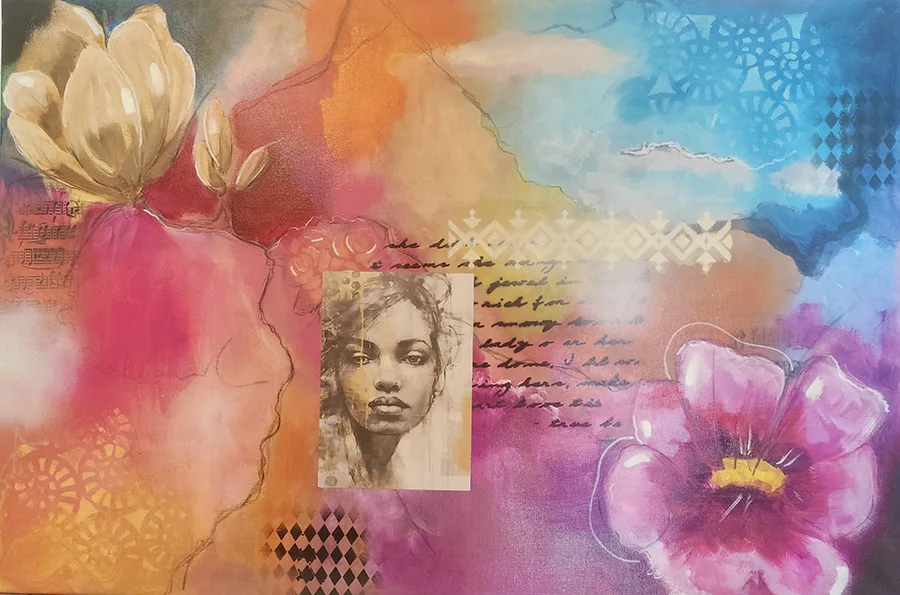
A painting made after walking through a rainforest does something a fundraising brochure never can. It holds humidity, birdsong, tension, grief, awe. That is why the future of nonprofit art collaborations feels so promising right now. People are not only looking for causes to support. They are looking for ways to feel connected to what they are helping protect.
For many years, nonprofit and art partnerships were often short campaigns – a charity auction, a gala donation, a one-night exhibition with a good intention and a fast deadline. Those efforts can still raise awareness, and sometimes they raise meaningful funds. But they rarely build a living relationship between artist, organization, place, and audience. What is changing now is not just the format. It is the expectation.
Artists want their work to carry purpose without losing its soul. Nonprofits want funding models that do not vanish after one event. Supporters want to experience impact in a way that feels real, human, and lasting. When those three desires meet with honesty, a new kind of collaboration becomes possible.
Why the future of nonprofit art collaborations looks different
The strongest collaborations ahead will be built less on sponsorship language and more on shared values. That sounds simple, but it changes everything. If an artist is invited in only to decorate a cause, people can feel the distance. If a nonprofit uses art only as a marketing layer, the result often feels thin. But when both sides are shaped by a genuine relationship to land, culture, biodiversity, memory, and community, the work gains emotional depth.
This matters especially in conservation and cultural preservation. These are not abstract issues. They are lived realities, often carried by Indigenous communities, local knowledge keepers, field teams, and ecosystems under pressure. Art can translate that reality into something people feel in their bodies. Not because it simplifies the issue, but because it gives it texture.
The future will belong to collaborations that respect complexity. A wildlife painting can inspire wonder, but it should also leave room for truth – habitat loss, displacement, fragile funding, and the patience real protection requires. A portrait shaped by cultural encounter can create deep recognition, but only if it comes from listening rather than extraction. That balance between beauty and responsibility will define which partnerships earn trust.
From one-time fundraising to long-term creative ecosystems
One of the most important shifts is financial. Nonprofits are under constant pressure to raise money quickly, while artists are often asked to contribute time and work in ways that are generous but unsustainable. The old model can leave both sides depleted. The next chapter needs a better rhythm.
Instead of one-off collaborations, we are seeing the rise of creative ecosystems. That can include traveling exhibitions tied to a conservation story, ongoing merchandise programs that fund a partner over time, immersive art residencies connected to endangered landscapes, or educational experiences where art becomes a doorway into advocacy. The point is not to add more activity for the sake of it. The point is to create continuity.
Continuity changes behavior. It gives nonprofits a better chance of receiving recurring support. It gives artists a framework for deeper research and more honest storytelling. It gives audiences time to build a relationship with a place or mission rather than responding to one emotional appeal and moving on.
This is where the future of nonprofit art collaborations becomes more than a trend. It becomes infrastructure. A thoughtful collaboration can create recurring income, sustained visibility, and a community that grows around shared care.
Experience will matter as much as the artwork
People remember what they have lived. That is why immersive, place-based collaborations are likely to become even more powerful in the years ahead. When artists spend time in a biodiversity hotspot, witness conservation work firsthand, or meet communities protecting ancestral land, the art that follows carries a different kind of truth.
That does not mean every collaboration has to involve travel. It does mean direct experience matters. Sometimes that experience is physical. Sometimes it comes through extended dialogue, field recordings, archival material, or long-term partnership with people on the ground. What matters is closeness to the story.
Audiences can feel the difference. They know when a work was made from a distance and when it was shaped by encounter. The future will favor art that emerges from presence, humility, and relationship.
Technology will expand reach, but not replace intimacy
Digital platforms are opening useful possibilities for nonprofit art partnerships. Online exhibitions, storytelling films, virtual studio access, and mission-driven shops can extend the life of a collaboration far beyond a gallery opening. For organizations with global supporters, that reach matters.
But there is a trade-off. More digital visibility does not automatically create more emotional depth. In fact, when everything is optimized for speed, important stories can become flattened. A forest becomes content. A community becomes a campaign image. An artist’s process becomes a promotional clip stripped of its vulnerability.
So the question is not whether technology belongs in the future of nonprofit art collaborations. It does. The better question is how to use it without losing intimacy. The most meaningful platforms will be the ones that protect story, context, and authorship. They will invite people closer rather than pushing them faster.
This is where thoughtful curation matters. A digital shop tied to a nonprofit can create ongoing support, but only if it reflects the values behind the work. An online exhibition can reach thousands, but only if the narrative remains grounded in respect and real collaboration. Scale is helpful. Soul is essential.
Artists will be expected to stand for something
There was a time when social impact in the art world could sit at the edge of an artist statement. That edge is disappearing. More artists are asking themselves what their practice serves, whose stories they engage, and what kind of legacy their work helps shape.
This is not a call for art to become propaganda. Art loses power when it is forced into slogans. What is changing is the appetite for sincerity. Audiences are drawn to artists who create from conviction, especially when that conviction is lived and not borrowed for appearance.
For artists interested in nonprofit collaboration, this means discernment matters. Not every partnership is right just because the cause sounds good. The strongest work comes when the mission genuinely intersects with the artist’s own emotional landscape. Nature, cultural memory, wildlife, migration, ritual, belonging, loss, resilience – these are not marketing themes. They are creative roots.
When an artist works from those roots, collaboration becomes an extension of practice rather than a side project. That is where lasting resonance begins.
Nonprofits will need to think like cultural stewards
The shift is not only for artists. Nonprofits will need to move beyond transactional outreach and become more thoughtful cultural stewards. That means making space for process, dialogue, and ethical representation. It also means understanding that art can do more than illustrate a mission. It can deepen it.
A good nonprofit partner does not ask only, “How can this artwork help us fundraise?” It also asks, “What story are we inviting into the world, and are we caring for it well?” That question changes the quality of collaboration.
It may require slower timelines, more shared decision-making, and clearer agreements around voice, benefit, and community involvement. That can feel less efficient at first. But it often leads to more trust, stronger outcomes, and work people want to share because it feels alive.
What lasting collaborations will have in common
The most meaningful partnerships ahead will not all look the same, but they will likely share a few qualities. They will be rooted in genuine alignment rather than convenience. They will create value for the nonprofit without draining the artist. They will honor the people and places at the center of the story. And they will think beyond the event toward a longer arc of relationship.
In that sense, the future is both innovative and very old. Humans have always used art to make meaning together, to witness what is sacred, and to remember what must not be lost. What feels new is the structure forming around that instinct – more intentional, more collaborative, and more capable of generating sustained support for the worlds we are trying to protect.
At its best, this future does not ask art to become less poetic in order to be useful. It asks art to remain fully itself while standing in service of something larger. That is a beautiful responsibility. And for the artists and organizations willing to build with care, it may become one of the most hopeful ways to fund and protect what still matters.