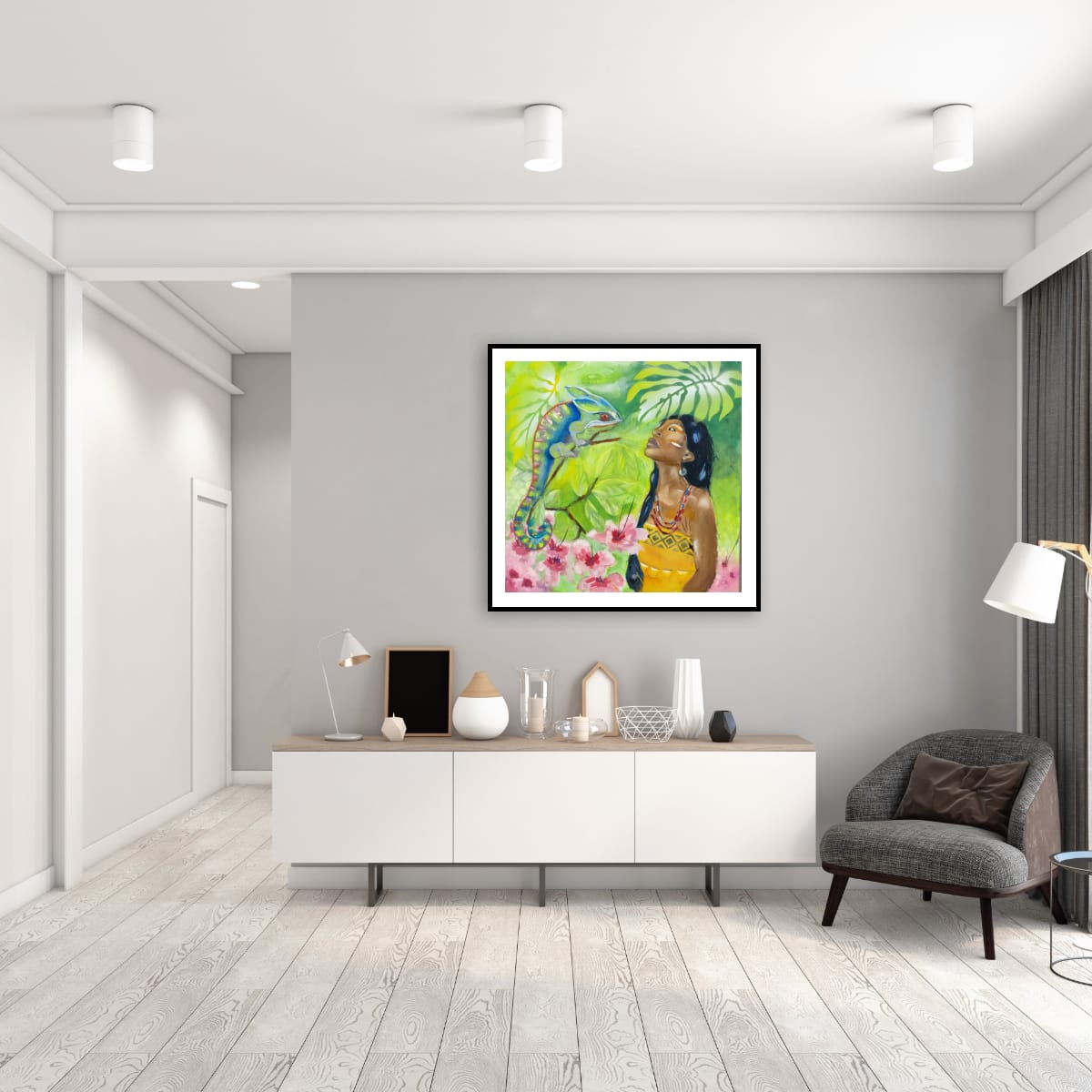
A painting can stop you in your tracks, but so can a print that carries the same pulse, color, and story into your daily life. If you have been wondering, are art prints worth buying, the honest answer is yes – often more than people expect. Not because they replace original art, but because they offer a meaningful way to live with beauty, emotion, and artistic vision at a more approachable level.
That question matters because buying art is rarely just a transaction. It is a choice about what you want near you, what kind of feeling you want to return to, and what stories you want your life to hold. A good art print can do that beautifully. A bad one can feel flat, forgettable, and disposable. The difference is everything.
Are art prints worth buying for serious art lovers?
They can be, especially if you care more about connection than hierarchy. There is still a lingering idea that originals are the only “real” way to collect art, as if a print is automatically second best. That view misses what many buyers actually want. They want to feel something. They want to support an artist whose work speaks to them. They want to bring home an image that keeps giving back.
A print is not an original oil painting. It does not carry the same one-time physical presence, texture, or singular history of the artist’s hand on the surface. That matters, and for some collectors it matters deeply. If your priority is owning the exact object the artist created, a print will never be the same thing.
But worth is not defined by sameness. Worth comes from the relationship between the artwork and the person living with it. If a print carries the atmosphere, emotional depth, and visual power of the original in a way that moves you, then it has real value. Not symbolic value. Real value.
What makes an art print worth buying?
The first thing is the strength of the artwork itself. A print can only be as compelling as the original image. If the composition is weak or the work feels generic, no premium paper will save it. But when the artwork has soul, a print can preserve that experience with surprising beauty.
The second thing is print quality. This is where many people get disappointed. There is a world of difference between a mass-produced poster and a carefully made fine art print. Color accuracy, paper quality, detail, tonal depth, and the overall finish all affect whether the piece feels alive or lifeless. A print should honor the original, not just copy it.
The third thing is intention. Some prints are made simply to fill inventory. Others are created as an extension of the artist’s practice, with care for how the work will be experienced by someone who may never buy the original. That intention shows. You can feel it in the choices around scale, material, editioning, and presentation.
Story matters too. Many art buyers do not want decoration for decoration’s sake. They want work that carries a memory of landscape, wildlife, travel, tenderness, courage, or human presence. When a print holds that kind of emotional narrative, it becomes much more than a budget option. It becomes a way to participate in an artistic world that feels personally meaningful.
When art prints make more sense than originals
Sometimes a print is not the compromise. It is the smarter choice.
If you are still learning your taste, prints let you begin collecting without the pressure of a major investment. You can spend time with an artist’s work, discover what keeps drawing you back, and build your confidence as a buyer. That is not a lesser form of collecting. It is often how a genuine collecting life begins.
Prints also make sense when you are deeply moved by an artist’s work but an original is out of reach. Art should not become meaningful only when it is expensive enough. Accessibility matters. It allows more people to live with work that opens the heart, sparks memory, or brings a sense of wonder.
They are also valuable for people who connect strongly to a specific image rather than the exclusivity of a one-of-one object. If one piece reminds you of a journey, a landscape, an animal encounter, or a feeling you do not want to lose, a print can be a very honest way to bring that into your life.
When a print may not be worth it
Not every print deserves your money. Some are produced with little care, sold with inflated language, or priced in a way that does not match the quality. If the print looks muddy, overly glossy, poorly cropped, or detached from the richness of the original work, it may not reward you over time.
You may also feel unsatisfied with a print if what you truly want is the material presence of paint, texture, and singularity. That does not make you difficult or elitist. It simply means your relationship to art is rooted in objecthood as much as image. In that case, it may be better to save for an original piece, even if it takes longer.
The same is true if you are buying purely for resale potential. Most open-edition prints are not financial investments in the traditional sense. Some limited editions from sought-after artists may hold or grow in value, but that should be the exception, not the promise. Buy prints because you love living with them, not because you expect them to behave like stocks.
Are limited edition prints worth buying?
Sometimes yes, but not automatically.
A limited edition can add a sense of rarity and care, especially when it is signed, numbered, and produced to museum-quality standards. It can feel closer to the artist’s hand and intention. For emerging collectors, that can be appealing because it offers a balance between accessibility and exclusivity.
Still, edition size alone does not create value. A print of mediocre work does not become profound because only 50 exist. What matters first is the power of the image, then the quality of production, and then the reputation and integrity of the artist behind it.
If an artist has a clear creative voice and a print is made thoughtfully, a limited edition can be deeply worth buying. It gives you a more intimate form of access to a body of work that may otherwise exist only in original paintings or in private collections.
The emotional value people underestimate
Art buyers often talk themselves into practical questions first. Is it worth the price? Will it last? Is a print less impressive than an original? Those questions are fair, but they often overlook the quiet truth of why people buy art at all.
We buy art because something in it recognizes something in us.
A print can carry that recognition just as powerfully as an original if the image has depth and the reproduction has integrity. The right print can remind you of places that changed you, animals that stirred your sense of wonder, cultures that expanded your understanding of beauty, or moments of tenderness you want to keep close. It can hold peace on difficult days and curiosity on numb ones.
That is not sentimental exaggeration. It is the real role art plays in human life.
For many people, prints also become the first doorway into a lasting relationship with an artist. They start with one piece that speaks to them. Later they return for another, join a collector community, follow the artist’s journeys, or one day invest in an original. At Bijsterbosch Art, that bridge between accessibility and emotional resonance is part of what makes prints so meaningful. They allow more people to enter the story, not stand outside it.
So, are art prints worth buying?
Yes, when they come from honest art, careful craftsmanship, and a genuine emotional connection.
No, not when they are treated like empty filler, printed without care, or bought for the wrong reasons.
The real question is not whether a print is equal to an original. It is whether the piece carries enough truth, beauty, and presence to matter in your life. If it does, then its worth is not up for debate. It is already doing what art is meant to do.
Buy the print that keeps calling you back. The one that holds a world you want to stay close to. That kind of choice tends to age well, because it was never only about buying art in the first place.