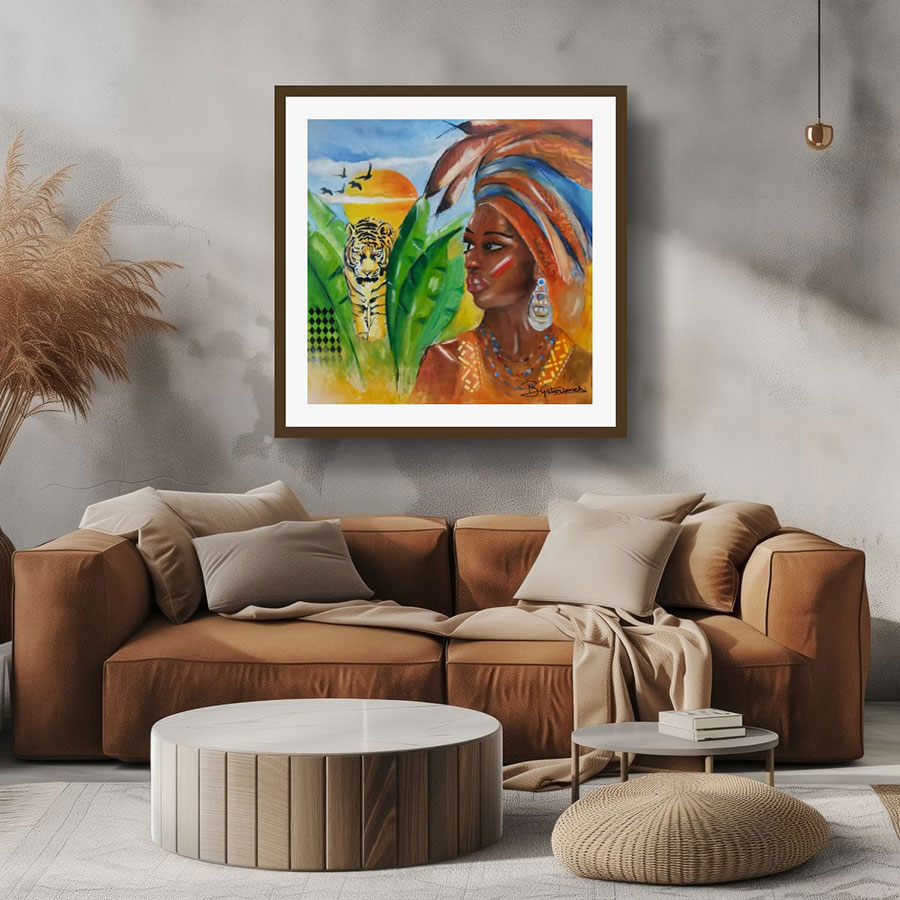
You stand in front of an image that moves you, and then the question arrives almost immediately: original art versus prints. Not as a cold buying decision, but as something more personal. What do you want to live with? What kind of connection are you hoping to bring into your life? For some people, the answer is about collecting. For others, it is about memory, emotion, access, or the simple joy of waking up each day and seeing something that still speaks.
This choice is often framed too narrowly, as if one is superior and the other is a compromise. That misses the heart of it. Original art and prints offer different kinds of value, and understanding that difference helps you buy with more confidence and more honesty.
Original art versus prints: the real difference
An original artwork carries the direct trace of the artist’s hand. In an oil painting, that may mean layered brushwork, shifts in texture, visible corrections, areas where the pigment catches the light, and the subtle energy of decisions made in the moment. It is the first and only full expression of that particular work. No one else can own that exact surface, those marks, or that physical presence.
A print is a reproduction of an original artwork. It allows the image, mood, and story of a piece to reach more people. Depending on the quality, a print can be beautifully made and deeply satisfying to live with. It may not have the same material uniqueness as an original, but it can still hold emotional power, especially when the image itself speaks strongly to your life, travels, values, or memories.
The difference, then, is not simply authenticity versus imitation. It is uniqueness versus accessibility. Material presence versus reproduced image. Singular ownership versus shared availability.
Why original art feels so different
There is something quietly powerful about standing close to an original painting and sensing the life inside it. You can often feel the pace of its making. A still area beside a bold gesture. A thin glaze over a thicker passage. A color that shifted because the artist changed direction in the work. These details are not decorative extras. They are part of the emotional language of the piece.
For collectors, that matters. An original artwork often feels like a relationship rather than a purchase. You are not only responding to the subject. You are responding to the artist’s presence, process, risk, and courage. If the work was inspired by wildlife, travel, tribal cultures, or the tenderness of everyday human beauty, the original may carry that experience with a depth that is hard to fully replicate.
This is also why original art can feel more intimate. It holds the imperfections, surprises, and living texture that happened between idea and completion. Many buyers are not looking for perfection at all. They are looking for truth they can feel.
Of course, originals also ask more of you financially. They are rarer by nature, usually more expensive, and sometimes harder to acquire if a collection is in demand. If you are buying original art, you are often choosing not only with your eyes but with your long-term values.
The beauty and strength of prints
Prints deserve more respect than they sometimes receive. A good print is not a lesser emotional experience by default. It is a different format with a different purpose. It opens the door for people who deeply connect with an image but are not ready to purchase an original, or who want to begin collecting art in a way that feels possible now.
That accessibility matters. Art should not belong only to those with large budgets. A print can be the beginning of a collecting journey, a meaningful gift, or a way to keep a place, an animal, a color story, or a feeling close. For travelers, nature lovers, and people drawn to soulful visual storytelling, a print can carry the essence of a moment they do not want to lose.
There is also freedom in buying prints. You may feel more relaxed choosing an image that simply makes your heart lift. You may decide to collect several works by the same artist over time. You may fall in love with a piece because it reminds you of a jungle path, a quiet coastline, a remembered face, or a feeling of wonder you want to return to.
What matters is quality. Not all prints are equal. Paper, ink, color fidelity, edition size, and production care all affect the final experience. A thoughtfully produced print can honor the spirit of the original beautifully. A poor reproduction can flatten it.
How to decide what is right for you
The better question is often not, Which is better? It is, What am I truly seeking from this artwork?
If you want rarity, tactile presence, and the feeling of owning a one-of-a-kind expression, an original may be the right path. If you are moved by the image itself and want to bring that emotional world into your life in a more accessible way, a print may be exactly right.
Budget matters, and there is no shame in letting it matter. Buying art should feel expansive, not stressful. A print can be a wholehearted yes. It does not need to be framed in your mind as waiting for the real thing. Sometimes it is the real answer for this season of life.
You should also think about your relationship to collecting. Are you building a personal collection slowly and intentionally? Do you care about owning singular works? Are you excited by the story of process and authorship? Or are you primarily responding to symbol, memory, and atmosphere? Your answer will guide you better than any rule.
Original art versus prints for new collectors
If you are early in your collecting journey, you do not need to force yourself into a collector identity that does not fit. Some people begin with prints and later invest in original paintings. Others save patiently for one original rather than buying multiple reproductions. Some happily collect both, because each serves a different emotional purpose.
There is wisdom in paying attention to what keeps returning to you. Which artwork stays in your mind? Which one feels like more than visual attraction? Which piece seems to carry a story that is somehow also your story?
That is often where the best decisions begin.
A print may help you discover the artists and subjects that truly move you. An original may mark a deeper threshold, a moment when art becomes part of your life in a more committed way. Neither path is more noble. What matters is whether the work feels alive to you.
Questions worth asking before you buy
Before choosing between an original and a print, pause long enough to ask a few honest questions. Am I responding to the image, the material presence, or both? Do I want something unique, or do I want access to a piece I love? Does the story behind this work matter to me? Am I buying from urgency, or from a genuine sense of connection?
It also helps to ask about the practical side without losing the poetry. Is this a limited edition print or an open edition? How close are the colors to the original? What is the medium of the original work? If it is an oil painting, part of its beauty may live in its depth and texture, which can affect how a print translates.
These are not dry technicalities. They shape the feeling of the piece over time.
When the story matters as much as the format
Art becomes more meaningful when it carries lived experience. A painting born from travel, wildlife encounters, human connection, or time spent in places where biodiversity is fragile often holds a different kind of energy. That energy may be felt in an original most directly, but a print can still carry the invitation of that story.
This is especially true when the artist works from sincere devotion rather than trend. At Bijsterbosch Art, for example, the work grows from lived encounters with nature, culture, color, and courage. For some buyers, that makes an original feel like a treasured meeting point between artist and collector. For others, a print becomes a way to stay close to that same spirit in an accessible form.
There is no wrong answer when the connection is real.
The choice that lasts
The best art purchases rarely come from pressure or status. They come from recognition. You see a work and something in you becomes quieter, brighter, or more awake. Whether that leads you to an original or a print depends on your means, your intention, and the kind of relationship you want with the piece.
So if you are weighing original art versus prints, let the decision be human. Let it include beauty and budget, yes, but also feeling, story, and the life you want your art to hold. The right piece is not the one that sounds most impressive. It is the one that keeps meeting you, day after day, with something true.