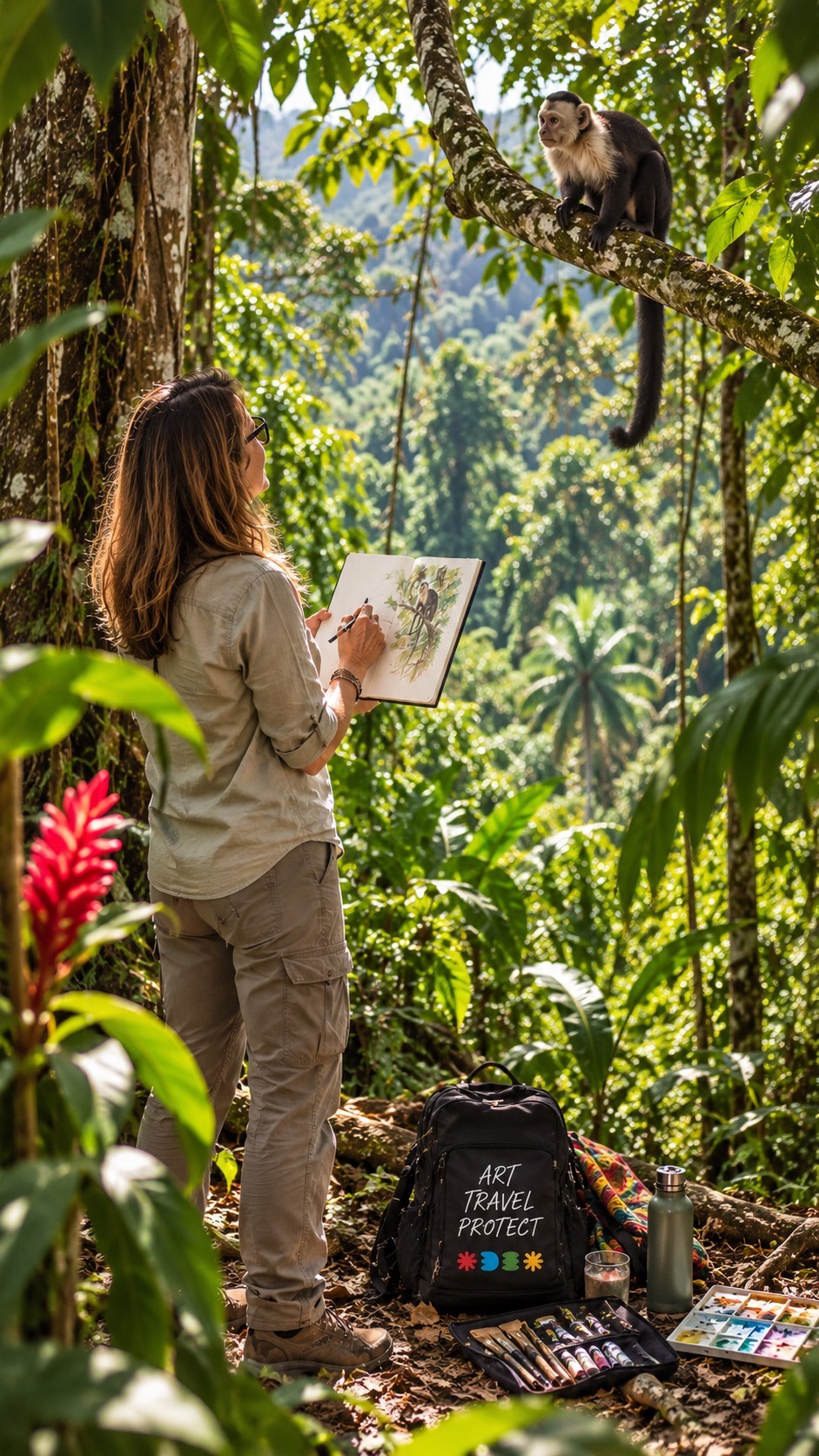
An art expedition review should begin somewhere more honest than a star rating. The real question is not whether the beds are comfortable or whether every hour is scheduled perfectly. It is whether a place changes the way you see, make, and carry your work into the world.
For artists, collectors, and creative travelers, an art expedition is an invitation to step outside the familiar studio rhythm. It offers the rare experience of meeting a landscape at close range, noticing its colors before they become a palette, and listening long enough for a new body of work to begin taking shape.
What Makes an Art Expedition Different?
A conventional creative retreat often centers on technique, productivity, or a change of scenery. Those things have value. An art expedition asks for something more personal: attention. The journey itself becomes part of the creative process, with weather, wildlife, local stories, textures, sounds, and unexpected encounters becoming quiet collaborators.
That does not mean every participant must paint outdoors from sunrise to sunset. Some artists work through photography, drawing, writing, collage, film, or collected visual notes. Others arrive without a fixed project and leave with a clearer sense of direction. The common thread is not one medium. It is the willingness to let a new environment loosen the habits that can make creative work feel predictable.
This is also why the destination matters. In a biodiversity-rich landscape, color is not abstract. Green is layered with moss, canopy, shadow, and rain. A birdcall can create rhythm. A conversation can reveal a way of seeing place that would never appear in a guidebook. These impressions often return home with the artist and continue to unfold in the studio.
Art Expedition Review: What the Experience Can Give You
The strongest expeditions balance inspiration with enough structure to make space for it. There may be guided visits, shared meals, opportunities to meet local communities, time in nature, and moments to create. Yet the most meaningful parts are often unscripted: a sketch made while waiting for the light to change, a color combination noticed on a market wall, or a conversation that lingers long after the journey ends.
A fuller relationship with place
Travel can sometimes become a collection of images taken quickly and remembered vaguely. An art expedition encourages a slower relationship with where you are. Rather than treating a destination as a backdrop, participants are invited to notice its living details and cultural character with curiosity and respect.
For an artist, that shift can be profound. You stop asking, “What can I take from this place for my work?” and begin asking, “What is this place showing me?” The difference may sound subtle, but it leads to art with greater tenderness, specificity, and emotional truth.
Creative companionship without creative pressure
Making art can be solitary, and often rightly so. Still, there is a particular energy in sharing a journey with people who understand why a weathered leaf, a handwoven pattern, or the silhouette of a distant animal can feel like a revelation.
The right group brings conversation, encouragement, and fresh perspectives without turning the trip into a competition. Artists may exchange working methods or simply enjoy the reassurance of being among people who take beauty seriously. Collectors and art lovers, meanwhile, gain a more intimate understanding of how experiences become artworks.
Work with a story that stays alive
Art inspired by a real journey holds a different kind of presence. A painting may carry the memory of rainforest humidity. A print may recall a specific encounter with a community, a forest path, or a horizon. These are not marketing details added afterward. They are part of the artwork’s emotional foundation.
For collectors, this kind of work can feel especially resonant. They are not only bringing color and form into their homes. They are living with an artwork shaped by attention, travel, and a genuine encounter with the wider world.
At Art-To-Protect, the expedition model connects creative travel with art inspired by extraordinary natural environments and cultural exchange. The emphasis is on making room for wonder, while allowing each participant to find their own artistic response.
The Trade-Offs Worth Considering
An art expedition is not designed for everyone, and that is part of its integrity. It asks participants to be present in a way that can be both exhilarating and demanding. Remote or nature-based destinations may include changing weather, early starts, long travel days, unfamiliar food, uneven terrain, and fewer comforts than an urban art retreat.
There is also no promise that inspiration will arrive on command. Some people create many sketches during the journey. Others absorb everything quietly and begin making their strongest work weeks later. A successful expedition should not be measured by the number of finished pieces packed into a suitcase. Its value may be a renewed creative instinct, a visual language that has expanded, or a story that finally finds its form.
Artists who need uninterrupted studio conditions, a highly technical curriculum, or a tightly controlled itinerary may prefer a workshop closer to home. But for those feeling creatively restless, an expedition can offer the kind of spacious disruption that a familiar setting cannot.
How to Judge Whether an Expedition Is Right for You
Before committing, look beyond beautiful destination photographs. Consider how the journey is guided and whether the pace leaves room for observation, rest, and independent creative time. A meaningful experience does not need to fill every hour. In fact, a little unscheduled space is often where the real work begins.
Ask yourself what you hope to bring to the experience. Are you looking for visual material, new confidence, a connection with fellow artists, or simply a way back to your own sense of wonder? Your answer will help you choose the right format. An emerging painter may want mentorship and shared critique, while an established artist may value access to an unfamiliar environment and the freedom to work intuitively.
It is also wise to consider your relationship with travel itself. The best participants are not necessarily the most adventurous in a dramatic sense. They are the people who can remain open when plans shift, when conditions are imperfect, and when a place refuses to reveal itself all at once.
Finally, choose an experience that treats people and place with care. Cultural encounters should feel rooted in exchange rather than spectacle. Nature should be approached with respect rather than rushed through for content. When those values are present, the journey becomes richer for everyone involved.
A Thoughtful Art Expedition Review
So, is an art expedition worth it? For the artist or art lover who longs for more than a vacation and more than a workshop, it can be deeply worthwhile. Its gift is not only inspiration, though there is plenty of that. It is the chance to remember that creativity is a relationship: with the world, with other people, and with the parts of ourselves that become visible when we step into the unknown.
The most lasting journey may not be the one measured in miles. It may be the moment you return home, open your sketchbook or face a blank canvas, and recognize that you are seeing differently.