
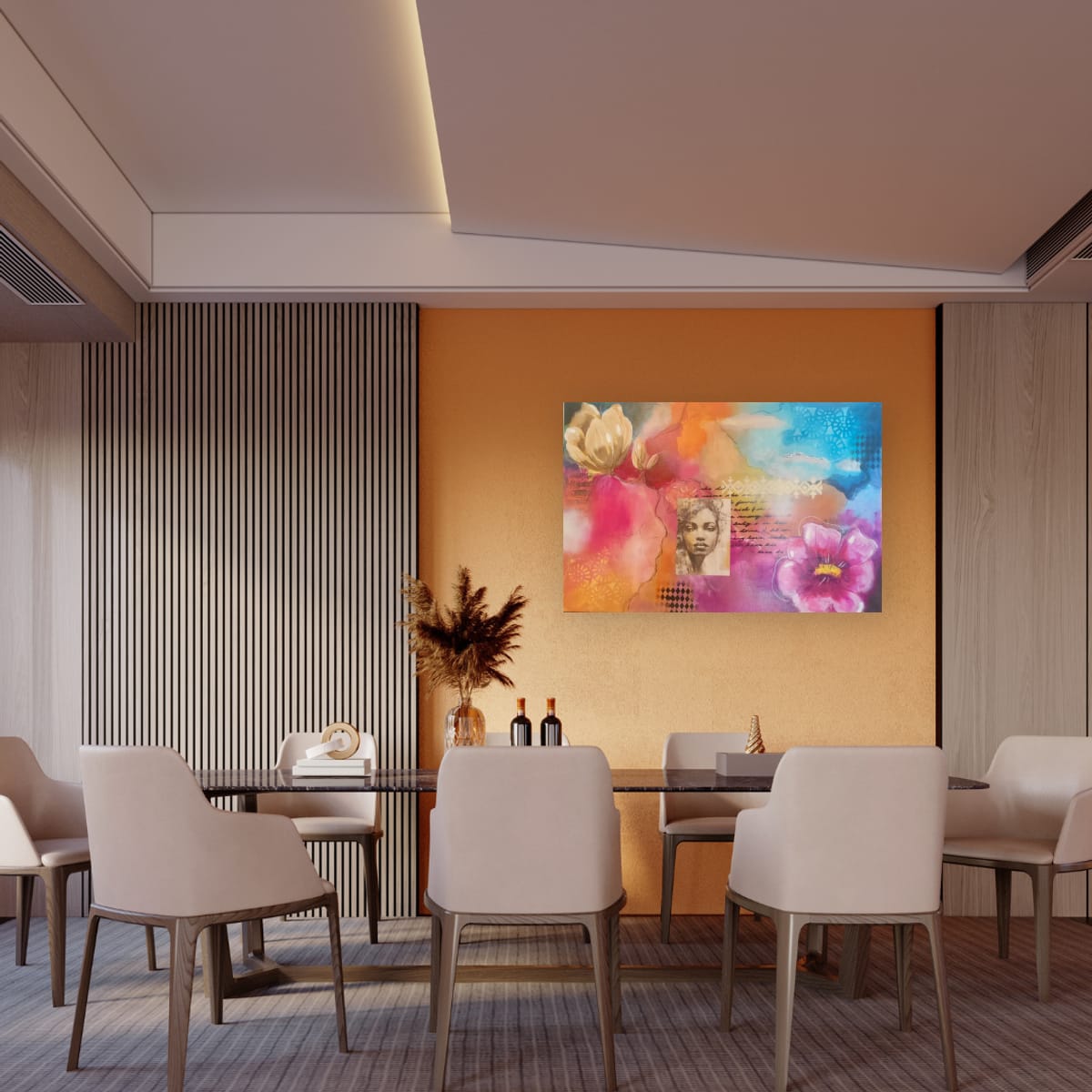
A guest may forget the exact shade of the lobby sofa, but they remember the artwork that made them stop. In this hotel art commission case study, the central question is not simply which pieces will fill empty walls. It is how art can give a hotel its own emotional landscape – one that begins at check-in and stays with guests long after their journey home.
This is a representative boutique hotel scenario, created to show what a thoughtful commission can look like without inventing claims about a named property. The lessons apply whether the project is a small coastal retreat, an independent city hotel, or a resort surrounded by extraordinary nature.
The Brief: Create a Sense of Place, Not Decoration
The imagined client was a 52-room boutique hotel preparing to open near a richly layered natural landscape. The owners had invested in tactile materials, generous light, and rooms designed for rest. Yet their first art proposal felt interchangeable: decorative prints of leaves, birds, and distant horizons that could have belonged anywhere.
Their revised brief was more ambitious. They wanted guests to feel the character of the region without turning the hotel into a museum display or a themed backdrop. The art needed to be warm, contemporary, and alive with color. It also needed enough consistency to connect the lobby, corridors, guest rooms, and restaurant while allowing each space its own mood.
That distinction matters. A hotel commission is not just a purchasing exercise. It is a visual language for hospitality. When the artwork has no relationship to the place, guests may find the interiors pleasant but forgettable. When it responds with care to landscape, people, light, and local stories, it can create a true feeling of arrival.
The first decision: original work, editions, or both?
The budget could not support an original painting in every room, nor would that have been the right answer. Original works carry presence and collectibility, making them especially powerful in public-facing areas where a guest has time to pause. Limited editions, made with archival materials and close attention to color, can carry the visual story through guest floors at a more practical scale.
The final approach combined the two. A series of original paintings became the heart of the lobby and restaurant, while carefully selected editions created intimate moments in rooms and hallways. This balance protected the creative vision without asking the project budget to do one impossible thing.
From Research to a Visual Story
Before a single final canvas was approved, the artist spent time understanding the atmosphere the hotel hoped to create. This stage included conversations with the founders, architect, interior designer, and operations team. It also meant looking beyond mood boards.
What colors appeared in the early morning? Which native plants, birds, patterns, and textures felt genuinely connected to the surroundings? What did local craftspeople consider meaningful? Which references needed permission, context, or should simply be left alone?
That last question is essential, especially when a hotel draws inspiration from a living culture. A meaningful commission never treats traditional symbols, Indigenous knowledge, or community stories as a free design resource. Respect may mean collaboration, licensing, attribution, or choosing a different source of inspiration altogether. Artistic freedom grows stronger, not smaller, when it is grounded in care.
For this project, the artist developed a palette from deep forest greens, sun-warmed earth, mineral blue, and unexpected flashes of coral. Rather than illustrating nature literally, the paintings translated the feeling of movement: a wing passing through leaves, rain gathering on a wide surface, a path opening between trees. The result was expressive rather than postcard-perfect.
Hotel Art Commission Case Study: Designing the Guest Journey
The collection was organized around the way a person moves through the hotel. This prevented a common problem in hospitality projects: art that looks beautiful in a presentation but loses its impact once divided among many walls and doorways.
The arrival moment
The lobby received the largest original work, positioned where guests could take it in while waiting or settling into a chair. Its purpose was not to explain the destination. It was to open a feeling of curiosity. The painting held bold color and loose, organic forms, offering a first encounter with the hotel’s creative spirit.
Scale was carefully considered. A work that is too small can disappear against a dramatic reception desk or double-height wall. A work that is too large can overpower a room intended to feel calm. The selected painting had enough visual energy to establish identity while leaving space for conversation, movement, and light.
The corridor as a quiet gallery
Hotel corridors are often treated as purely functional passages. In this commission, they became a slower chapter of the story. Smaller framed editions appeared in sequences rather than as identical repeats. Each one shared the same visual vocabulary, but changed in color, composition, and detail.
This is a useful strategy for guest floors. Repetition creates cohesion, yet too much repetition can make a hotel feel standardized. Variation gives regular guests something new to notice and lets each room feel considered rather than copied.
Rooms made for lingering
Guest room art required a different sensitivity. The goal was not spectacle. It was companionship. Softer compositions, smaller scale, and carefully placed color brought life to the rooms without competing with sleep, work, or the view outside.
The hotel chose editions for most rooms because replacements, consistency, and installation timelines all matter in an operating property. A few suites received original works, giving those spaces a distinctive point of view. Neither choice is automatically better. It depends on the hotel’s positioning, maintenance plan, budget, and desire to create collectible moments.
The Details That Protect the Vision
A beautiful concept can be weakened by practical decisions made too late. Framing, glazing, placement, lighting, cleaning procedures, and installation methods all shape how art lives in a hotel.
For the representative project, framing was selected to echo the interior finishes without becoming too rustic or ornate. UV-protective glazing was considered in areas with strong daylight. In high-traffic spaces, the team used secure hanging systems and positioned work away from luggage routes and service carts. These choices are not glamorous, but they allow the artwork to remain luminous over time.
The artist also supplied a simple art map for the hotel team, with images, dimensions, placement notes, and care guidance. This became especially useful when new staff joined or a room needed refreshing. Commissioning art is a relationship that continues after installation, not a delivery day with a final signature.
Measuring What Matters Without Reducing Art to a Number
The hotel did not expect a painting to solve every business question. Art cannot replace thoughtful service, comfortable beds, or a well-run restaurant. But it can deepen the emotional character that makes people choose one memorable stay over another.
For this kind of project, the most valuable signals are often qualitative. Do guests pause in the lobby? Do they ask staff about the artist? Do photographs of the spaces reflect a recognizable visual identity? Do returning visitors notice a detail they missed before? These moments show that art is participating in the experience rather than merely completing a design checklist.
There can also be a practical benefit: a coherent collection gives marketing and guest relations teams a genuine story to tell. The story should remain truthful and specific, never inflated into a slogan. Guests are perceptive. They can feel the difference between art selected with a point of view and art chosen only because a wall needed something on it.
What This Commission Teaches
The strongest outcome was not a single hero image. It was a hotel that felt more like itself. The art connected public spaces and private rooms, invited guests into the atmosphere of the surrounding world, and gave the property a visual signature that could not be easily duplicated.
For artists, this type of commission asks for more than technical skill. It calls for listening, research, logistical discipline, and the courage to keep the work emotionally alive while meeting the needs of a shared space. For hotel owners and designers, it asks for an early commitment to art as part of the experience, not an item added after the furniture arrives.
The most enduring hotel artwork does not need to shout. It offers a small opening: a color that changes with the afternoon light, a form that recalls a journey, a moment of beauty that quietly tells a guest, you are somewhere worth feeling.