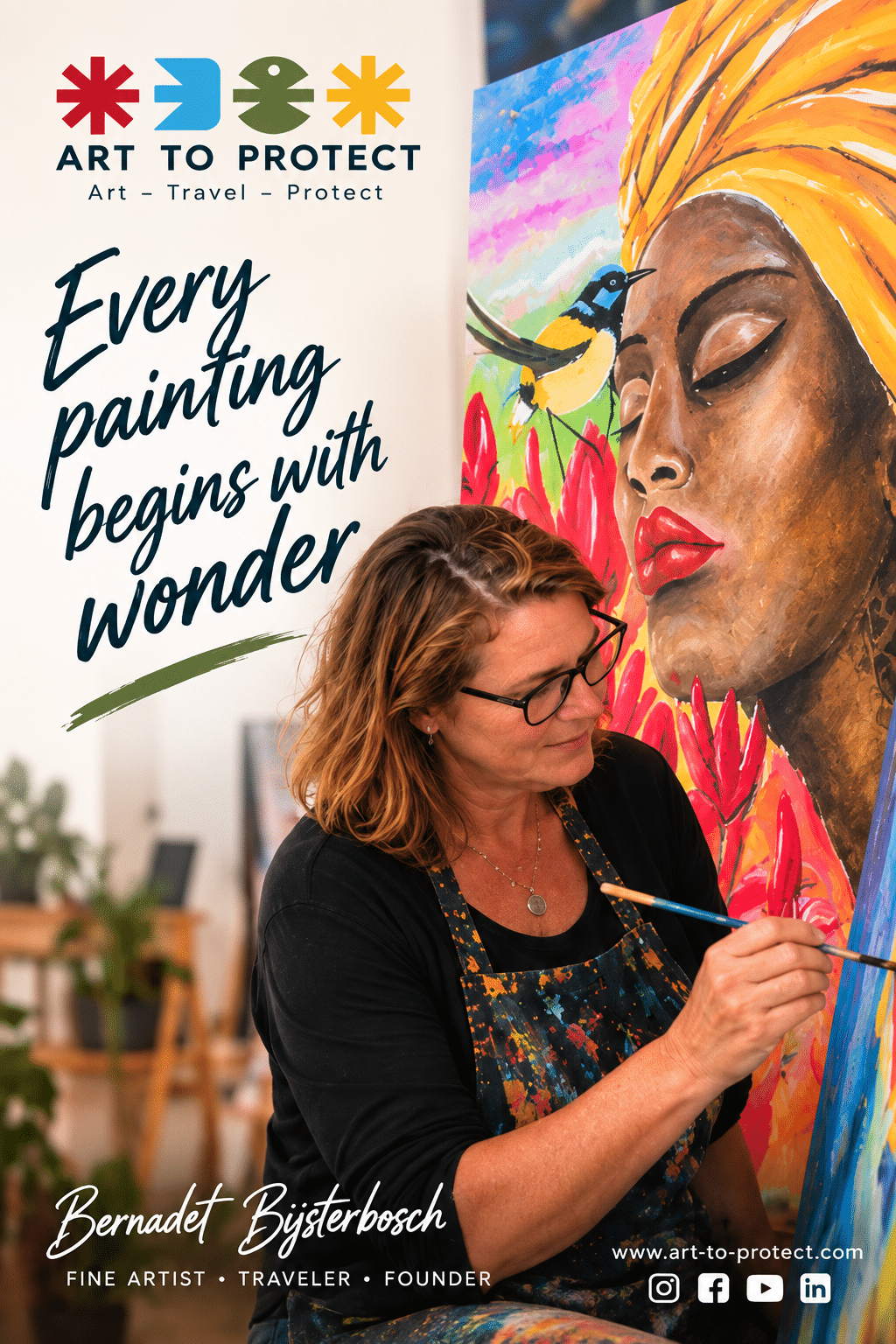
A field sketch is more than preparation for a finished work. It is a record of being present: the quick angle of a bird’s wing, damp earth beneath your shoes, a cloud shadow traveling across a hillside. To turn field sketches into paintings is not simply to make them larger or more polished. It is to return to the feeling of a place and give that experience room to breathe.
For artists inspired by wildlife, travel, and the living world, this process can become a powerful act of attention. A painting made from the field carries marks that no photograph can fully replace: what you noticed first, what changed while you watched, and what made you stay.
Begin With the Memory, Not the Outline
When you open a sketchbook back in the studio, resist the urge to copy every line. Your drawing may be incomplete, but its incompleteness is often where its energy lives. Look for the visual memory behind the marks.
Ask yourself what held your attention. Was it the startled posture of a deer at the forest edge? The rhythm of mangrove roots at low tide? The extraordinary color relationship between a scarlet flower and its surrounding leaves? A strong painting begins when you identify the emotional center of the encounter.
Field notes can be as valuable as the drawing itself. A few words such as “warm wind,” “silver water,” or “quiet before rain” can guide decisions about color, edges, scale, and atmosphere. They help the painting remain connected to experience rather than becoming a technical exercise.
Let the sketch choose the painting’s purpose
Not every field sketch needs to become a highly detailed studio painting. Some are best translated into small, intimate works that retain their immediacy. Others contain an idea worthy of a larger canvas, a print collection, or a design that helps tell the story of a destination or species.
Consider what the sketch is asking for. A fast drawing of a moving animal may call for broad, energetic brushwork. A careful study of native plants may invite a layered composition with greater detail. There is no single right finish. The right choice is the one that protects the original sense of wonder.
Build a Reference Story Around the Sketch
A field sketch is a starting point, not a limitation. Before painting, gather the materials that help you remember accurately and work freely. This might include your own photographs, color notes, maps, plant observations, and a second sketch made from a different angle.
Use references with care. Photos can clarify structure, especially when an animal moved quickly or the light changed before you could finish. Yet photographs also flatten space and can make an image feel overly literal. Let your sketch remain the creative anchor. It contains your point of view, while supporting references provide information.
If your work is connected to a particular community, landscape, or cultural tradition, research with respect. Name what you know, avoid assumptions, and let the place remain more than a decorative backdrop. Art can encourage curiosity and care when it is rooted in genuine observation.
Choose What to Leave Out
The most compelling paintings are not always the ones that include the most. Field environments are full of visual information: branches, grasses, reflections, stones, shifting shadows, and countless small changes in color. A sketch may capture that abundance, but a painting needs a clear invitation for the viewer.
Start by deciding where the eye should rest. Perhaps it is the luminous eye of a lemur, the curve of a sea turtle’s shell, or a single path leading into a cloud forest. Simplify areas around that focal point so the subject can speak.
This is where composition becomes an act of storytelling. Crop boldly if it strengthens the feeling. Shift a horizon line to create more sky. Combine elements from several sketches only when they belong to the same honest experience of place. The goal is not documentary precision at every inch. It is visual truth.
Make color carry the atmosphere
Field sketches often include quick color swatches, shorthand notes, or remembered impressions rather than exact mixtures. Use them as a guide to temperature and mood. The green of a rainforest after rain is not one green. It may hold blue shadows, yellow light, red-brown bark, and sudden flashes of brilliant life.
Begin with a limited palette that reflects the scene’s overall feeling. Then introduce a few purposeful contrasts. A small note of warm color against a cooler field can create focus and vitality. If you are painting wildlife, look beyond local color. The reflected light around an animal often reveals its relationship with the habitat.
Color does not need to be photographic to be believable. A more expressive palette can honor the intensity of a memory, provided it remains connected to the character of the place.
Keep the First Marks Alive
One risk when you turn field sketches into paintings is polishing away the very quality that made the sketch compelling. The loose pencil line, unexpected proportion, or unplanned patch of color may hold more life than a perfectly rendered detail.
Begin your painting with speed. Block in the largest shapes using a brush or tool that prevents fussy decisions too early. Establish the main movement, value pattern, and color temperature before working on texture. If the composition does not communicate at this stage, detail will not solve it later.
Then slow down selectively. Refine the areas that deserve close attention and allow other passages to stay open. Vary crisp edges with softer ones. Let a wash, scrape, visible pencil line, or textured ground remain where it adds a sense of time and touch.
This balance depends on your subject and medium. Watercolor may preserve spontaneity beautifully but offers less opportunity for revision. Oil and acrylic allow more layering and adjustment, though they can tempt an artist to overwork. Choose the medium that supports the voice of the sketch, not simply the finish you think a painting is expected to have.
Let the Subject Belong to Its Habitat
A wildlife painting gains depth when the animal is not isolated from the world that sustains it. Even a close portrait can suggest habitat through reflected color, vegetation, weather, or surrounding space. This matters creatively and emotionally: biodiversity is made of relationships.
Study how your subject moves through its environment. Notice the branch that supports a perched bird, the waterline that frames a wading animal, or the plant forms that repeat the shape of its body. These connections can guide composition without making the painting feel crowded.
For ART-TO-PROTECT, art begins with this kind of relationship. A beautiful image can become a doorway into a wider story about wildlife, place, and the people working to care for both. The painting does not need to explain everything. It only needs to invite a closer look.
Create a Painting People Can Live With
A studio painting based on fieldwork can be personal and still welcome others in. Think about the experience you want a collector, traveler, or visitor to have when they encounter it on a wall. Will the work offer a moment of calm? Spark a memory of a journey? Encourage someone to ask where the animal lives or why the landscape matters?
Scale and surface make a difference. A small work can feel like a private page from a travel journal. A larger canvas can give the viewer a sense of standing within the scene. Prints and thoughtfully designed products can carry the image into everyday life, allowing more people to connect with the story behind it.
Do not feel pressured to make every painting universally appealing. Specificity is often what creates connection. The honest curve of a particular coastline, the unusual pattern of a familiar species, or the weather of one unforgettable morning can touch someone far beyond the place where you stood.
Return to the Field Whenever You Can
The studio teaches one kind of seeing. The field teaches another. Each new sketch strengthens your visual vocabulary and reminds you that nature is never still. Returning to draw from life helps prevent your work from becoming reliant on formulas, even when you revisit subjects you have painted many times.
Bring a small sketchbook, a few simple tools, and permission to make imperfect pages. Record movement, color, sounds, and questions. Pay attention to what surprises you. Those surprises are often the beginning of your next meaningful painting.
A finished work does not have to reproduce the field sketch faithfully to honor it. Let it carry forward the attention you gave a living place. When that attention reaches another person, art becomes more than an image. It becomes a shared reason to notice, value, and protect the world around us.