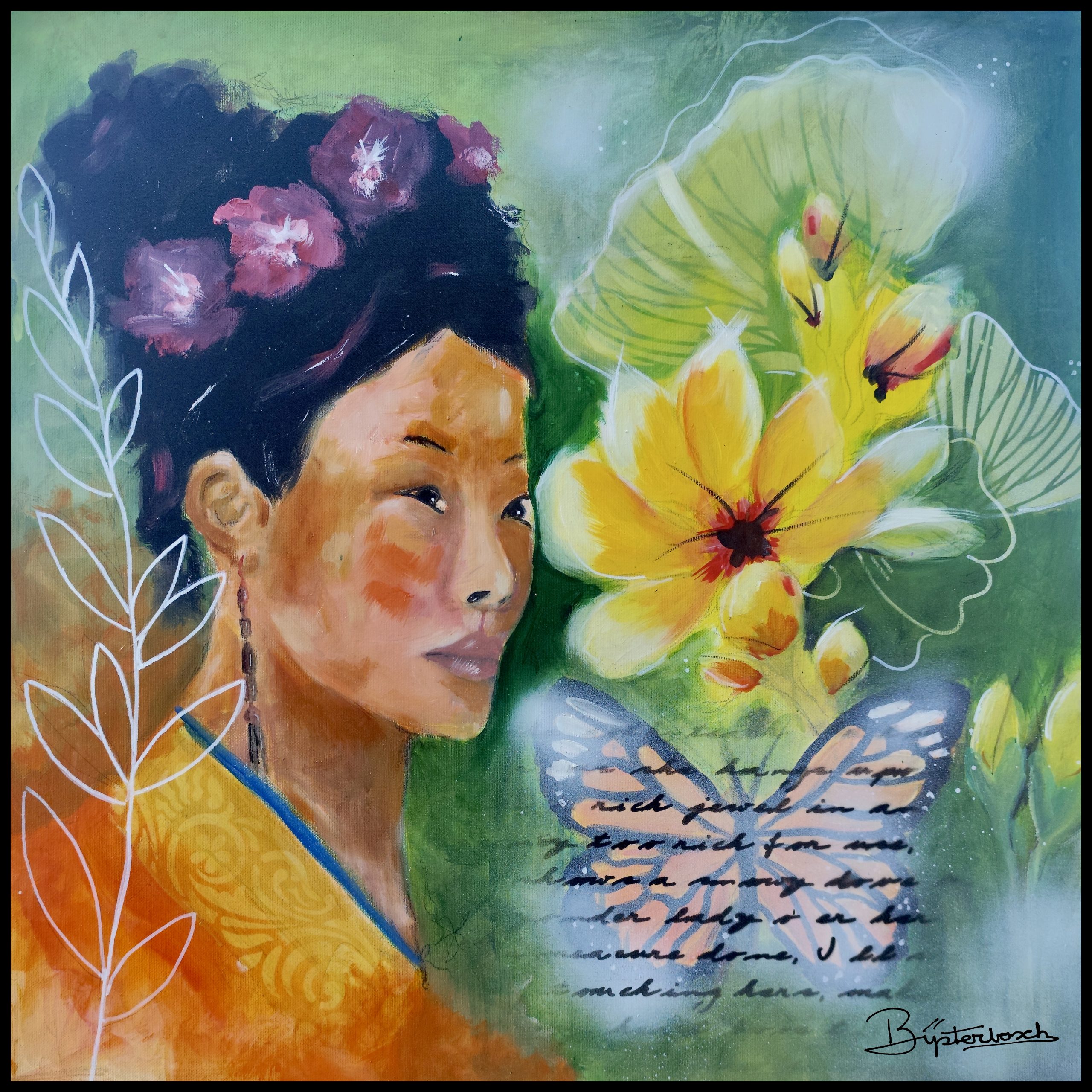
A painting can brighten a room on the day it arrives, yet its deeper presence often unfolds slowly. Artwork collectible value is not created by a label, a trend, or a price alone. It grows where artistic vision, authenticity, craftsmanship, and a work’s emotional truth meet – then continues to gather meaning through the life it shares with its collector.
For many people, collecting begins with an immediate feeling: a color that recalls a faraway landscape, an animal gaze that feels almost familiar, a scene that opens a small window onto freedom. That instinct matters. The works we keep closest are often those that continue to speak after the first spark of attraction has passed.
What Shapes Artwork Collectible Value?
Collectible value is both tangible and deeply human. Some qualities can be documented, such as provenance, edition size, materials, and condition. Others cannot be measured quite so easily: the conviction in an artist’s hand, the originality of a visual language, and the sense that a work carries a real encounter rather than a borrowed idea.
A meaningful collection makes room for both. It honors the practical details while remaining open to wonder.
An unmistakable artistic voice
Collectors often return to artists whose work feels recognizable without becoming repetitive. A distinct voice may appear in a palette, a way of layering marks, an approach to line, or the subjects an artist returns to again and again. It can also live in the courage to see the world differently.
Originality does not mean an artist must invent a completely new subject. Nature, people, and travel have inspired artists for centuries. What matters is the particular way an artist transforms lived experience into an image. A rainforest seen through attentive eyes, a remembered conversation, or the quiet strength of a wild creature can become something no one else could make in quite the same way.
This consistency of vision helps a body of work feel coherent over time. For a collector, that coherence can make one artwork feel like part of a larger, unfolding story rather than an isolated decorative object.
Story is not an accessory
A compelling story should never be used to distract from weak art. But when the work itself is strong, its story gives the collector a richer relationship with it. Knowing what inspired a piece, where an artist traveled, what they observed, and why a certain color or symbol appears can add dimensions that remain present long after the work is hung.
Art inspired by biodiversity, cultural encounters, and extraordinary landscapes can hold this kind of resonance especially well. The value is not simply in representing a place. It is in the artist’s ability to translate the atmosphere of that place into feeling: humidity in a wash of green, sunlight in a field of gold, or movement in a bold, instinctive brushstroke.
The best stories leave room for the viewer’s own life, too. A collector may see a work differently after a journey, a new season, or a conversation with a child standing in front of it. That continuing exchange is part of what makes art alive.
Rarity, editions, and the pleasure of discernment
Rarity can influence collectible value, but scarcity alone is not enough. A one-of-a-kind original is naturally singular, carrying the physical traces of the artist’s decisions: the texture, corrections, pressure, and energy of the making. Limited editions can also be highly collectable when they are carefully produced, clearly numbered, and connected to an artist with a recognizable practice.
A smaller edition generally offers greater rarity than an unlimited reproduction, yet the question is never only numerical. Consider the quality of the image, the materials, the printing or production process, and whether the artist is actively involved in approving the final work.
For newer collectors, there is no need to treat editions as a lesser choice. They can be a beautiful and accessible way to begin, particularly when the image is one you truly want to live with. The key is clarity. A certificate, edition number, signature where appropriate, and transparent information help preserve confidence in what you are acquiring.
Provenance Gives a Work Its Continuity
Provenance simply means the recorded history of an artwork: who created it, when it was made, where it has been exhibited or acquired, and who has cared for it along the way. It is the work’s paper trail, but it is also its biography.
For contemporary art, good provenance often begins with simple, organized records. Keep the invoice, certificate of authenticity, artist statement, correspondence related to the purchase, and photographs of the work when it enters your collection. If the artwork is part of a numbered edition, record that number and the total edition size.
These documents matter if you ever lend, insure, gift, or resell a work. More personally, they allow you to preserve the story you responded to at the beginning. Years from now, those details may bring back the exact moment a work found you.
Condition deserves the same thoughtful attention. Light, heat, moisture, dust, and careless framing can alter a work over time. Use archival framing materials for works on paper, avoid direct sunlight, and ask a professional conservator before attempting repairs. Caring for art is not fussy or transactional. It is a quiet form of respect for the artist’s labor and the work’s future.
Emotional Resonance Is Not Separate From Value
There is a persistent myth that serious collecting must be cool, distant, and purely strategic. Yet most lasting collections have a pulse. They reveal what their collectors care about: beauty, risk, memory, place, craftsmanship, or a desire to live surrounded by images that expand the imagination.
Emotional resonance does not guarantee financial appreciation, and no honest artist or advisor should promise that it will. The art market can shift with taste, visibility, timing, and many factors beyond any collector’s control. If resale potential is part of your thinking, research the artist’s exhibition history, consistency of practice, market representation, and the documentation around the work. Then allow your own response to remain central.
The most rewarding purchase is often one that succeeds on more than one level. You admire the work visually. You trust its authenticity. You understand something of its origin. And you can imagine seeing it every morning without growing tired of its presence.
How to Collect With Both Heart and Care
Begin by looking slowly. Before asking whether a work will increase in price, ask whether it keeps revealing something when you return to it. Notice composition, color, material, and scale. Ask what the artist was exploring, not merely what the image depicts.
Then learn the practical facts. Is it an original, an edition, or an open reproduction? What materials were used? Is it signed and dated? Is there a certificate or a clear record of purchase? These questions are not a barrier to joy. They help the joy rest on solid ground.
It also helps to collect in conversation with your own life. Perhaps you are drawn to works that recall journeys, celebrate the natural world, or bring a sense of bold color into a quiet home. Perhaps you begin with a small work and let your collection grow gradually. A collection does not need to be large to be meaningful. It needs attention.
At Art-To-Protect, artworks inspired by wild places, human connection, and the beauty of cultural encounter invite collectors to see art as a lasting companion. Their value begins with the original vision behind them and continues in the conversations they create wherever they are lived with.
Choose the work that makes you pause. Keep its story safely, care for its physical presence, and give it room to become part of your own. That is where collecting becomes more than ownership: it becomes a way of living with beauty, memory, and possibility.