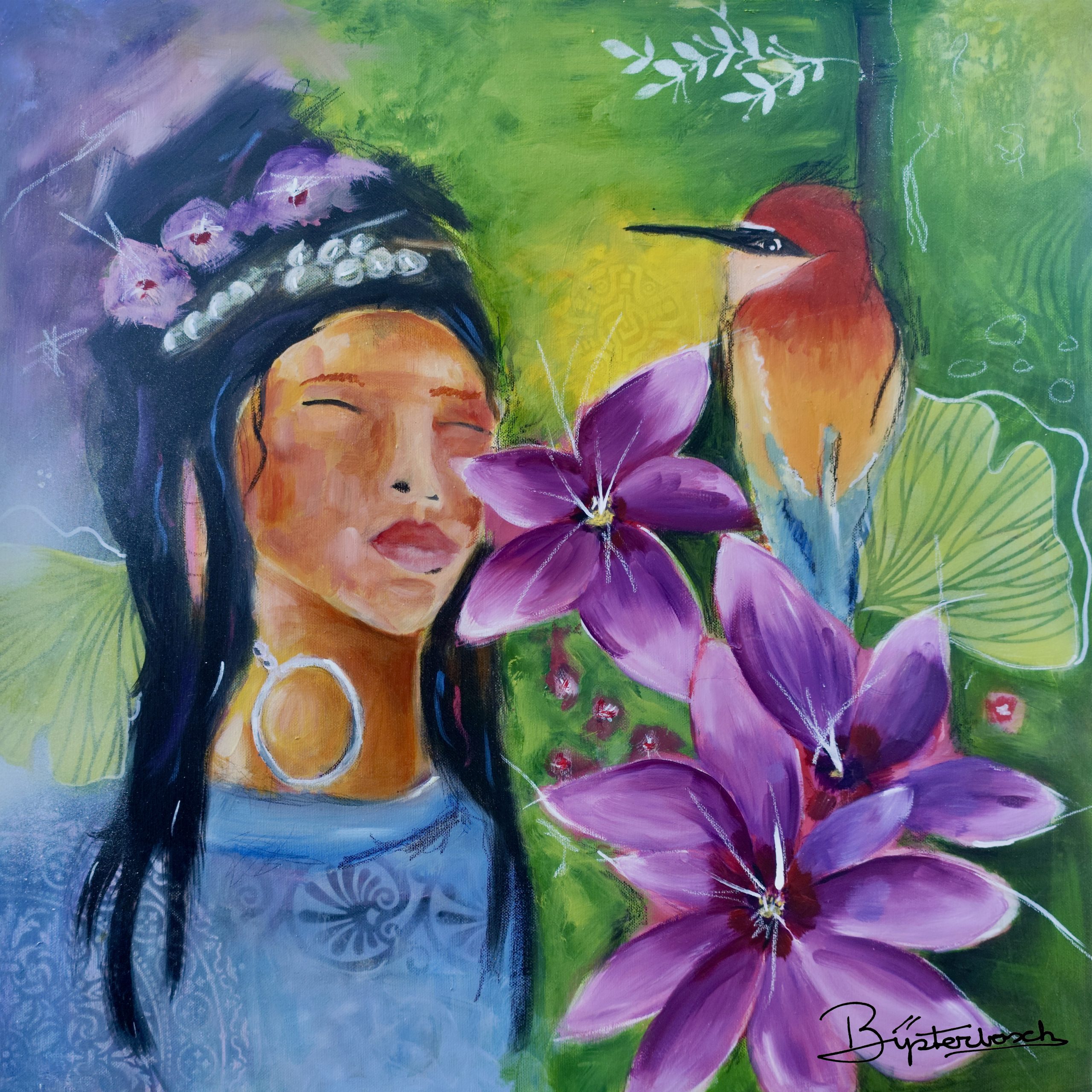
A sudden blue wing lifting from a rainforest path. The intricate geometry of a leaf held against the sun. A line of elephants moving quietly across an open plain. These are not simply beautiful sights to an artist. They are invitations to pause, feel, and translate a fleeting encounter into something that can be carried home.
Nature inspires artists because it asks us to pay attention. It offers color without rules, forms without repetition, and moments of tenderness and strength that cannot be staged. For an artist, this is not background scenery. It is a living source of rhythm, emotion, memory, and meaning.
Why Nature Inspires Artists Across Time
Long before the white walls of galleries and the bright glow of digital screens, people made images of the natural world. Animals, plants, stars, rivers, and human hands appeared on cave walls, in textiles, on vessels, and in ceremonial objects. Nature was not separate from life. It shaped food, shelter, stories, movement, and imagination.
That connection remains. A contemporary artist may work with acrylic paint, photography, printmaking, or sculpture, yet the first spark can still arrive in the same simple way: through direct encounter. A bird’s unexpected call at dawn may become a composition. The texture of bark may suggest a new surface. The intense orange of a flower may shift an entire palette.
Nature also gives artists something more difficult to name. It reminds us that beauty is not always polished. There is beauty in weathered stone, tangled roots, shadowed water, and the quiet dignity of an aging tree. These details make work feel alive because they carry complexity. They resist perfection while inviting us to look longer.
The Artist Learns to Look, Not Just See
Seeing is quick. Looking is an act of presence.
An artist in a wild landscape begins to notice what others may pass by: how light changes the color of a bird’s feathers, how a horizon becomes softer after rain, how one green is never only green. There are greens touched by yellow, blue, gray, and gold. There are greens that feel youthful, ancient, tropical, dry, hopeful, or mysterious.
This close observation develops a visual language. The artist does not need to reproduce every detail exactly. In fact, literal accuracy is only one possible path. A painter may exaggerate the curve of a flower, deepen the red of a sunset, or simplify a landscape into expressive blocks of color. What matters is emotional truth. Does the work hold the atmosphere of the place? Does it preserve the feeling of standing there?
That is why two artists can return from the same journey with completely different work. One may be drawn to the wild energy of a jungle canopy. Another may remember the laughter shared over a meal, the patterned textiles of a local market, or the stillness of an animal resting in shade. Each response is personal, and that individuality is where art begins.
Color Carries the Memory of a Place
For many artists, color is the first language of nature. It can be bold and exuberant, as in a field of flowering plants or the flash of tropical birds. It can also be restrained: the silver of rain, the earthy red of a trail, the deep indigo that arrives just before night.
Color is never merely decorative. It can hold temperature, movement, and emotion. A luminous turquoise may bring back the freedom of open water. Rich ochre may evoke warmth, dust, and the ancient presence of land. Vivid pinks and oranges can express delight, abundance, and courage.
When collectors bring such work into their homes, they are not only choosing a palette. They are welcoming an atmosphere. A painting inspired by a distant landscape can become a daily reminder to stay curious, to travel in the imagination, or to make room for wonder in an ordinary week.
Wild Places Create Space for Inner Listening
Nature often quiets the noise that crowds daily life. Away from constant schedules and familiar surroundings, artists can hear their own instincts more clearly. This does not mean that every journey must be remote or dramatic. A city garden, a coastline close to home, or a morning walk beneath old trees can be enough.
Still, travel can deepen the experience. Entering an unfamiliar landscape asks the artist to become a respectful guest. The pace changes. The senses sharpen. A new ecosystem may reveal forms, colors, and relationships that challenge old habits of making.
The strongest creative travel experiences are not about collecting images quickly. They are about allowing a place to leave its mark. Sketches may be incomplete. Photographs may capture only fragments. Yet a remembered scent, a rhythm of rain, or a conversation with someone who knows the land intimately can return months later in the studio.
At Art-To-Protect, this spirit lives within immersive art journeys that bring artists and creative travelers into remarkable places such as Madagascar, Costa Rica, and Malaysia. The value is not simply the destination. It is the opportunity to slow down, create from direct experience, and let art become a bridge between landscape, culture, and personal expression.
Nature Is Not a Decorative Motif
There is a difference between using nature as a pattern and allowing it to change the work.
A botanical motif can be lovely. A tiger, a leaf, or a mountain can create an immediate visual impact. But when an artist spends time observing the subject with care, the image gains another dimension. It begins to carry a story: the alertness in an animal’s gaze, the fragility of a habitat, the generosity of a forest, the coexistence of human lives and wild lives.
This is especially meaningful when artists engage with cultural heritage during their travels. Inspiration should be approached with humility and curiosity, not as something to take. Listening, learning context, and honoring the people connected to a place lead to more truthful work. The result is not a souvenir of an encounter, but a considered response to it.
For collectors, this distinction matters. Art with a real story continues to reveal itself over time. The first response may be to its colors or composition. Later, a viewer may notice a hidden creature, a layered texture, or a detail that recalls a personal journey. The work becomes a companion rather than an object that fades into the room.
The Studio Turns Experience Into Meaning
The landscape does not finish the artwork. It begins it.
Back in the studio, an artist faces the beautiful challenge of choosing what to keep and what to leave behind. Too much detail can flatten a painting. Too much distance from the original experience can weaken its energy. The process is a balance between observation and imagination.
Some artists work immediately, while the impressions are fresh and urgent. Others allow memories to settle. A sketch made beside a river may later become the foundation for a large canvas filled with unexpected color. A photograph of a butterfly may inspire not an illustration, but an abstract composition about transformation and movement.
There is no single correct method. The medium matters, the artist’s temperament matters, and the subject itself matters. A quick charcoal drawing may suit the motion of an animal better than a highly finished painting. A layered mixed-media piece may better express a dense forest than a smooth, realistic image. The essential question is whether the chosen form honors the feeling that first moved the artist.
Living With Art That Holds Wonder
Nature-inspired art has a rare ability to make a room feel more open. It can bring the pulse of a faraway forest into a quiet hallway or place the warmth of a sunlit landscape above a dining table. It does not replace being outdoors. Nothing can. But it can keep our relationship with beauty awake when life becomes hurried.
For an artist, this is a generous possibility. A private moment of attention becomes something others can experience. For a collector, it is an invitation to live with a story that extends beyond the frame. And for anyone who feels restored by a bird in flight, a vivid flower, or the first light on water, it is a reminder that wonder is still available.
The next time a landscape catches your breath, stay with it a little longer. Notice the colors that shift, the shapes that repeat, and the feeling that rises before words arrive. That small act of attention may be where a new artwork, a new journey, or a more imaginative way of seeing begins.