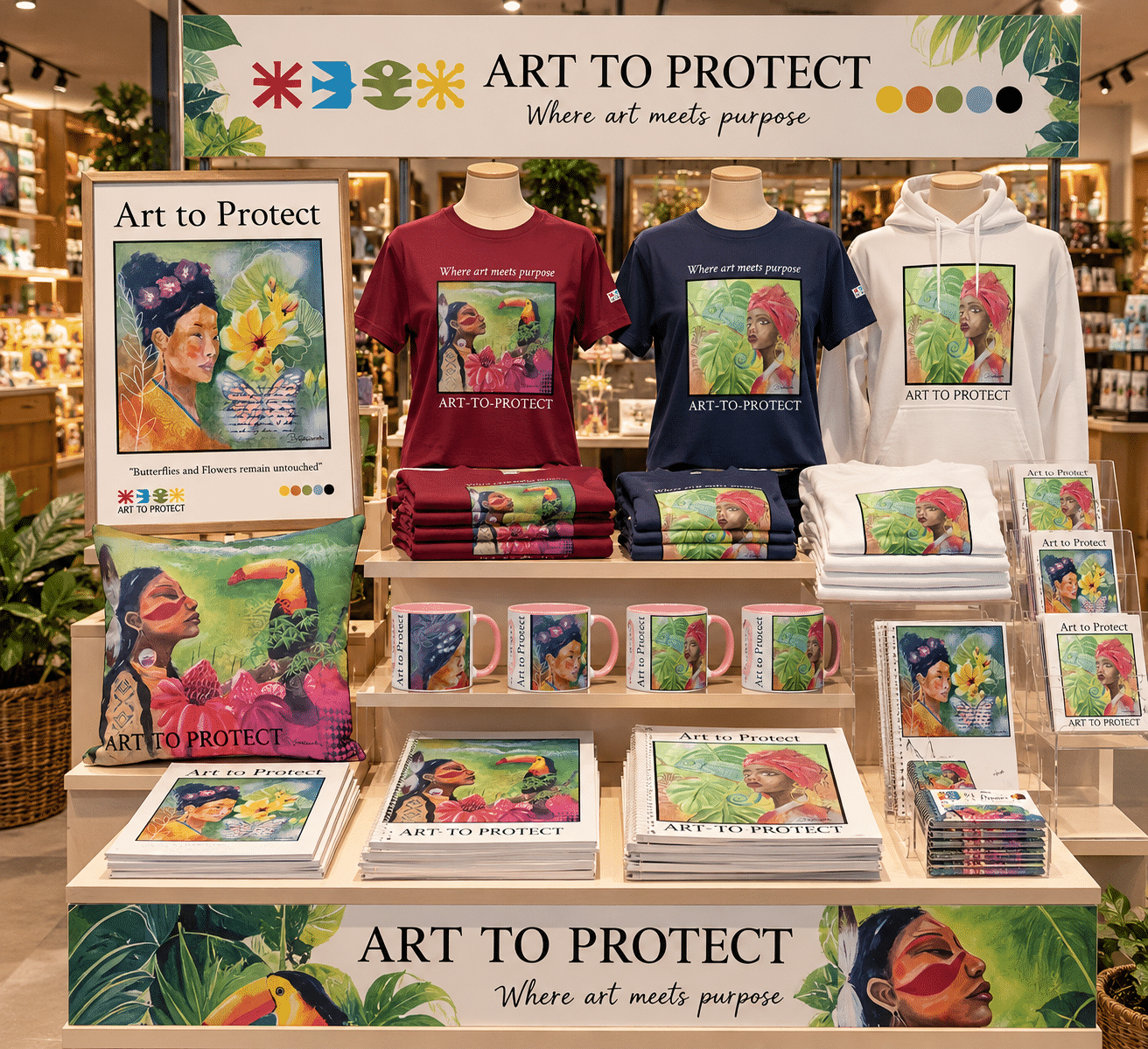
A sea turtle illustrated in luminous blue, a rainforest bird rendered in bold color, or a landscape shaped by a memorable journey can travel far beyond the original artwork. But the path it takes matters. When considering art licensing versus wholesale partnerships, artists and retailers are choosing more than a sales model. They are deciding how a story will be shared, who will shape the product, and how creative work can contribute to something meaningful.
For purpose-led collections, that decision carries special weight. A museum shop, zoo store, airport retailer, or destination boutique is not simply filling shelf space. It is offering visitors a way to carry wonder home. The right partnership can honor the artist, delight the customer, and create room for support of wildlife, biodiversity, and the communities connected to extraordinary places.
What Art Licensing Makes Possible
Art licensing is an agreement that gives a company permission to use an artist’s artwork on specified products, in defined markets, for an agreed period of time. The artist typically keeps ownership of the copyright. In return, they receive a royalty based on sales, a flat licensing fee, or a combination of both.
This model is especially well suited to artwork with a strong visual identity. A collection inspired by Costa Rica’s rainforest canopy, Madagascar’s remarkable wildlife, or the cultural textures of a meaningful destination can become stationery, home goods, travel accessories, apparel, and gift products while remaining connected to its original creative source.
For artists, licensing can extend the reach of their work without requiring them to manufacture, package, ship, and sell every product themselves. Their role remains centered on what they do best: observing, imagining, creating, and building a body of work with emotional resonance. A licensing partner takes on production and distribution, ideally with clear standards for quality, product categories, territories, and brand presentation.
For retailers, licensed collections can bring fresh artwork to the floor with a cohesive product story. A well-developed program may offer coordinated items at several price points, making it easier for a visitor to find a meaningful souvenir, a thoughtful gift, or a piece of everyday beauty.
Still, licensing asks for patience and precision. Royalties may grow over time rather than creating immediate income. Contracts need to be specific about how art may be adapted, how approvals are handled, and whether the partner has exclusivity. An artist who values close control over every color, material, and message may find broad licensing arrangements uncomfortable unless the relationship is built on genuine trust.
The heart of a strong licensing agreement
The best licensing partnerships protect both creative integrity and commercial clarity. They define the artwork being licensed, the products that may carry it, the regions where those products may be sold, and the length of the agreement. They also make room for artist approval at important stages, especially when the art represents a culture, a place, or a conservation story that deserves thoughtful treatment.
A mission should be clear as well. If a collection supports conservation partners, the language around that support should be accurate and transparent. Customers respond to a story they can understand and believe in. Beauty invites attention; honesty earns trust.
How Wholesale Partnerships Work
Wholesale follows a different rhythm. In a wholesale partnership, a brand or supplier designs, produces, and sells finished goods to a retailer at a wholesale price. The retailer then chooses its retail price and sells the products directly to its customers.
For a retailer, wholesale is often straightforward. The products are ready to order, the margins are known, and the buyer can select items that fit the season, the audience, and the available display space. A botanical garden shop may choose nature-inspired notebooks and scarves, while an airport store may focus on compact gifts that travelers can easily take home.
For the brand supplying those products, wholesale offers more control over the finished collection. The brand can choose materials, packaging, product combinations, messaging, and the overall experience. It can also build a recognizable world around the artwork, where each product card, hangtag, and display detail deepens the connection between art, travel, and protection.
Wholesale can be particularly powerful when a collection is already developed and ready to be shared across a network of aligned retailers. It creates a more immediate transaction than a royalty-based licensing arrangement and allows the supplier to maintain consistent quality across products.
The trade-off is responsibility. Wholesale suppliers carry the cost and risk of product development, inventory, storage, fulfillment, and forecasting. They must understand what retailers need: reliable delivery, clear pricing, thoughtful packaging, and products that earn their place on a shelf. A beautiful idea becomes a sustainable retail program only when it is executed with care.
Art Licensing Versus Wholesale Partnerships: The Essential Difference
The simplest distinction is this: licensing grants permission to use artwork, while wholesale sells finished products.
With licensing, the artist’s art is the core asset. A licensee may manufacture the goods, often under a set of agreed creative and commercial guidelines. With wholesale, the supplier is responsible for the complete product and sells it directly to retail partners.
Neither model is automatically better. The right choice depends on where the expertise, resources, and creative responsibility sit. An artist with a distinctive portfolio and little interest in operations may thrive through licensing. A brand with an established product line and a strong retail network may find wholesale the more natural path. Some organizations wisely use both, licensing art for selected categories while wholesaling their own signature collections.
The question is not only, “Which model earns more?” It is also, “Which model lets this work travel with care?” A design inspired by endangered wildlife or indigenous cultural knowledge deserves a partnership that preserves context, treats the artwork respectfully, and communicates the story with accuracy.
Choosing the Right Path for Your Collection
Artists should begin with their desired level of control. If approving products, maintaining copyright ownership, and expanding into categories they cannot manufacture are priorities, licensing may be a natural fit. If they want to create and sell their own finished goods, wholesale through a studio or brand may offer a more direct expression of their vision.
Retailers should consider what their customers are seeking. A shop with limited buying time may value a ready-to-display wholesale collection. A larger institution developing an exclusive program around a particular exhibition, animal encounter, or destination may benefit from a licensing arrangement that creates something uniquely theirs.
It also helps to consider scale. Licensing can open doors to larger production runs and broader distribution, but it often requires careful contract management and consistent brand stewardship. Wholesale can be easier to begin with on a smaller scale, yet growth brings inventory commitments. Cash flow, lead times, storage capacity, and minimum order quantities all deserve an honest look before a partnership begins.
Purpose should remain part of the decision, not an afterthought. When a collection is designed to encourage appreciation for nature and help support conservation work, the commercial model should leave room for that commitment. This may mean setting aside a defined portion of profits, using product storytelling to highlight a partner’s work, or creating limited collections around a specific place and its living heritage.
Building Partnerships That Carry Meaning
Whether the relationship is based on licensing or wholesale, the strongest partnerships begin with shared values. The artist needs to feel that their work will be represented with sensitivity. The retailer needs confidence in product quality, delivery, and customer appeal. The conservation or cultural partner deserves respectful, factual storytelling rather than a passing mention.
Start conversations early about the details that shape a collection’s integrity: creative approvals, product quality, packaging, pricing, fulfillment, sales reporting, and how impact will be communicated. These are practical subjects, but they protect the poetry of the work. They ensure that the customer who picks up a card, scarf, print, or gift understands that it carries more than an attractive image.
At ART-TO-PROTECT, we believe a successful collection can become a small invitation to look closer: at a species, a landscape, a culture, or a journey that deserves our attention. The best partnership model is the one that gives that invitation the space to grow, from an artist’s first sketch to a visitor’s treasured keepsake.
Choose the structure that supports your vision, then build the relationship with clarity, generosity, and care. When art is given a thoughtful route into the world, every purchase can become a quiet act of connection.