
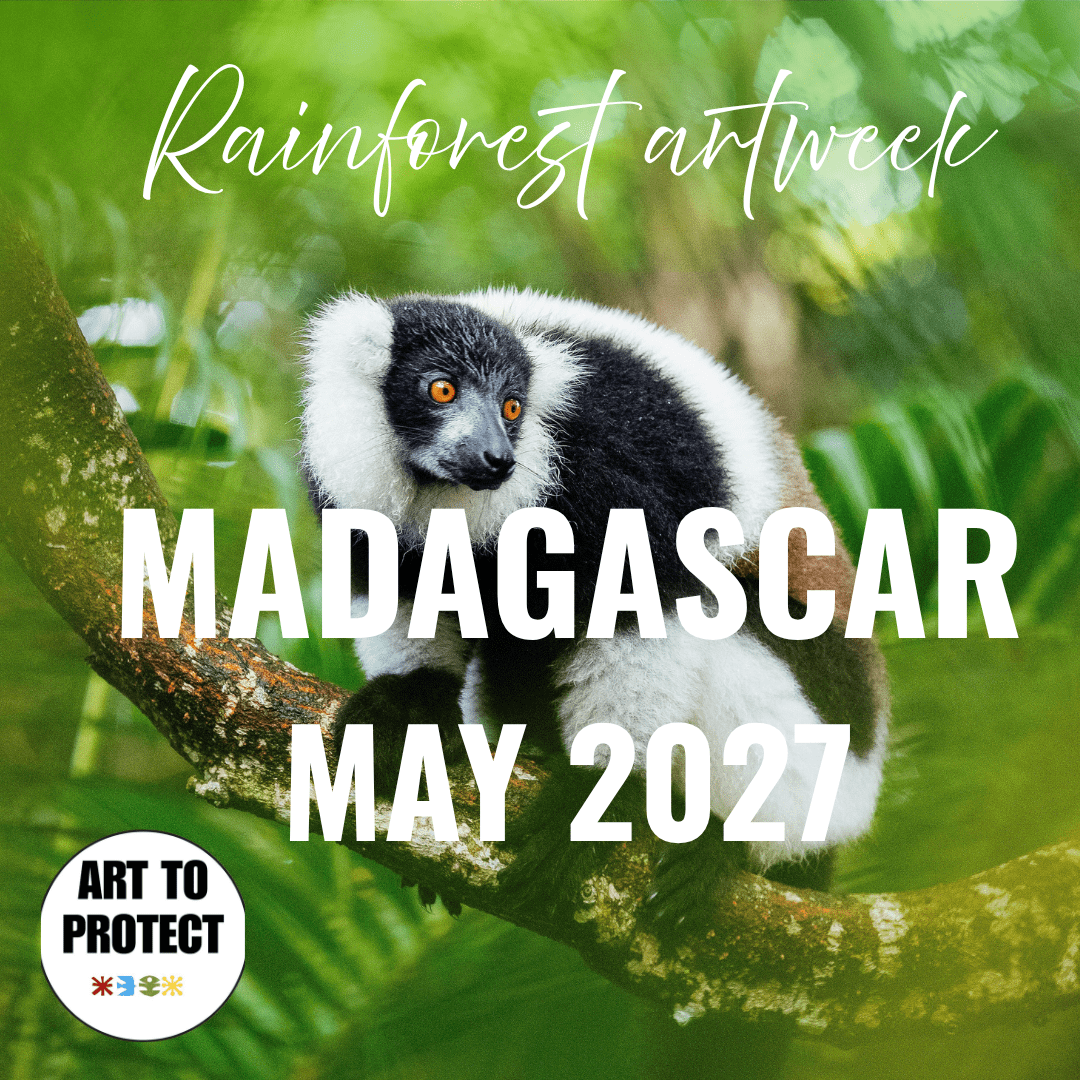
A rainforest does not arrive as a single color. It arrives in layers: the bright interruption of a bird in flight, the silver underside of a leaf, the rhythm of rain on a canopy, and the presence of people who know the paths by heart. Biodiversity conservation begins with this kind of attention – the willingness to see life not as a backdrop, but as a living, interconnected story.
For artists, collectors, and thoughtful travelers, that story can become more than inspiration. It can shape what we create, where we place value, and how we move through the world. Beauty is not separate from care. Often, beauty is where care begins.
Biodiversity Conservation Begins With Relationship
Biodiversity is the extraordinary variety of life within an ecosystem: plants, animals, fungi, insects, waterways, soils, and the relationships that allow them to thrive together. A forest is not simply a collection of trees. It is a world of pollinators, seed carriers, shade makers, decomposers, nesting places, and seasonal rhythms.
When one part of that world changes, other parts respond. A flowering plant may depend on a particular insect. A fruiting tree may be carried across the landscape by a bird or mammal. Healthy rivers, wetlands, coral reefs, grasslands, and forests each hold their own intricate forms of abundance.
That is why biodiversity conservation is not only about protecting what is rare or visually spectacular. It is also about respecting the small and easily overlooked lives that make an ecosystem whole. The beetle beneath the bark, the wild seed along a road, and the frog calling after rain belong to the same larger composition.
For a creative person, this perspective can be quietly transformative. Nature stops being a subject to copy and becomes a relationship to honor. The question shifts from, “What can I take from this landscape?” to, “What has this landscape invited me to notice?”
Why Culture Belongs in the Picture
Landscapes are never experienced in isolation. Across the world, Indigenous communities and local stewards carry deep, place-based knowledge shaped over generations. This knowledge may include seasonal patterns, medicinal plants, migration routes, food systems, materials, and ways of living with the land rather than simply on it.
To recognize this is to understand that cultural heritage and ecological richness often travel together. A woven pattern, a local story, a ceremonial color, or a traditional craft may hold a memory of a specific place. Yet inspiration needs humility. Cultural exchange becomes meaningful when it is built on consent, listening, proper credit, and genuine relationship rather than extraction.
For artists working across cultures, this distinction matters. Travel can widen the imagination, but it also asks us to arrive with respect. Take time before making images. Learn names. Ask what can be photographed, painted, shared, or left private. Purchase directly from local makers when appropriate, and let the people connected to a place remain present in its story.
This approach does not make art less free. It makes the creative process more honest, more textured, and more alive.
Art Can Teach Us How to Look Again
A powerful artwork slows the eye down. It asks us to remain with a color, a gesture, a creature, or a horizon long enough for it to become personal. That pause has value in a culture trained to scroll past almost everything.
Art cannot replace scientific fieldwork, community leadership, or thoughtful land stewardship. It has a different role. It can create emotional proximity. A painting of a lemur, a tropical flower, or a forest path may help someone feel connected to a place they have never visited. A work inspired by a journey can carry the warmth of encounter into a home, a hotel, a gallery, or a public space.
This is especially meaningful when the work preserves complexity. Nature is not always calm, symmetrical, or decorative. It can be wildly patterned, muddy, vulnerable, noisy, and full of surprise. Letting those qualities enter an artwork can move it beyond a polished nature motif and toward a deeper sense of presence.
At Art-To-Protect, creative journeys and collections are rooted in this possibility: art can hold the memory of a living place while inviting a wider circle of people to care about its future. The goal is not to turn nature into a trend. It is to let wonder become a lasting part of how we value the world.
Creative Choices With a Lighter Footprint
Every artistic practice involves materials, movement, and production choices. There is no perfect formula, and the right approach depends on the medium, location, budget, and longevity of the work. Still, small decisions can express a larger ethic of care.
An artist may choose archival materials that allow a piece to live for generations instead of requiring frequent replacement. A designer may work with a trusted production partner, produce in considered quantities, or choose packaging that feels beautiful without becoming excessive. A collector may look for work with a real story, live with it for a long time, and choose fewer objects with greater meaning.
The trade-offs are real. Local production may cost more. Sustainable materials may not always offer the exact texture or pigment an artist prefers. Limited editions require restraint when demand grows. But constraints can sharpen imagination. They encourage makers to ask what truly belongs in the work and what does not.
This is not about perfection or self-denial. It is about alignment. When the spirit of a collection is rooted in wild places, its making can reflect that respect wherever possible.
Travel as a Practice of Presence
Travel offers a rare chance to experience biodiversity with all the senses. The humid air before a tropical storm, the first sound of waking birds, the deep green of a forest after rain – these moments can reawaken wonder in ways no screen can reproduce.
But meaningful travel is not measured by how many places we collect. It is measured by how present we are while there. Staying longer in one region, working with knowledgeable local guides, following site rules, and leaving natural materials where they belong are simple practices that protect the quality of the experience for others as well.
Artists can also resist the urge to make everything immediate content. Some encounters need time before they become a sketch, a photograph, or a finished work. Keeping a written journal, observing before composing, and returning to a scene at different hours can reveal far more than a hurried image ever could.
In places such as Costa Rica, Madagascar, or Malaysia, this patience is especially rewarding. Biodiversity reveals itself gradually. The more carefully you look, the more the landscape begins to speak in detail.
Bringing the Living World Into Everyday Life
Biodiversity conservation can feel vast, but it also lives close to home. A balcony planted with regionally appropriate flowers can become a resting place for pollinators. A garden left with a little more leaf litter can provide shelter for small creatures. Choosing seasonal plants, reducing unnecessary pesticides, and protecting a patch of shade are modest acts with visible life around them.
For collectors, the home can become a place of remembrance rather than accumulation. Choose art that returns you to a feeling of wonder. Let a work remind you of a bird call heard at dawn, a conversation with a maker, or the sensation of standing beneath unfamiliar trees. Art has the quiet ability to keep attention awake.
That may be its most enduring contribution. When we learn to see a living world with tenderness and curiosity, care becomes less of an obligation and more of a natural expression of belonging.