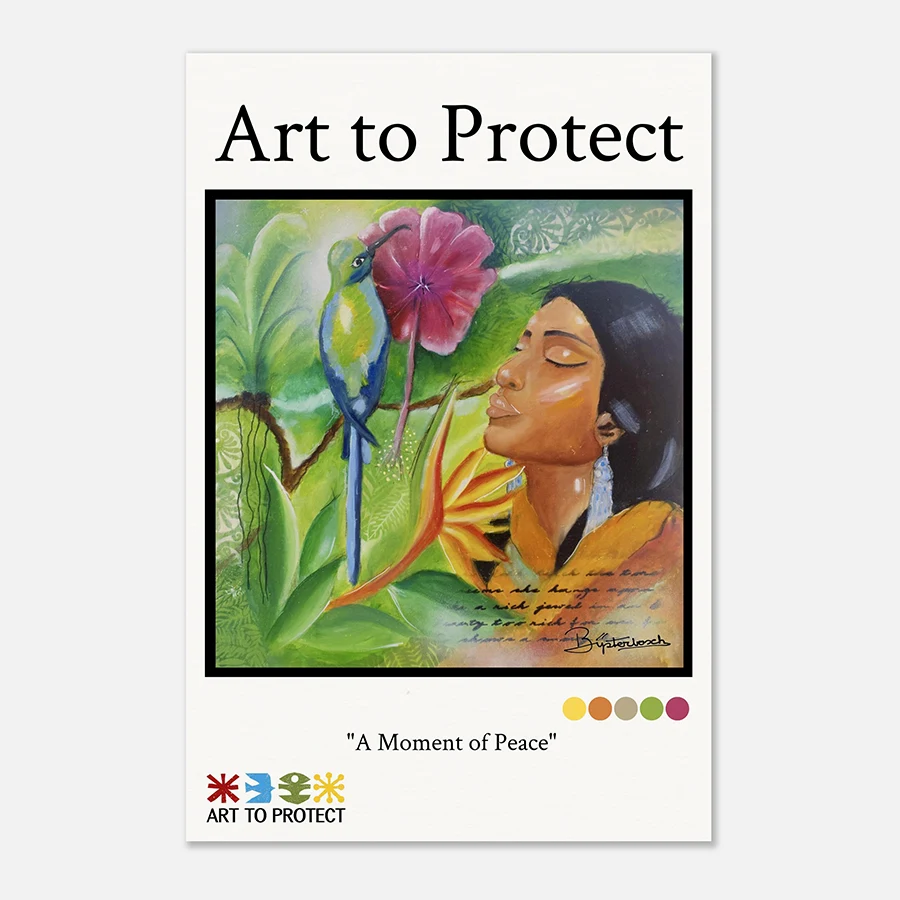
A rainforest painting becomes memorable when it feels like more than an animal placed against green leaves. It carries the hush of dense canopy, the flash of a wing between branches, and the sense that every creature belongs to a larger living community. Learning how to paint rainforest wildlife begins with that relationship. Your subject is the focal point, but the habitat is part of its story.
Whether you work in watercolor, acrylic, gouache, oils, colored pencil, or digital media, the goal is not to copy every feather and leaf. It is to notice what makes a species feel alive, then use color, light, texture, and composition to share that feeling with someone else.
Begin With Observation, Not Decoration
Rainforests are often reduced to a quick formula: bright birds, oversized leaves, and a wall of green. They are far richer than that. Before making a sketch, spend time with reliable reference photos and field guides. Observe how a toucan balances its large bill, how a tree frog grips a wet stem, or how a sloth’s calm shape echoes the curve of a branch.
Choose one main subject and learn a few essential details about its habitat. Is it found high in the canopy, close to a stream, or camouflaged against bark? Does it move with sudden energy or quiet patience? These questions shape the pose, setting, and mood of your work more effectively than adding extra tropical motifs.
Reference images are a starting point, not a substitute for your own point of view. Make small notes beside your sketches: the animal’s silhouette, the direction of its gaze, a distinctive pattern, and the colors that appear in shadow. A scarlet macaw may look red at first glance, but its feathers can hold deep crimson, coral, rose, violet-blue, and warm reflected light. Observation turns a familiar subject into a personal painting.
How to Paint Rainforest Wildlife Through Layers
A convincing rainforest scene has depth. Light does not land evenly across the forest. It filters through leaves, catches mist, disappears into shadow, and returns in small moments of reflected color. Build your painting in layers so the animal feels discovered within the environment rather than pasted on top of it.
Start With a Clear Value Map
Before choosing your most vivid colors, plan the light and dark shapes. A simple grayscale thumbnail is enough. Decide where the brightest area will be and where the deepest shadow will sit. In many wildlife paintings, a light opening behind the head or body helps the subject read clearly without needing a hard outline.
Keep the background values quieter than the focal point. If your bird, frog, or butterfly is mostly dark, place it against a softer midtone or a small wash of light. If the animal is pale or vividly colored, let part of the surrounding foliage fall into deeper shadow. This contrast gives the eye a place to rest.
Build Greens That Feel Alive
One tube of green rarely captures a rainforest. Mix variations with yellow, blue, earth tones, and small touches of red or violet to create greens that recede, glow, or soften. Cool blue-green foliage can move into the distance, while warmer yellow-green leaves can come forward into the light.
Resist the urge to paint every leaf with equal detail. Use broader, softer shapes in the distance, then add a few sharper leaves or stems near the subject. Suggestion creates atmosphere. Detail has the greatest impact when it is saved for the places that matter most.
Let the Animal Lead the Eye
Once the habitat is established, develop the wildlife subject with more deliberate edges and carefully observed markings. Sharpen an eye, the curve of a beak, or the edge of a wing where you want attention. Allow other edges to soften into shadow, foliage, or mist.
A small catchlight can bring an eye to life, but it should not be the only source of energy. Look for gesture. The lean of a jaguar’s shoulders, the spread of a butterfly’s wings, or the curl of a monkey’s tail can communicate movement before the viewer sees a single detail. If the pose feels believable, the painting already has a pulse.
Choose Color for Emotion and Accuracy
Rainforest wildlife offers extraordinary color, yet a painting does not need to use every possible hue. Choose a color family that supports the feeling you want to create. Emerald, indigo, and soft silver can suggest a misty early morning. Sap green, ochre, and warm orange can evoke humid afternoon light. Deep teal, near-black, and flashes of brilliant red can create a more dramatic nocturnal mood.
The trade-off is clarity. If every leaf is saturated, a colorful animal can disappear. Let neutral browns, muted greens, and soft grays make room for the moments of intense color. In watercolor, reserve clean paper or lift pigment for highlights. In acrylic or gouache, add lighter opaque touches near the end. In oils, build transparent darks first and save thicker highlights for the final passages.
Color can also tell a conservation-minded story without becoming literal. A vivid poison dart frog against shadowed forest foliage reminds us that small creatures can hold extraordinary beauty. A hornbill framed by fruiting branches speaks to the interdependence of wildlife and forest. Let the painting invite curiosity rather than trying to explain everything at once.
Create Texture Without Losing the Wonder
Texture helps a rainforest feel tangible: waxy leaves, rough bark, damp moss, fine fur, iridescent feathers. The key is to vary your marks. Use dry brush for bark, layered translucent washes for humid air, stippling for speckled skin, and directional strokes for fur or feathers.
Still, texture should serve form. Feathers follow the body, leaves turn toward or away from light, and bark wraps around a branch. If a detailed pattern flattens the subject, step back and simplify. Often, three well-placed texture passages tell a more convincing story than an entire surface covered in marks.
Try a small test sheet before committing to the final work. Paint a few leaf shapes, a patch of fur, and one bright accent color. This is especially helpful when working from multiple references, since lighting can vary from image to image. A test helps you create one unified atmosphere rather than a collection of copied details.
Paint With Respect for Place and Species
A wildlife painting can deepen connection when it is rooted in respect. Learn the correct name of the animal, its range, and a little about the ecosystem it inhabits. If your work is inspired by a particular destination, acknowledge your sources thoughtfully and avoid treating cultural patterns or Indigenous visual traditions as decorative material unless you have a meaningful, appropriate collaboration or permission.
The rainforest is not simply a dramatic backdrop for an exotic subject. It is home to people, plants, insects, birds, mammals, amphibians, and countless relationships we may never fully see. That awareness can change the choices you make. You might paint a pollinator beside a flowering plant, show a bird carrying fruit, or include the layered canopy that shelters your subject.
For artists creating work for a collection, exhibition, or retail setting, a short story card can add lasting value. Share what drew you to the species, the feeling you hope the work carries, and the conservation connection that inspired it. ART-TO-PROTECT believes these stories help art travel beyond the studio and become an invitation to care.
Know When the Painting Is Finished
Rainforest scenes can tempt you to keep adding. There is always another leaf, another reflection, another tiny feather to refine. Before continuing, view the work from several feet away. Does your eye find the animal first? Does the light lead through the composition? Does the painting still have breathing room?
If the answer is yes, protect that clarity. Add only the final marks that strengthen the story: a glint on wet foliage, a broken edge of sunlight, a few fine whiskers, or a thread of color echoed between animal and habitat. Then stop while the sense of wonder is still intact.
Each rainforest wildlife painting can become a small act of attention. Paint the creature with patience, honor the place that sustains it, and let your finished work remind someone that beauty is not separate from responsibility. A single image may inspire a question, a memory of travel, or a deeper desire to protect the living world it celebrates.