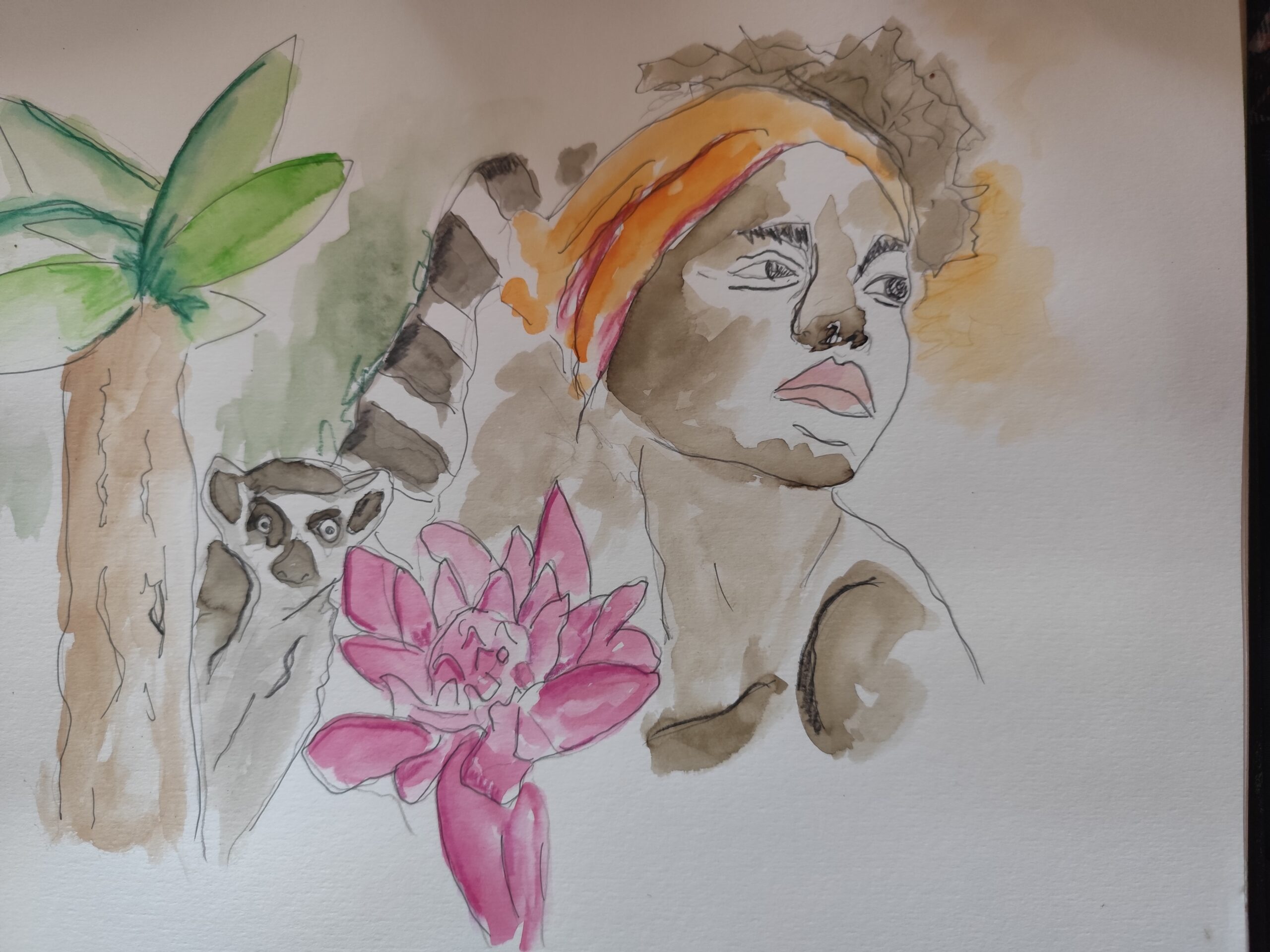
A travel painting can begin with a view, but its real subject is often the feeling of being there: humid air gathering before rain, a bird flashing through a green canopy, the patterned shade of a market awning, or a conversation that changes how you see a place. To develop expressive travel paintings, move beyond recording what was in front of you. Let observation, memory, and respect work together until the painting carries a lived sense of connection.
For artists who travel with curiosity, painting is a way of paying attention. It can also become a way of honoring the wildlife, landscapes, and communities that make a destination meaningful. The goal is not to bring home a perfect visual inventory. It is to translate an experience with enough honesty that someone standing before the finished work can feel invited into its story.
Start With the Moment That Stays With You
Many travel sketches are made quickly, between a walk and a meal, while a scene is still unfolding. That speed can be a gift. A loose drawing of a sea turtle surfacing offshore or a hill town glowing at dusk may hold more energy than a carefully copied photograph because it records your attention in real time.
Before choosing a subject, ask one simple question: what made me pause? The answer may be visual – an unexpected color relationship, a dramatic silhouette, a local flower growing through stone. It may be emotional – a sense of welcome, wonder, quiet, or awe. Begin there. A painting becomes expressive when its decisions serve that original response.
Keep a small travel notebook for more than sketches. Add a few words about temperature, sounds, scents, and the direction of light. Note what happened just outside the frame. A drawing of a rainforest path becomes richer when you remember the distant call of birds or the weight of moisture in the air. These details may never appear literally in the image, but they can shape the palette, brushwork, and atmosphere.
Build a Visual Language, Not a Postcard
Travel imagery can easily drift toward the polished, familiar view. Landmark paintings have their place, especially when a site carries personal or cultural meaning, but the recognizable subject alone rarely creates an emotional response. Look for the particular angle, rhythm, or detail that belongs to your experience.
Instead of painting every roofline in a historic town, crop in on the meeting of sunlit walls and laundry moving in the breeze. Rather than describing every leaf in a tropical forest, use broad layered marks that convey density, movement, and light. Simplifying is not leaving things out carelessly. It is choosing what the painting needs to say.
Color is one of the clearest ways to move from description to feeling. A place may look predominantly green in a photograph, yet your memory may be held by blue shadows, rust-red soil, and the sharp yellow of a butterfly. Give those colors room to lead. A limited palette often creates more unity than trying to reproduce every visible hue.
Work From Observation and Memory Together
Photographs are useful references, particularly for animals in motion, changing light, or complex architecture. Yet they can flatten a journey into a collection of surfaces. Pair them with on-location studies, written notes, and your own emotional recollection.
Try making two versions of a subject. In the first, use a photograph to understand structure and key details. In the second, set the image aside after a brief look and paint from your sketches and memory. Notice what remains: perhaps the curve of a hornbill’s beak, the gleam of water at sunrise, or the bold geometry of a carved doorway. Those surviving elements often reveal the heart of the work.
This approach also gives you permission to change the composition. You may move a tree to strengthen the rhythm, enlarge a flower to create a focal point, or soften a busy background so an animal becomes more present. Expressive painting is not about factual duplication. It is about being truthful to your experience.
Let Marks Carry the Feeling of Place
Brushwork, line, and texture can speak before the viewer identifies the subject. Consider the physical character of the place you are painting. Dry grasslands may call for broken, sunlit strokes. Misty mountain trails may need softened edges and thin washes. A coastal scene might ask for confident, sweeping lines that echo wind and tide.
Varying your marks prevents the surface from becoming mechanical. Combine quiet passages with energetic ones. Let some pencil lines remain visible beneath watercolor. Press thicker paint into a foreground leaf or feather, then allow distant forms to dissolve. These contrasts create a sense of discovery, much like travel itself.
It helps to decide where the painting should breathe. Not every area needs equal detail. Leave open space around a focal form, simplify a sky, or allow a wash to remain beautifully imperfect. Viewers need places to rest before their eyes return to the story.
Choose Materials That Invite Spontaneity
The best travel kit is the one you will actually carry and use. A compact watercolor set, a few brushes or water brushes, waterproof ink, pencils, and a sturdy sketchbook can be enough for weeks of observation. Gouache offers opacity and strong color in a small package, while colored pencils are excellent for studies on planes, trains, or quiet evenings.
There is a trade-off. Minimal supplies encourage speed and clarity, but they may limit large-scale experimentation. A fuller kit expands possibilities but can make you hesitate or overpack. Start with a small, dependable selection and learn its personality. Your style grows through repeated choices, not through owning every color.
Paint With Cultural Curiosity and Care
Travel offers encounters with living cultures, not raw material to collect. When painting people, ceremonial objects, homes, or culturally significant places, take time to listen and learn. Ask permission when appropriate, especially when working directly from a person, private setting, or community event. A warm conversation can lead to a more meaningful painting than a hurried snapshot ever could.
Avoid treating cultural details as decoration detached from their context. If a textile pattern, craft tradition, or local symbol inspires you, learn what you can about its origins and meaning. Then consider whether your painting communicates appreciation rather than imitation. Sometimes the most respectful response is to paint the light falling across a workshop, the hands making something beautiful, or the landscape that nourishes a tradition.
The same care applies to wildlife. Observe from a respectful distance and let the well-being of the animal guide the encounter. A patient study of a creature in its habitat often has more life than a close, disruptive pursuit. Your artwork can become an invitation for others to value the species and ecosystems that make such moments possible.
Create a Studio Ritual After the Journey
The journey does not end when you return home. In fact, some of the most resonant work begins after a little distance. Spread out your sketches, tickets, color notes, and photographs. Look for repeated shapes, colors, and subjects. You may find that three separate sketches of mangrove roots, market baskets, and shorebirds belong to one visual story.
Give each painting a clear emotional intention before you begin. Write a short phrase on the back of the canvas or in your notebook: “morning mist and possibility,” “the stillness before a bird takes flight,” or “a place cared for by many hands.” This is not a rule for the viewer. It is a compass for you when the composition becomes uncertain.
Then make room for surprise. A travel painting should not become rigid simply because it is made in the studio. Let a new color appear. Follow an accidental texture. Paint over a section that feels too controlled. The courage to revise is often where the work becomes truly yours.
Share the Story Alongside the Image
When a painting is ready to meet an audience, its story can deepen the connection. A short note about the destination, the encounter, or the species that inspired it helps collectors see beyond the surface. Be specific without claiming more than you know. If a work was inspired by a conservation landscape, say what you observed and what moved you.
For retailers, galleries, museums, and purpose-driven collections, this context turns art into a conversation. It gives customers a way to remember their own travels, ask questions, and choose pieces that reflect their care for the natural world. ART-TO-PROTECT believes that these connections can help transform creativity into lasting support for places and people worth protecting.
Let each painting remain a gesture of gratitude. Carry your sketchbook with humility, look longer than feels necessary, and paint the detail that continues to glow in your memory. That is where a journey becomes more than an image. It becomes an invitation to see, feel, and protect the beauty we share.