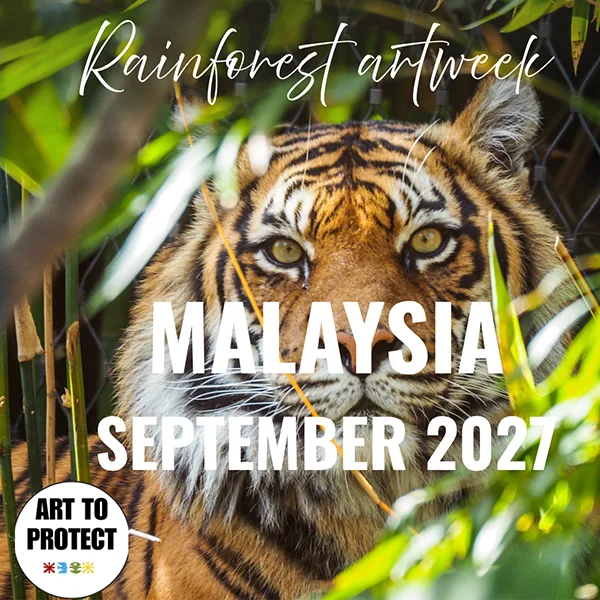
Before the first sketch is made, the rainforest has already composed a scene: layered green light, the call of a bird beyond sight, leaves marked by rain, and roots finding their way through the forest floor. A Malaysia rainforest art retreat offers more than beautiful reference material. It invites artists and travelers to slow down, look closely, and let a living ecosystem reshape the way they see.
For people who create, collect, or curate art with purpose, this kind of experience can become a source of lasting meaning. Malaysia’s rainforests hold remarkable biodiversity, deep cultural knowledge, and a sense of scale that does not fit easily into a photograph. Creative work made in response to that experience can carry a story far beyond the studio – one of wonder, respect, and a shared responsibility to care for extraordinary places.
A Malaysia Rainforest Art Retreat Begins With Attention
The rainforest is not a backdrop. It is an active presence in every moment of a retreat. Humidity changes the behavior of paper and paint. A sudden downpour changes the day’s rhythm. A close observation walk may reveal tiny fungi, a patterned wing, a climbing vine, or a single leaf holding several shades of green that seemed impossible to notice from a distance.
This is why a retreat in the forest can be such a powerful creative reset. It shifts the artist away from quick impressions and toward patient observation. Instead of trying to capture everything, participants can spend time with one subject: the architecture of a seed pod, the movement of water, the colors visible in a butterfly’s wing, or the changing atmosphere beneath a canopy.
That attention matters because biodiversity is often understood through big numbers and broad ideas. Art gives it a more intimate scale. A drawing, textile pattern, print, or photograph can help someone feel the distinct character of a species or landscape. It can create the emotional connection that encourages people to ask better questions and make more thoughtful choices.
Let the Place Set the Pace
A meaningful rainforest retreat should leave room for stillness. A full schedule may sound exciting, but creative insight often arrives in the unplanned spaces: while listening from a sheltered veranda after rain, returning to the same trail at a different hour, or revisiting a field sketch after dinner.
Working outdoors also asks for flexibility. Not every day will be ideal for painting, and not every encounter can be predicted. That is part of the gift. Artists may use wet weather for writing, collage, color studies, or conversations with guides and local hosts. The goal is not to produce a perfect body of work on demand. It is to develop a more honest visual language shaped by experience.
Art, Culture, and Care in the Rainforest
Malaysia is home to diverse communities, landscapes, and cultural traditions. Any art retreat that engages with local stories or indigenous knowledge should do so with care, permission, and a commitment to reciprocity. Cultural expression is not simply material to borrow for a mood board. It belongs to people, places, and living traditions.
The most respectful creative experiences are built through listening. Local guides, artists, community members, naturalists, and conservation practitioners can offer perspectives that no visitor can gain alone. Their knowledge may deepen an artist’s understanding of seasonal rhythms, native plants, craft practices, or the meanings carried by a landscape. When their contribution shapes a project, it should be acknowledged fairly and represented accurately.
This approach does not reduce creativity. It makes the work stronger. Art becomes more than an image of a destination. It becomes a record of relationship – between artist and place, visitor and host, imagination and responsibility.
For organizers, the practical choices matter too. Choosing locally owned accommodations where possible, working with qualified local guides, keeping group sizes thoughtful, and setting clear expectations around photography and collecting natural materials can help a retreat operate with respect. Participants should leave the forest as they found it, taking observations and memories rather than objects from the living environment.
What Artists May Bring Home
The most valuable outcome of a Malaysia rainforest art retreat is not always a finished painting. Sometimes it is a new way of noticing. An artist might return with a palette shaped by moss, bark, shadow, and bright tropical fruit. Another may begin a series about native wildlife, create a travel journal, or develop patterns inspired by leaves and water.
For collectors, these works offer something rare: art rooted in direct encounter. They bring a sense of place into homes and shared spaces without pretending to contain the rainforest itself. A thoughtfully made work can become a daily reminder that nature is not distant or abstract. It is a community of life worthy of curiosity and care.
There is also potential for responsible collaboration. Artists can create collections that share the stories behind a journey, while retailers, galleries, museum shops, and destination stores can present those collections with context. When a product includes the name of the species that inspired it, the place that informed the work, or a clear explanation of its conservation connection, customers are invited into a fuller story.
ART-TO-PROTECT believes this is where creativity can travel further. A print, scarf, notebook, or small artwork may begin with an artist’s time in the forest, then reach someone browsing a museum shop or choosing a meaningful gift. Beauty opens the conversation. Purpose gives it direction.
Preparing for a Rainforest Creative Experience
Preparation helps artists stay present once they arrive. Lightweight materials are often more useful than a large studio setup. A small sketchbook, waterproof pen, compact watercolor set, colored pencils, camera, and a reliable way to protect paper from moisture can be enough. The best tools are the ones that allow attention to remain on the landscape rather than on logistics.
It also helps to arrive with curiosity rather than a fixed concept. A detailed plan can be useful, especially for a professional project, but the forest may lead the work somewhere unexpected. A painter hoping to study large landscapes may become fascinated by lichens. A photographer focused on wildlife may find their strongest images in texture, trace, and light.
Artists should be mindful of their own footprint as well. Reusable water bottles, low-waste supplies, established paths, and respect for wildlife viewing distances are simple choices with real value. If drawing or photographing people, asking first is essential. Consent is part of creative integrity.
From Inspiration to Lasting Impact
The work does not end when the retreat does. Back in the studio, artists can give their experiences time to settle before turning them into a collection. Notes, sound memories, conversations, and unfinished studies often reveal their value weeks later. This slower process can prevent the work from becoming a surface-level souvenir of travel.
When sharing a finished piece, context is a form of care. Name the ecosystem that inspired it. Share what you learned from local guides or conservation partners, where appropriate. Be clear about any contribution connected to sales, rather than making vague promises. This honesty helps audiences understand how their support can become meaningful action.
A Malaysia rainforest art retreat is ultimately an invitation to practice a different kind of travel: one that values observation over consumption, connection over spectacle, and creativity that gives something back. Let the first mark you make be an act of attention. From there, art can carry the forest’s story into new hands, new homes, and a wider circle of care.