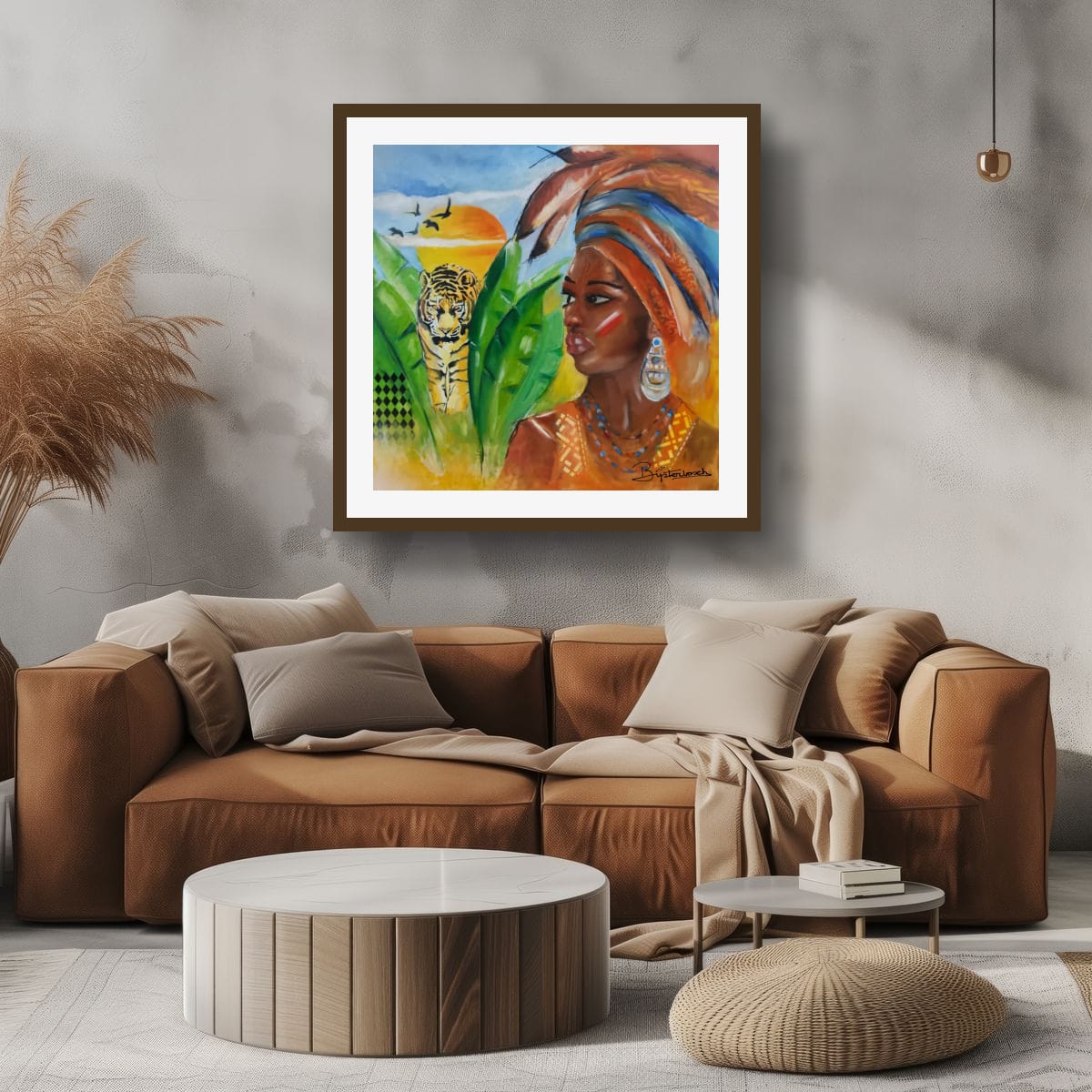
A room can hold more than a palette and a point of view. With the right wildlife art styles for interiors, it can hold the alert gaze of a snow leopard, the bright rhythm of tropical birds, or the quiet intelligence of an elephant. These images do more than fill a wall. They remind us that our homes are part of a larger, living world.
Choosing wildlife art is not about matching every cushion or following a passing trend. It is about finding a visual language that feels true to the way you live and the places, creatures, and stories that move you. A small, expressive portrait may bring intimacy to a reading corner. A sweeping landscape with migrating animals can give an entryway a sense of journey and possibility.
Start With the Feeling You Want to Create
Before choosing an animal or an artist, pause at the doorway. What should this room make people feel? Calm, curiosity, adventure, warmth, or conversation? Wildlife art is wonderfully versatile because its subject matter is familiar, while its interpretation can be endlessly personal.
For a restful bedroom, consider soft watercolor studies, gentle line drawings, or photographs with misty natural light. A heron standing in shallow water or a sleeping fox can bring presence without demanding attention. In a lively kitchen or family space, bolder graphic prints of parrots, zebras, reef fish, or botanical habitats add energy and color.
A hallway often benefits from art with a sense of movement. Running horses, soaring birds, or a sequence of small animal studies can lead the eye forward. In a dining room, a larger piece can become a generous conversation starter, especially when it carries a story about a destination, a species, or the artist’s relationship with nature.
The goal is not to make a room feel like a themed lodge or a safari set. Let the art bring nature into the space with intention, leaving room for your own memories and imagination.
Wildlife Art Styles for Interiors: Finding Your Visual Language
Botanical and naturalist illustration
Detailed naturalist illustration has a timeless, collected quality. It honors feathers, fur, leaves, and anatomy with close attention, often recalling field journals and museum collections. This style works beautifully in traditional, transitional, and layered interiors, especially when paired with warm wood, linen, brass, or vintage objects.
Choose a single framed bird study for a refined accent, or create a small gallery of related works. The trade-off is formality: highly detailed illustrations can feel more structured than playful. If your home is relaxed and contemporary, balance them with simple framing and plenty of open wall space.
Expressive painting
Expressive wildlife paintings are driven by gesture, color, and emotion rather than literal detail. A tiger built from confident brushstrokes or a whale suggested through fluid washes can make a room feel alive. These works suit collectors who want art to carry a little courage and surprise.
This approach is particularly effective in modern interiors, where a vivid piece can soften clean lines and add warmth. Look for a color that echoes something already in the room, perhaps the rust of a clay vessel or the deep green of a favorite chair. Matching every shade is unnecessary. A little contrast lets the artwork breathe.
Graphic, contemporary, and pop-inspired art
Graphic wildlife art uses simplified shapes, high contrast, pattern, and strong composition. It may feel joyful, urban, playful, or wonderfully unexpected. A brightly colored toucan, stylized leopard, or patterned sea turtle can give a neutral room its focal point.
This style is ideal for an entryway, creative workspace, children’s room, or vacation home, but it can also bring welcome lightness to a formal space. Pay attention to scale. Small graphic art can disappear against a busy wall, while one confident oversized print can create the clarity the room needs.
Photography and cinematic landscapes
Wildlife photography offers a different kind of connection: the awareness that a real encounter took place in a particular moment and place. A close-up portrait can feel intimate, while a wide landscape places the animal within its habitat and reminds us that wildlife protection is inseparable from protecting ecosystems.
Black-and-white photography brings a quiet, sculptural mood and fits almost any palette. Color photography can transport a room to a rainforest, coral coast, grassland, or mountain range. Choose images that respect the animal’s natural behavior and setting. The most lasting work tends to invite wonder rather than treat wildlife as decoration alone.
Cultural and pattern-led interpretations
Artists around the world have long drawn inspiration from animals, landscapes, and local craft traditions. Pattern-led wildlife art can introduce rhythm, heritage, and a strong sense of place through textile-inspired motifs, layered ornament, or symbolic forms.
This category deserves thoughtful collecting. Learn about the artist’s perspective and the story behind the work, especially when it is connected to a living cultural tradition. Choose pieces made with respect, attribution, and genuine collaboration. When art carries cultural meaning, that meaning is part of what makes it valuable in a home.
Let Scale Do Some of the Storytelling
A common mistake is choosing art that is too small for the wall. Wildlife has presence in nature, and a piece needs enough visual room to express it indoors. Above a sofa, bed, or console, artwork generally feels strongest when it spans a meaningful portion of the furniture below it rather than hovering like a postage stamp.
Large art does not always mean loud art. A full-size canvas of a pale owl or a softly toned elephant can feel serene because of its restrained palette. Conversely, a small work with intense color can be a powerful jewel box moment on a narrow wall or beside a bedside lamp.
Gallery walls are especially suited to wildlife themes. Instead of filling every frame with the same animal, build a wider story: a bird, a landscape, a botanical detail, a map-like pattern, or a travel photograph. The result feels less literal and more like a personal archive of places you care about.
Make Color a Companion, Not a Rule
Wildlife art can either harmonize with a room or create an intentional spark. A tonal piece that repeats your existing earth colors will feel settled and immersive. A brilliant macaw against sand-colored walls will feel celebratory. Both choices work.
If you are uncertain, begin with the colors you naturally wear, collect, or notice while traveling. Those preferences often reveal more about your lasting taste than a paint chart. Then consider the animal’s natural palette as a gift rather than a limitation. The silvery blue of a whale, the amber of a big cat, and the layered greens of a rainforest can guide a room without making it feel overly coordinated.
Frame selection also changes the mood. Light wood feels organic and approachable. Black frames sharpen contemporary work. Natural oak, walnut, or woven textures can connect the art to a more grounded, nature-led interior. For colorful art, a simple frame often gives the image the final word.
Choose Art With a Living Story Behind It
The most memorable interiors reflect what their inhabitants value. A wildlife artwork becomes more meaningful when you know why the artist made it, where the species lives, or how its purchase contributes to a wider purpose. That knowledge can turn a beautiful object into a daily invitation to pay attention.
At ART-TO-PROTECT, this connection between art, travel, and conservation is central to the work. A collection inspired by biodiversity can carry the spirit of a destination while helping support the people and organizations working to protect it. For collectors and purpose-driven retailers alike, that added layer of meaning makes art easier to share, gift, and remember.
You do not need a home full of animal imagery to express your love of nature. One piece chosen with care can change the emotional center of a room. Place it where you will see it often, let its story unfold over time, and allow it to keep a little window open to the wild.