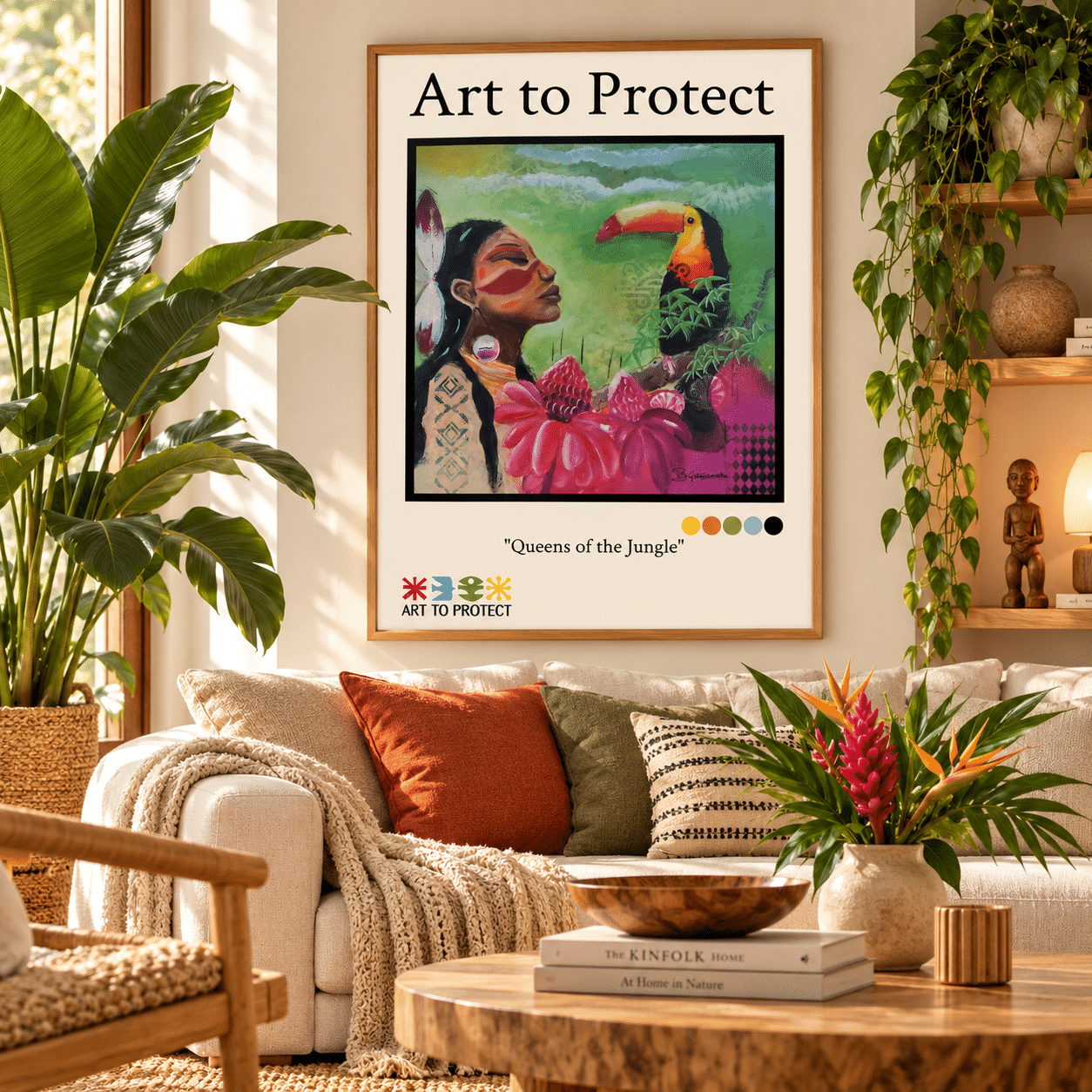
A print of a rainforest bird, a sea turtle, or a distant mountain can do more than fill an empty wall. It can hold the feeling of a journey, introduce a species worth knowing, and become a quiet daily reminder that beauty deserves care. That is at the heart of why buy conservation art prints: they bring art, memory, and meaningful action into the same space.
For collectors, travelers, and nature lovers, the right print is not simply decoration. It is an invitation to look closer. For museum shops, zoo stores, galleries, and destination retailers, it is a way to offer visitors a piece of the story they came to experience – one they can carry home and share.
Why buy conservation art prints instead of ordinary wall art?
Conservation art prints begin with connection. An artist may be inspired by the expressive eyes of a lemur, the layered greens of a tropical forest, the flight of a rare bird, or the traditions and landscapes of a community that calls a place home. The finished work gives that inspiration a lasting form.
Ordinary wall art can certainly be beautiful. A conservation print asks for something more from its beauty. It helps turn admiration into awareness, and awareness into an opportunity for support. When a collection is created with credible conservation partners and a clear giving model, a portion of profits can help fund work that protects biodiversity, wildlife habitats, and indigenous communities.
The impact is not only financial. A print displayed in a living room, office, hotel, classroom, or retail space keeps a story visible. It may prompt a child to ask about an animal they have never seen. It may bring a traveler back to a moment of wonder. It may remind a guest that the places they love need thoughtful stewardship.
Art makes conservation personal
Facts matter in conservation, but facts alone do not always stay with us. A visual story often does. We remember the color of a butterfly’s wings, the shape of a coastline at sunset, or the alert posture of an animal in an artist’s linework. Art gives people a relationship with a place or species before they have the language to describe why it matters.
That personal relationship is powerful because care tends to grow through familiarity. A print can make a faraway ecosystem feel present without reducing it to a trend or a souvenir. The most meaningful work respects its subject, honors the artist’s point of view, and offers context for the story behind the image.
This is especially true for travel-inspired art. A photograph may capture where you went. An illustrated print can capture how it felt to be there: the humid air of a forest trail, the stillness of an early wildlife encounter, or the joy of finding a new culture through its art and landscape. It becomes a keepsake with a longer horizon.
A purchase can support a larger story
Not every product described as sustainable or purpose-driven creates the same kind of impact. Thoughtful buyers should feel welcome to ask questions: Which conservation organization is supported? How is support structured? Is the artist credited and fairly represented? Does the collection explain the wildlife, destination, or community that inspired it?
Transparency turns a good intention into a relationship built on trust. It also helps buyers choose work that reflects their values without expecting a single purchase to solve a complex challenge. Conservation is long-term work, shaped by local knowledge, dedicated organizations, community participation, and sustained resources. Art can be one meaningful part of that wider effort.
At ART-TO-PROTECT, this connection is central to the creative model. Collections are designed to celebrate extraordinary destinations, endangered wildlife, biodiversity, and the people who protect them, while helping direct a portion of profits toward conservation partners. The aim is not to separate art from the world it depicts, but to let art encourage care for that world.
The value of a print is more than its size
A conservation art print can fit many budgets and spaces. It may be a small piece for a reading corner, a framed focal point for a hallway, or a gift for someone whose favorite memories are outdoors. Because prints are generally more accessible than one-of-a-kind originals, they can make artist-led work available to more people.
That accessibility matters. It allows a first-time art buyer to begin a collection with intention, while giving established collectors a way to add new voices, subjects, and places to their walls. A well-chosen print can also be deeply personal: a species that fascinated you as a child, a destination that changed your perspective, or a landscape that brings calm after a busy day.
There is a trade-off worth considering. A mass-produced image may cost less, but it can lack a clear artist story, careful production choices, or a connection to a conservation purpose. A mission-led print may ask you to spend a little more, depending on its materials, edition, framing, and giving model. For many buyers, that difference reflects the value of thoughtful design, creative labor, and a story they genuinely want to live with.
How to choose a conservation print you will love living with
Start with the feeling you want the work to carry. Some people are drawn to bold wildlife portraits that spark conversation. Others prefer subtle botanical forms, coastal scenes, or abstract interpretations of nature that create a sense of calm. The print should feel at home in your space, not like an obligation.
Then look beyond the image. Read the artist’s inspiration and the collection story. Consider whether the work shares a respectful connection to its subject and whether the brand is open about its conservation partnerships. If cultural references are part of the design, seek work that approaches them with appreciation, collaboration, and care.
Practical details also shape your experience. Think about scale, paper quality, color, and framing. A richly detailed illustration may shine in a larger format, while a small print can become more intimate when grouped with travel mementos or other nature-inspired pieces. If you are buying a gift, choose a story rather than trying to predict every detail of someone’s decor. A print connected to their favorite animal or meaningful journey often lands beautifully.
A thoughtful choice for gifts, homes, and shared spaces
Conservation art prints have a rare ability to feel both personal and generous. They work for birthdays, housewarmings, graduations, thank-you gifts, and travel keepsakes because they offer more than an object. They say: this species, place, or story is worth celebrating.
In shared spaces, they can shape the atmosphere as well. A nature center can use art to extend learning beyond an exhibit. A hotel or tourism business can reflect a real sense of place. A retailer can offer customers a beautiful alternative to generic souvenirs. The best collections invite conversation without demanding it, allowing curiosity to unfold naturally.
For artists, this kind of work can also create a meaningful path for their creativity. Their visual language reaches people in homes and public spaces while contributing to a purpose beyond the frame. That exchange – between artist, buyer, retailer, conservation partner, and place – is what makes the model feel alive.
Let your walls reflect what you care about
The objects we choose to live with quietly tell our stories. A conservation art print can speak of a journey taken, a species admired, an artist discovered, or a hope for the natural world we share. It offers beauty first, then gives that beauty somewhere to go.
Choose the piece that makes you pause. Let it bring wonder into the room, invite a conversation, and keep the people, wildlife, and landscapes you value close to heart.